Home Blog Page 407

Samsung Galaxy A80 Launched – 48MP Rotating Camera For The Folks Who Crave The Most

0

Samsung has finally announced a few devices today. After a month of wait, Samsung introduces to you the Galaxy A70 and Galaxy A80. Both of these devices are going to be retailing beside the Samsung Galaxy A30 and A50, two devices they had announced around MWC 2019 earlier this year.

Samsung had already announced the Samsung Galaxy A70 last month. However, the new addition making its way to the A-series family is dubbed as the Samsung Galaxy A80, a device that may be polarizing to many for its unique design that once Oppo used to tout.

The new Samsung Galaxy A80 comes with a decent spec sheet. The Samsung Galaxy A80 comes with a 6.7-inch FHD Super AMOLED display, 8GB of RAM, 128GB of internal storage, a 3700mAh battery, an under-display fingerprint sensor and an unknown SoC that would most likely be the Snapdragon 660/670. Furthermore, the device comes with Samsung’s in house apps and features. We’re talking about Samsung Pay, NFC, Samsung Health, 25w fast-charging, and a whole lot more.

However, aside from that, what makes the Samsung Galaxy A80 polarizing has to be its unique camera setup. The new Samsung Galaxy A80 now features an all display design, lacking any form of notches or bezels up front. With the Samsung Galaxy A80, you simply use the back cameras on the device up front for your selfies. Essentially, the camera set up on the Samsung Galaxy A80 can be rotated either way based on your preference.

With the Galaxy A80 again, we’re looking a duo at the back off the device, featuring a 48MP main shooter as well as an 8MP ultra-wide shooter at the back of the device. And in typical Samsung fashion, the Samsung Galaxy A80 features a ton of Samsung’s camera tweaks and intelligent features.

The Samsung Galaxy A80 is said to come in three colors, that is, in Pink, Frost White and Black. Regarding pricing, Samsung remained vague. However, we would be updating this article as soon as possible once we get those details in our possession. However, if we were to predict the release dates of these devices, we’d say that these devices would be landing on the international, or may I say, the Asian market within the next month given how long Samsung launching and teasing these devices.

The Gradient Of Biometric Security In Smartphones – Where It All Began & What’s Next

Smartphone security is one of the most if not the most important aspect of a modern device. The security features of any device in this matter are considered to hold a key value which can either make or break the mind of an enthusiast. Biometric security has taken a sharp turn into smartphones and is a must-have feature in almost every smartphone.

Fingerprint scanners out of all have come on top and have become a part of daily life and provide fast effective security to users. While being extremely secure the technology itself isn’t perfect and has some flaws here and there. Fortunately, manufacturers have given a fair bit of importance to smartphone security/privacy and have been in active development of better alternatives.

Biometric Security In Smartphones – Where It All Started

The concept of fingerprint scanners gained ground when Apple showcased the iPhone 5s has a fingerprint sensor on the home button. Moreover, Samsung came up with the Galaxy S5 having a fingerprint sensor in a very similar fashion. Ever since then, capacitive fingerprint sensors have flooded smartphone markets and literally every phone starting from budget, midrange and all the way up to the premium level has a fingerprint sensor.

Manufacturers ever since then have come a long way and it shows how much we’ve progressed over the course of only a few years. Smartphones have come up with facial recognition technologies providing a heightened level of security better than ever before. The iPhone X for that matter has taken this a step forward, removing the fingerprint sensor as a whole and relying completely on the facial recognition feature termed “Face ID”. The primary question at play here is what could be next?

While most smartphones do come equipped with facial recognition features, the array of sensors required for it to beat the fingerprint sensor take up a fair bit of real estate that too in the front of the device. Moreover, having a single front-facing camera with facial features wouldn’t ever be as secure as a traditional fingerprint sensor which then defeats the purpose. This meant that the fingerprint sensor is still the most reliable method of security.

New Innovation Or Just Pure Gimmicks?

Over the span of a couple of years, fingerprint sensors themselves have come a long way. Gone are the days when sensors used to be highly inaccurate and inefficient. As of late 2018 under display fingerprint technology has garnered countless hosts with major smartphone manufacturers like Huawei, Xiaomi, OnePlus and more hopping on the bandwagon. While capacitive fingerprint sensors had no major flaws, having an under display one is definitely futuristic and more modern looking. Although the new concept is more gimmick than practicality.

The optical in display fingerprint sensor uses a bright light which flashes once triggered. It flashes on the finger and produces a high resolution image which then determines the ridges of the fingerprint and stores the image in its database. Once that image is obtained from the sensor, the phone unlocks. Now, the technology is amazing and indeed a step towards the future but is substancialy slower than traditional methods. Moreover, this requires a bright light to be lit in order for the sensor to notice anything which might be considered annoying to some.

Samsung in this matter, however, has come up with an alternative in display technology which achieves the same goal but with a different perspective. The Galaxy S10 is the first ever smartphone to feature an ultrasonic in display fingerprint sensor. The ultrasonic sensor as the name suggests emits frequencies of extremely small wavelengths once activated to map out the ridges of the fingerprint. As a result, the obtained sensor is far more efficient and secure than the optical one and maintains the in-display factor.

What To Expect In The Future – What’s Next?

While the race for biometric security continues LG has brought in a “Palm Sensor” with their new G8 ThinQ. The Palm sensor is a series of sensors most noticeably the IR sensor which tracks the haemoglobin in your hand’s veins and uses that to identify a unique signature. As ridiculous the technology may sound, it actually works and LG has stated that palm ID is a secure way of unlocking the phone. While the technology is still pretty new and very immature manufacturers are constantly working to improve security in their smartphones.

With fingerprints, Iris scanners, facial recognition and now palm scanning out of the way what could be next? My speculation says that at this current point in time, we are at our highest point and moving ahead atleast a couple of years ahead would only hold gimmicks and more gimmicks.

New Alleged Redmi Flagship Mysteriously Surfaces – Hosts A Snapdragon 855 & A Punch Hole Display

0

The Redmi brand has gained quite some exposure ever since its separation from Xiaomi. The Redmi brand alone has produced quality phones this year mostly featuring the lower mid range market. All this however is predicted to change as new surfaced leaks suggest the Chinese brand to be working on a Snapdragon 855 flagship.

A recent leak from a credible Chinese tipster shows a video of what is allegedly a brand new Redmi smartphone fitted with the Snapdragon 855 SoC. Now, when we consider how Redmi came into being we notice the fact that it basically targetted the budget range and rocked the Snapdragon 6xx / 7xx series SoCs. The recent leaks of it having a premium SoC like the 855 has really puzzled enthusiasts.

The video is actually quite revealing and shows a hands-on experience of a smartphone very much holding the Xiaomi DNA. If having a premium grade SoC in a smartphone division which is meant for budget devices wasn’t a shocker, the leaked footage also shows the display of the phone having a centred punch hole design. Previously we’ve talked countless times on how the punch hole is revolutionising smartphone display tech. Nokia in its budget phones is expected to house a punch hole design which for its price point seems credible. More and more smartphones seem to adapt the punch hole instead of the notch and it just shows how Samsung is currently leading smartphone innovation.

One of the interesting facts about the leaked phone is the fact that the punch hole is centred instead of a corner. Many phones even today like the Huawei P30 feature a teardrop notch which looks fairly decent. Having a punch hole camera meant for enthusiasts to get rid of the notch and sideline the protrusion. This centred hole, on the other hand, looks weird, to say the least, and only time will tell how efficient it really is.

One more noticeable fact here is that Xiaomi itself already has the upper and lower mid-range market covered and has pretty much covered all of Asia. Having a Redmi phone, that too rocking an 855 chipset is pretty absurd. It is almost as if Xiaomi is trying to pick competition with itself. I wouldn’t be surprised if they divert the Redmi lineup to a completely different market space like Africa, Australia or South America for the global invasion of the Chinese tech giant.

Samsung Merges The Galaxy J-Series With The A-Series – Galaxy A30 & A50 To Be The New Budget Options

0

Samsung’s smartphone reign is immense and for good reason. The Korean tech giant has been around ever since even before the birth of smartphones and is easily the most recognizable smartphone brand. With four major smartphone divisions targetting various different markets, Samsung had planned on targetting every major market globally. The Galaxy J and Galaxy A series has been around for quite some time and was focussed on the budget and midrange market while the S series targetted the premium market.

Samsung however has recently spiced things up in its smartphone divisions. Last year we saw a very abstract change in approach by Samsung towards the Galaxy A series. Folks over at Samsung started experimenting more and giving the A series more attention in general. The J series on the other hand has reportedly been merged with the Galaxy A series with the launch of a couple of new phones by Samsung, the Galaxy A30 and A50.

While one may call it the scraping of the Galaxy J series which apparently had quite a few good smartphones that served well for their price yet Samsung felt the need to merge both the divisions. The Galaxy J series while being important came with its own set of issues and obstacles. Being based on a different DNA meant that the attention was diverted from Samsung itself and the J series lacked support. Having merged into the Galaxy A series, Samsung would most probably experiment even more with the Galaxy A series and would mean heightened customer support.

Samsung has always been lacklustre with software support and customer support in general with its lower end devices, this merger could mean that Samsung plans on a better smartphone experience especially in the lower end of the spectrum. With Chinese manufacturers already taking a huge chunk of the mid range and budget market, Samsung tries its best to compete with them and this might actually prove fruitful for them.

AMD RX-8125, RX-8120, & A9-9820 Leaked – New CPUs Incoming

AMD has definitely spiced up the market ever since they launched their new Ryzen lineup of CPUs. As the 3rd-generation of Ryzen CPUs arrive, a few mysterious CPUs have made their way to 3DMark’s database dubbed as the RX-8125, the RX-8120 and A9-9820.

Based on the details provided by the leak, first spotted by the folks over at Toms Hardware, these CPUs would apparently be codenamed as Cato, with only two of the CPUs excluding a CPU. All three of the CPUs are said to be eight-core CPUs with relatively weak clock speeds on the surface. Here’s the details of all three CPUs.

  • AMD RX-8125 – 2.3GHz (2.4GHz Turbo) – 8 Cores – No SMT
  • AMD RX-8120 – 1.7GHz (1.8GHz Turbo) – 8 Cores – No SMT
  • AMD A9-9820 – 2.3GHz (2.4GHz Turbo) – 8 Cores – Integrated Radeon RX 350 -No SMT

And while I’m personally left puzzled, it definitely does confirm leaks from a while ago where a major embedded solutions provider listed the product featuring the above names/model numbers.

For folks who are keen about these processors, it’s worth noting that these CPUs are meant or industrial applications rather than home or gaming applications. So these CPUs would most probably never make it to the market. So if you find any of these CPUs with some interest, you’d rather wait for AMD’s 3rd-Gen Ryzen series of CPUs to launch.

Google’s Pixel 4 Lineup Could Come With A Dual-Camera Setup – Google’s AI-Based Photography Days Are Over, It’s Time To Step Up

Google’s about to have its toughest year, that’s for sure. For the past few years, Google has showcased its incredible prowess in the camera department ever since they departed from their Nexus series of devices.

This Year’s Google Pixel 4 Lineup Would Test Google’s Camera Prowess To Its Limit

Google’s Pixel reboot has showcased Google’s prowess in the camera department for quite a while. And until the Pixel 3 lineup of devices landed, Google’s Pixel 3 and Pixel 3 XL were named as the best smartphones for photography. As 2019 loomed around the corner following the Google Pixel 3 lineup, Google didn’t see what’s coming around the corner in 2019, and it seems like they may finally take notice as competition from the Korean and Chinese peninsula gain up on the Pixel series of devices.

With 2019 taking an avid turn, the first quarter of 2019 has presented some harsh competition for the American giant. Samsung has come out guns blazing with the Samsung Galaxy S10 lineup. While Huawei has taken the game to another level with the Huawei P30 Pro lineup. Furthermore, Oppo has jumped in with their incredible Oppo Reno that’s supposed to zoom up to 10x, that too, optically. A ton has changed in 2019, and it seems like the 2019 market of flagships would absolutely decimate Google’s camera prowess this year unless Google shakes things up this year with the Pixel 4 and Pixel 4 XL.

The Gradient Of Modern Smartphone Photography

2019 has officially become the year of ultra-wides. After 2018 cemented the dual camera setup, the devices released across the isle have made triple-camera setups the norm, making the second and third cameras a must in pretty much any device.

There’s no doubt that having all three cameras is an absolute luxury. Huawei’s P30 Pro comes with 5x zoom. Pair that with Huawei’s in-house hybrid zoom, and you have a smartphone camera that would effectively zoom in 50x. Moreover, the camera game isn’t all about post processing at this stage. Competitors despite lacking Google’s level of image processing have managed to produce quality raw images which throw Google’s Pixel lineup off the table.

HMD Global’s Nokia 9 is a perfect example to highlight the gradient of modern smartphone photography. Having a 5 camera set up on the back allows the phone to produce lifelike photos and capture the moment in its full glory. Huawei’s implementation of RYB technology has revolutionized the way smartphone cameras work and the results have been proven. The Huawei P30 Pro produces images crisp and lit even in extreme low light conditions beating its competitors to the race even the Galaxy S10. All this progress in smartphone cameras make up the experience and create hype among enthusiasts for further innovation.

Google’s Next Move On The Pixel 4’s Cameras – Our Speculation!

Last year, Google brushed off the whole telephoto lens game, cementing Google’s confidence in its single-camera setup. So far, Google has managed to stun the world with the shots the Pixel 3 and Pixel 3 XL. And with Google brushing off the year of telephotos, the question is, can Google continue to brush off the ultra-wide trend with a single camera setup again this year.

Google’s camera game has been on point ever since the first Pixel phone. Considering the release of the Pixel 3 having only a single rear-facing camera though seems a little too dated by all standards. In a world where budget devices come with multiple sensors for diversity and functionality, Google has always opted for a single rear-facing sensor on its flagship phone. Sure the XL variant offers an extra sensor yet still lags behind even by 2018’s standards.

Taking Google’s upcoming smartphone, the Pixel 4 we speculate that the base model would comprise of more than just a single sensor and Google would most certainly opt for something out of the box. Google’s Pixel phones have always been about their camera features and capabilities and having competitors beating Google to the race is intolerable. We could possibly expect an ultra wide angle, optical zoom and a standard lens on the new Pixel 4 since 2019 is all about diversity.

Nokia 1 Becomes The Cheapest Android Phone In India – Beats The Redmi Go After Price Cut

0

Nokia has been raising its bar amongst smartphone manufacturers as each day passes. 2019 brings more hope to enthusiasts from these rising brands like Xiaomi, Nokia and OnePlus to deliver more innovative products in the future. Recent reports suggest that the Nokia 1’s price has reportedly been cut down to Rs 3999 in India. (source)

While the phone targets the absolute bottom line budget department, the competition is immense. Moreover, the slashed price also means that the Nokia 1 is officially the most affordable smartphone available in India barely beating the Redmi Go. The Redmi Go was released just last month for
Rs 4,499 claiming the most affordable smartphone spot but this move by HMD Global has set Nokia on the front foot.

Having such a wide array of smartphones, Nokia has definitely come prepared for 2019 and the devices offer aesthetic features instead of flashy gimmicks which attract enthusiasts even more. India acts as one of the fastest growing economies and this move by Nokia would prove to be extremely fruitful especially in developing markets. Both the smartphones offer quality specifications for the price they cost and run Android Oreo (Go Edition) with preinstalled Google Go apps. Both the phones are fit for daily day to day tasks and provide a clean and simple Android experience.

With a Rs 500 difference and almost identical specifications, some even better than Redmi, users would most certainly opt for the cheaper smartphone and this alone would mean everything for Nokia. Being a brand which made its comeback not so long ago, Nokia would seize every opportunity to beat its competitors and in a massive market like India, they’re more than ready to step up.

With the lower end of the spectrum covered by Nokia we expect them to step up and release a credible flagship grade device fit to give tough time to competitors.

Google’s Pixel 3A Could Potentially Be Xiaomi’s Ticket To The USA

0

Google’s Pixel 3A and Pixel 3A XL are expected to hit the market within the next month or two. Rumors have been afloat suggesting the fact that out of all companies, Xiaomi could potentially be backing up Google’s upcoming budget-oriented lineup.

Last year, we predicted that Google may have a potentially sound partnership with Xiaomi to reboot Google’s budget-oriented Nexus lineup. And while recent leaks have suggested that the upcoming devices would be under the Pixel branding of devices, it certainly does allude the fact that Google has been working on a budget device for more than a while now.

Google has been, for the past few years, rebranding HTC and LG devices. With the exception of the Pixel 3 and Pixel 3 XL, I have a strong belief that Xiaomi could be working on Google’s new Pixel 3A and Pixel 3A XL. Following the horrible sales the original Pixel and second-gen Pixel 2 series brought in, Google decided to shake things up with the Pixel 3 and Pixel 3 XL, eventually, leaving Foxconn in charge for Google’s Pixel 3 and Pixel 3 XL(source).

As I did elaborate in one of my past editorial, both Google and Xiaomi, if true, could enjoy a win-win situation from the deal for a number of reasons.

With the Google Pixel 3A under Xiaomi’s control, Google would benefit from Xiaomi’s incredibly cheap resources, large manufacturing infrastructure, and reach major markets across Asia, more notably, areas where Google hasn’t been able to reach. We’re talking about major markets like China and India. In addition to that, considering that recent leaks of the Pixel 3A came in from US-based Google Store simply alludes us to assume that the device would be sold in the US, and given the fact, eventually giving Xiaomi a taste of the USA market.

Xiaomi has managed to slowly expand from the Chinese market into the larger part of Asia, and eventually into Europe later in 2018. However, one area where Xiaomi hasn’t managed to get to is the USA. I could only imagine Xiaomi screeching when OnePlus finally made it to the USA thanks to a partnership OnePlus and T-Mobile signed last year.

Given that none of the details have been finalized so far, we could only speculate at this point why the Xiaomi-branded Pixel 3A and 3A XL would be possible.

Google Pixel 3A & 3A XL Leaked – Google Is Back At It Again

0

Google has become a major smartphone manufacturer since they rebooted its smartphone lineup with the Pixel series. Apparently, both, the Pixel 3A and Pixel 3A XL have just made their way onto Google’s official websites, confirming what we had been seeing from rumor mills over the past week or two.

The Google Pixel 3A and Pixel 3A XL are intended to be Google’s new budget-oriented offerings. As I predicted last year, Xiaomi is most probably behind Google’s new project, handling the manufacturing of the Google Pixel 3A and 3A XL. And while the new rumors do not shed light on any Xiaomi-Google partnerships, it definitely does reveal quite a few details regarding Google’s upcoming budget devices codenamed Sargo and Bonito.

As the upcoming leaks reveal (courtesy of reddit), the Pixel 3A and Pixel 3A XL are most probably going to feature the same set of internals as the rest of the pack. Based on the leaks that have made their way to several fronts at Google, the Bonito and Sargo are said to pack 4GB of memory and 5.6-inch and 6-inch Full HD+ displays. In addition to that, both devices are said to run on Android Pie out of the box, with the rest of the spec sheet still yet to be confirmed.

Given that all fingers are being pointed towards Xiaomi, we would speculate that the upcoming Pixel 3A and Pixel 3A XL would most probably feature a Snapdragon 710 / 675 SoC under the hood. Given the positions Xiaomi and Google are in, and since budget devices are an area where Xiaomi excels at, we wouldn’t be surprised to see Google continuing its partnership with Xiaomi for the years to come. It’s a win-win situation for both brands.

And as I highlighted in the Xiaomi-Google Nexus reboot editorial a while ago, Google would finally have the means to expand its Pixel brands into areas where it hasn’t been able to reach so far, all-the-while, Xiaomi would finally make its way to the US. It’s about to get a whole lot interesting over next few weeks. Given that we’ve come this far and this close to all of the details, I would expect Google to reveal the device within the next month or two.

Redmi Pro 2 Leaked Poster Shows Flagship Specs & A Pop-Up Selfie Camera

0

After the separation of the Redmi brand from Xiaomi, the sub brand has released a few devices targetting the mid range and budget markets. The Redmi brand is known for its budget options with smartphones having quality specifications and a very accessible price point.

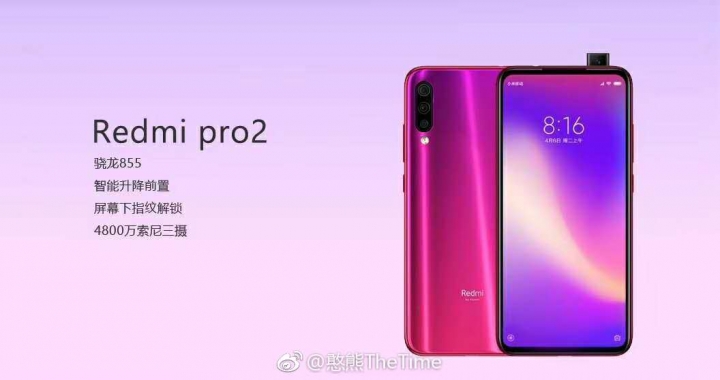
This all, however, is about to change. According to leak courtesy of Weibo, the poster for Redmi’s upcoming smartphone has leaked out showing what seems to be a successor to the Redmi Pro, the Redmi Pro 2. The leaks also reveal the basic internals of the phone and show that the phone would be powered by a Snapdragon 855 SoC with a pop-up selfie camera. Moreover, the phone is equipped with a triple camera setup with the main sensor being a 48 MP sensor. As for the miscellaneous features of the phone, leaks suggest that the phone would keep the headphone jack and would feature an under display fingerprint sensor.

While the phone does look very high end considering the specifications, it really defeats the standpoint of the Redmi brand. With most of Redmi devices targetting the budget smartphone market while Mi phones cover a more premium market things are definitely going to be interesting. The pop up camera feature is unarguably the most astonishing especially in a budget device. Having a pop up camera would mean that the phone offers a seamless front display with no sort of notch or hole punch.

Although the pop up feature is pretty dated and was first introduced last year, having such a feature would still offer a sound experience especially if Redmi does not compromise on the pricing of the phone. In a world where Xiaomi’s Mi MiX lineup strives to minimize the bezels of a modern smartphone, having a pop-up camera would definitely stir the market for completely bezel-less phones.

Having so many different independent sub brands could prove fatal for Xiaomi and could potentially backfire if their products start to go up against each other. Recent leaks though suggest that Redmi plans on taking over and becoming a completely seperate entity anyhow.

Fortnite’s Reboot Vans Are Finally Alive – Revives And Brings Your Squad Back To Life

The folks over at Epic have finally revealed what the number of mysterious vans have been doing over the past few weeks. In an update posted by the folks over at Epic Games, the studio has confirmed that the reboot vans are actually something functional.

The vans scattered across the Battle Island are dubbed as the Reboot Vans. These Battle Islands would allow players to bring back their eliminated squad members back to life, one at a time. However, it wouldn’t be as simple as bring back your squadmates back to life. In typical fashion, Epic has added a number of balancing features to the addition.

To bring your friends or team mates back to life, you would require a device called the Reboot card. With the help of the reboot card, you would be able to revive the teammate who had dropped the reboot card in the first place after being eliminated. Folks would then have to take the cards to the reboot vans scattered across the maps to bring back their squadmates back into action.

While you revive your teammates, these vans would give off audio cues as well as a few visual cues such as beacons to surrounding players, notifying the revival of your teammates. Once you do revive all of your team mates, the van would be unusable for a certain period of time before being usable again by other squads or players.

The Reboot Van is expected to arrive to the game in the next Fortnite update, next week. Hopefully, we’ll be able to see some incredible changes to the overall gameplay dynamics of the game with the addition of the Reboot Van.

Samsung Electronics Discloses Q1 2019 Sales Report – Operating Profits Down By 60% Over Last Year

0

Samsung Electronics has just disclosed its earnings for Q1 2019 and the results are unexpected to say the least. The Korean tech giant has been making subtle efforts to retain the top spot in global rankings and has managed to stay on top for quite some time. Despite hardened competiton from Chinese manufacturers, Samsung has improvised its products and delivered amazingly.

The Q1 2019 sales report is live and it shows the sales conducted throughout the first three months of the year along with the operating profits which were obtained from those sales. The statistics show that Samsung earned a consistent 52 trillion KRW equivalent to around 45.7 billion USD. While the operation profits were calculated at 6.2 trillion KRW or roughly 5.4 billion USD.

Compare that with previous sales and questions start to rise as to what the manufacturer been up to lately. The release of new Samsung products ensured the security of the revenue generated yet the numbers have been going downhill ever since. As for the mobile division, the Galaxy S10 could not save the company from declining and the stats, when compared to Q4 2018 results, paint an obsolete picture. Samsung in Q4 2018 earned roughly 59.27 trillion in sales with operating profits of around 10.80 trillion. Compare this with this year’s results and we start to see a heavy decline in sales and profits altogether.

Now, many would argue the fact that having the end of the year is compared to the start of a new year isn’t really an eye for an eye but the struggle is clear when Q1 2018 sales outdo this year’s sales. 2018 was considered to be a year for Chinese brands and young companies and proved fatal for Samsung. With the revelation of newer, updated and more innovative products enthusiasts had hopes that the company would stand back up and come in stronger than ever. As a matter of fact, Q1 2018 showed 60.56 trillion KRW in sales with operating profits of 15.64 trillion KRW. That is roughly a 14% decline over the course of the year in sales and a 60% decline in operating profits.

Considering the fact that Samsung heavily relies on hardware manufacturing and sales, prices for basic hardware parts have gone down ever since. For Samsung to regain ground, it must bring something new to the table. Something new to offer, with more innovation than ever.

Press Renders For Motorola’s Next Flagship Surface – Show An Unearthly Rear Camera Setup

0

Motorola has been climbing its way up the smartphone market and has brought innovation to the general smartphone market. Recently the manufacturer operated its first ever 5G module launch in the U.S which apparently sticks to the Moto devices through the magnetic pins provided in the back.

Courtesy of folks over at Cashkaro, the latest project by Motorola has finally surfaced. While not much about the internals of the phone is yet known but the high quality renders do show a high-end premium device set to release this year. One of the striking features of the device is the fact that it hosts a four-camera setup at the back with an overall similar design as the previous Moto devices.

The device holds a huge rectangular protrusion in the middle of the device where the four cameras are situated which seems quite weird to say the least. The design language here seems a lot similar to what Apple’s iPhone XI has in store and is turning out to be a trend. While not much is known about the device, one thing is sure and that is its thickness. The phone comes in at 9.8 mm including the camera bump and surprisingly still has the headphone jack.

As we move to the front of the device we notice a teardrop notch very similar to the Huawei P30 and P30 Pro. In a world where punch hole displays are a thing, Motorola has opted for a more traditional yet outdated notch for their upcoming flagship. The overall bezels of the phone are quite thin and the back of the device seems to be made up of metal instead of glass with a brushed texture. The general geometry of the device is very true to its ancestors except the rear camera of course.

In terms of camera diversity, our speculation would be that Motorola would offer a standard lens with ordinary focal length, a wide angle lens, a telephoto lens and a depth sensor. While literally no information about the device is known to start from its name to its specifications apart from its press renders and that those renders are from a trusted source.

iPhone XI’s Protruding Triple Camera Further Verified By Leaks

0

The yearly iPhone update is undoubtedly the most awaited each year especially in the odd years since Apple introduces a completely new form factor of their iPhone. While the manufacturer is praised for its secrecy and quality control, having a trillion dollar company is not easy. Some information is bound to leak and expecting everything to go according to plan is inevitable.

Source: Venya Geskin

Unlike Android smartphone leaks there’s not really a grade to believe the leaks or to rank them for their accuracy yet a couple of leaks have been circling the internet since January 2019 and it seems that they may actually be of some use. The above image has been thrown around quite a lot recently and shows the iPhone XI hosting a triple camera set up at the back. While this design may seem to be a little too unbelievable, every trusted source has presented the same model for the upcoming iPhone. Instead of a traditional orientation of the three cameras, Apple has gone for a very unique and interesting design.

Apple itself isn’t really considered the gold standard when it comes down to geometrical feats and the manufacturer has taken questionable steps in that department. The leak also shows that the triple camera set up along with the dual tone flash would be housed under the “Sapphire” glass which Apple likes to brag about. Now, many of you may think that the month is April and nothing could be trusted but this leak is further confirmed by a leaked frame panel of the iPhone on Weibo.

The frame clearly shows that the three cameras would, in fact, be placed in a fidget spinner orientation. This poses a very bizarre design not only by the looks but having such a huge protruding portion of the phone is just not acceptable. Enthusiasts barely let manufacturers get away with a camera bump and Apple here wants a huge rectangular bump on their phones.

The frame also shows a massive hole for the wireless charging coil which Apple introduced in its iPhones earlier. A bigger coil would mean that Apple could add faster wireless charging in its upcoming devices. The iPhone is expected to go live later this year and while only a few months remain for Apple to unveil their new products, hopes are being shattered for a geometrically sound iPhone.

Fortnite Stretched Resolution Banned – Epic Games Continues Controversial Changes

Epic Games couldn’t have enough of making controversial changes to Fortnite. The latest change comes from a single paragraph from the latest Fortnite update blog.

Epic has announced that they would be banning custom resolutions moving forward. However, it isn’t as simple as it reads. Epic has announced that these changes would be made for the upcoming tournament where none of the players would be able to play in custom resolutions but would be forced to play on their native 16:9 resolutions.

In the near future, we will be updating how we handle custom resolutions on PC. When using a custom resolution, vertical FOV will be locked. Horizontal FOV will be unlocked in all modes, but in competitive playlists (e.g. Arena and in-game tournaments) we will be locking the aspect ratio to 16:9.

Epic Games in their latest competitive blog post update.

The update is going to make its way later to the rest of the PC players where folks would be able to play stretched, but would not be able to enjoy the vertical FOV advantage they once had. However, Epic is expected to add custom FOV sliders to the game to increase your FOV is that’s something that you crave for.

Pro Fortnite players and streamers are finding themselves in a horrid position as the upcoming Fortnite World Cup looms around the corner. Professional Fortnite players have been playing on these custom resolutions for quite a while and have become accustomed to the feel of the resolution, leaving many to be concerned how this would affect their performance at the upcoming tournament.

If taking advantage of the vertical FOV is Epic’s concern of banning the resolutions, we hope they could add an option that allows players to choose where their character is on the display. Unlike CS:GO, another popular title where players often play stretched, Fortnite’s 3rd-player view forces the in-game character in the middle of the display rather than on the right or left. Fortnite’s closest rival, PUBG has made these changes in the past as well and has instead offered an excellent section of options to compensate for the changes, allowing players to have their character on the right or left side of the display.

Oppo Reno Specifications Leaked – Oppo’s 2019 10x Zoom Flagship On The Horizon

0

Folks can’t get enough of Oppo’s new Reno smartphone. As we move deeper into April, leaks regarding the Oppo Reno have been emerging following the render leaks earlier this week. The new leak suggests the specifications of the new Oppo Reno, teasing what we could expect from the upcoming Oppo-branded behemoth.

Courtesy of Ishan Agarwal, the Oppo Reno is said to pack a Snadragon 855 SoC, 8GB RAM, 256GB of internal storage, an OLED display featuring a 93.1% screen-to-body ratio, and a rather behemoth size to go along with it. According to the leak, the Oppo Reno would be about 215g light and would be as thick as 9.3mm. Unfortunately, specifications regarding the cameras haven’t been leaked, but by the looks of it, it seems like the Reno may actually come in more than one variant.

Renders published yesterday of the Oppo Reno revealed what seemed to be of the alleged Oppo Reno featuring a dual-camera setup on its rear. However, new leaks and teasers have been suggesting the inclusion of a third box-shaped camera that would most probably be accommodating the 10x optical zoom camera.

So far, what we can do is speculate about the device. However, given how thick the device is and how heavy the device is, it would most probably come with a large battery not only to keep up with the competition but also to justify the thickness of the device. Let’s hope its 5000mAh. You know, you should hope for the best, right?

Regarding what the Oppo Reno may be called in the end is yet to be seen. However, if the Oppo Reno ends up coming in a number of variants, this could most probably signal the launch of a flagship-oriented lineup from Oppo, ditching the Find series.

Oppo is expected to reveal the Oppo Reno next week on Wednesday, April the 10th. OnePlus 7, anyone?

PUBG Mobile Continues To Dominate Over Fortnite – Records March As The Best Month Ever

0

While Fortnite may be dominating on PCs and gaming consoles, Epic Games hasn’t managed carry over the same hype over to the folks on mobile. Reports have emerged suggesting some incredible details regarding PUBG’s success over on the mobile side of things, suggesting a shift in the emotions mobile players experience over these two games.

The latest report comes from the folks over at Sensor Tower who have just released some major sales numbers regarding PUBG Mobile and how it has been glimmering over the smartphone gaming market. According to the details published by the smartphone research firm, PUBG managed to make March 2019 its best month in its history, with an increase of 83% in gross sales compared to the month prior.

Additional details provided by the report reported on the iOS side of things exclusively. According to the firm, the influx in March 2019 was 81% higher than the $36 Million folks spent on Fortnite last month. Furthermore, the report suggests that the closest both of the rival titles game to each another in terms of gross sales was in February with PUBG taking the lead by about 29% over Epic’s Fortnite.

It’s clear where PUBG mobile is heading. And while PUBG may not be as popular of the title on the PC and console side of things right now, the folks over at Tencent are making sure the money continues to roll in from the mobile side of things.

Whether PUBG Mobile would continue to dominate the platform for the months to come is yet to be seen. However, given how dominant the game has been on mobile, it may be suggesting the fact that mobile players are not open to the complex and cartoon-like mechanics of Fortnite.

Nokia’s 8.1 Plus Screen Protector Leak Confirms The Punch Hole Display

0

Just yesterday, the user manual for the Nokia 8.1 Plus surfaced and what was thought to be a premature leak turned out to be a decent find. Nokia’s smartphone game is on another level at this point in time. The manufacturer is silently targetting the rough edges in our modern smartphone design and providing a sound smartphone experience.

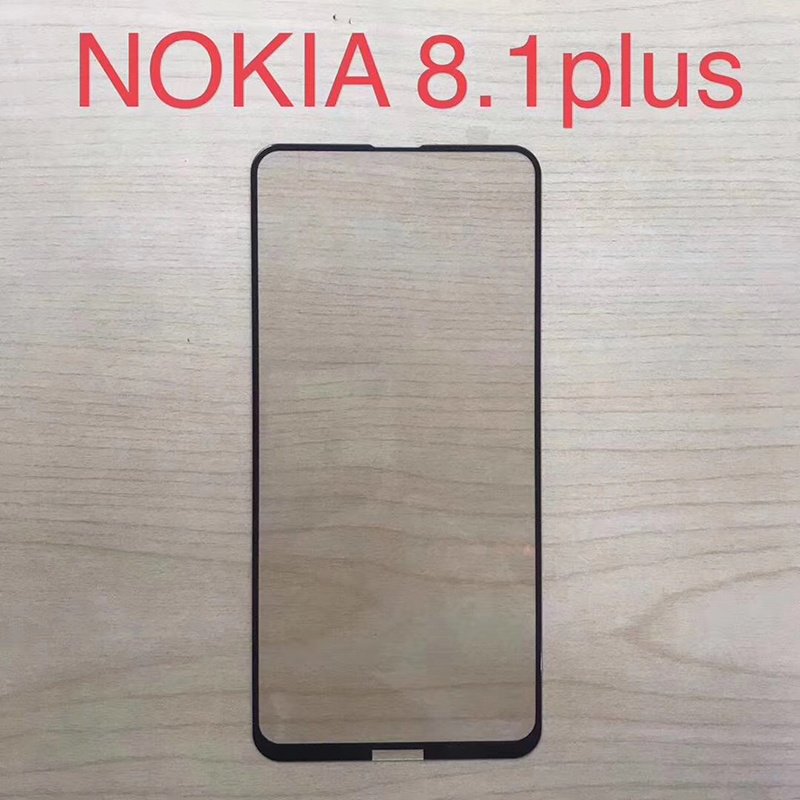
Today, courtesy of a credible tipster the front screen protector of the Nokia 8.1 Plus has leaked out. Considering the fact that Nokia just unveiled its fleet of devices for 2019 led by the infamous Nokia 9 with an astonishing 5 camera set up at the back, recent leaks suggest that the Nokia 8.1 Plus could be right around the corner.

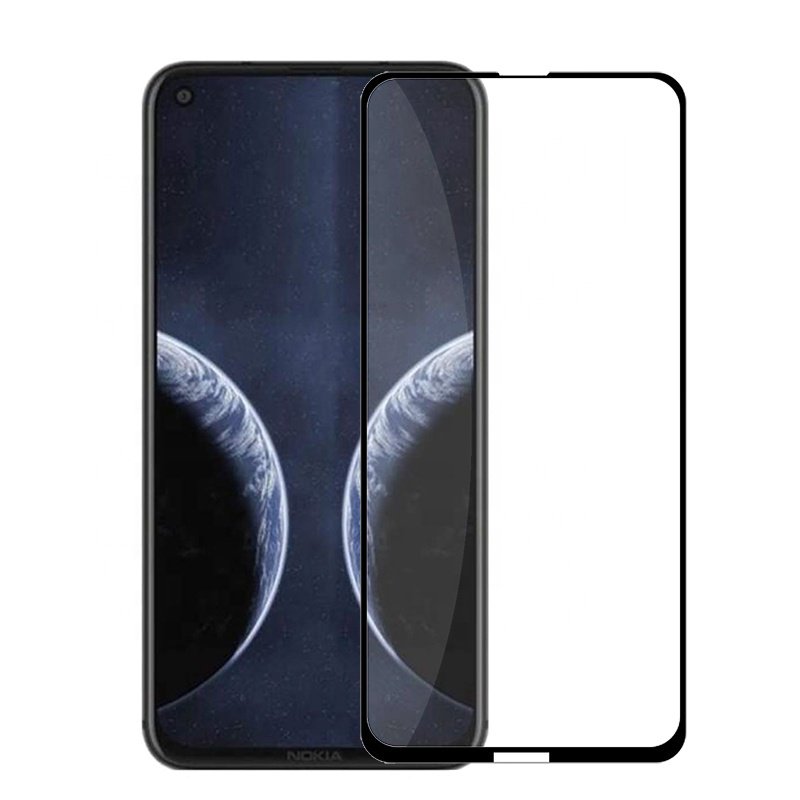
The leaked screen protector not only confirms the previous surfaced leaks but also matches the exact renders of the phone. While the exact internal specifications of the phone are unknown, one thing is certain that the phone would aim for the upper mid-range market. Taking a look at Samsung’s newly unveiled Galaxy A series it is certain that the Nokia 8.1 would prove to be a valid competitor.

The Punch hole design has come a long way and if Nokia somehow manages to offer a punch hole display with an accessible price point then there could be a lot of potentials. While the technology is still pretty new and considered premium, Nokia could normalize it just like the notch but only time will tell.

With Chinese manufacturers on top of their game especially the Redmi brand and the Honor brand taking control of the mid-range and budget market almost completely. Nokia would have to bring in something new to the table just so that it could stack up against the Chinese. Although the Nokia phones do bring in innovation in various parts of the device and have genuine selling points they would still have to out do themselves to make their place in the Asian markets atleast.

Oppo Reno Gets Its Official Renders Leaked – Its Beautiful!

0

Oppo’s next flagship, dubbed as Reno, has been receiving a ton of attention lately. As Chinese brands battle out for the top spot, Oppo has announced its take on major breakthroughs by announcing that the Oppo Reno would feature 10x optical zoom on the back of the device.

Oppo Reno Renders Leak The Device’s Unique Design In Its Entirety

And while Oppo hasn’t been very specific regarding the details we could expect from the Reno, we could be looking at a potential flagship from Oppo to compete with the big guns of 2019. Renders courtesy of Ishan Agarwal via an unnamed Chinese commerce site emerged a while ago, leaking the design of the Oppo Reno in its entirety.

The renders reveal what seem to be a unique-looking device from the front and back, as well as a full-view display, lacking a notch up front in typical Oppo/Vivo fashion. Furthermore, the renders reveal some incredible color options that would be coming with the Oppo Reno with gradient-colored backs.

If the Oppo Reno is one of Oppo’s flagships for 2019, it would be incredible to see where Oppo moves forward, especially considering that the Oppo Find X lineup from last year seemed to be resurrecting Oppo’s inner-beast. The Oppo Reno would most probably feature the latest and greatest Snapdragon 855 SoC, around 8GB of memory, 256GB/512GB of internal storage, about a 4000mAh battery with Oppo’s in-house fast-charging technologies, and a whole lot more.

As the competition continues to heat up, it seems like Oppo’s Reno would be the device that would compete directly against Huawei’s P30 Pro that features 50x zoom and crazy low-light improvements. However, we’re particularly interested to see if Oppo takes that 10x zoom to the next level given that its optically zoomed at 10x rather than the 5x zoom on the P30 Pro.

Pricing so far hasn’t been leaked, although, given the bragging power Oppo currently has with the Oppo Reno, we wouldn’t be surprised to see if Oppo slaps the Oppo Reno with a $1000 price tag.

Iron Man VR On The PS4 Looks Mesmerizing – Offers Realistic Physics, Graphics & Much More

0

PS VR has been on a gaming spree with Sony focussing more on the platform than ever before. The PS VR has gradually matured among competitors like the Oculus Rift and the HTC Vive and Sony’s gameplan for the peripheral is undoubtedly bright. With more and more titles being released for the headset Marvel’s Iron Man VR is one of the upcoming titles.

The title brings an immersive Iron Man experience to live for both VR and Marvel fans to cheer. Sid Shuman, the Director of Social Media, PlayStation got the chance to spend 30 minutes with the game and shared quite a few shots of the gameplay. While the game itself looks immersive, amazing and Marvel fans would purchase it anyway but we have to give credit to the developers since they’ve brought a classic comic book character to life.

The game is one of the few titles for titles to mimic the exact feeling of the character being played and Iron Man VR does exactly that but better. The physics and mechanics of the game are fluent and consistent as the demo shows. Let’s be real, every comic book fan at least once in his life has pretended to be Iron Man in front of a mirror, haven’t we? Well, this is for the adult babies to relive their childhood and dive right into the highly sophisticated Iron Man action.

Kudos to the developers on bringing in such innovation to the PS VR. It is PlayStation’s game library which would make it lead the VR race. The title is expected to release later this year and after a few gameplay samples, looks amazing and we expect Sony to deliver more titles of the sort. Here’s the official launch trailer of the game.

Nokia 8.1 Plus User Manual Leaked – Early Leaks Surface

0

Nokia is on a smartphone spree as 2019 takes HMD Global to the top with a new fleet of updated Nokia devices ready for consumers. Nokia just a couple of months ago revealed the Nokia 8.1 with immense potential and an amazing set of features targetting the upper mid-range market. While not much time has passed ever since its release, new rumours regarding the Nokia 8.1 Plus have already started to surface.

Today, we’ve uncovered the leaked user manual of Nokia’s 8.1 Plus which went live on Nokia’s official website and was then immediately removed. Kudos to whoever pointed out and posted it on Reddit. The manual itself reveals quite a few details about the device, its design and basic geometric features.

Right off the first image, we see the front and back of the device. The front consists of a punch hole design display which has been the trend lately. The Nokia 8.1 offered a notched design and this punch hole design definitely seems like an upgrade. Moreover, the device is pretty sleek with an overall edge to edge display. As for the back of the device, the Nokia 8.1 Plus is most likely to host a triple camera setup. Our speculation would suggest that Nokia here would opt for a standard primary shooter with an ultra wide angle lens along with a depth-sensing sensor but Nokia is known to have its ways as we’ve uncovered in the Nokia 9.

As we move towards the sides of the phone, we notice the fact that the phone would, in fact, support dual SIM Cards or a single SIM Card paired with a Micro SD Card. This shows that the 8.1 Plus would not cease expandable storage capacity like various other smartphones and would provide support for expandable storage cards. Moreover, the phone seems to feature an under display fingerprint sensor. Now, considering how the Nokia 9 failed miserably when it came down to biometric security we would expect Nokia to step up and offer a more sound, accurate and quick sensor. While ultrasonic sensors are already a thing, it is highly unlikely that Nokia would ship its budget variant with a better fingerprint sensor than its successor, the Nokia 9.

While these may be very early predictions for the Nokia 8.1 Plus we can’t rule out the possibility of them being correct. Nokia’s smartphone game has been on point and we expect them to step up and outperform competitors in the mid-range market. However, we do advise to take these with a pinch of salt just in case.

Samsung Announces The Galaxy S10 5G – Launches April 5th In Korea

0

The Galaxy S10 has been around for quite a few weeks now and the phone is phenomenal. The device caught the attention of every tech geek and is undoubtedly the most hyped up device of 2019. Apart from all the S10s Samsung did announce the Galaxy S10 5G to be released later this year. The 5G variant upon announcement gained a ton of exposure and thence became the most awaited smartphone of the year. Today Samsung has finally revealed the Galaxy S10 5G and it is everything you would expect.

A Technical Overhaul Over The Previous Galaxy S10s

The S10 5G not only brings hardware enhancements but also marks to be the first ever 5G device to be released publicly. While following the footprints of the S10, the S10 5G not only supports 5G but also brings in major technical improvements over the already great Galaxy S10 devices. The display of the phone, for instance, is a massive 6.7 inch AMOLED panel with Quad HD+ resolution. The phone does in fact house the same dual front cameras like the Galaxy S10+. The S10 5G also now features a massive 4500 mAh battery which would mean that the phone would last a lot longer than previous S10s. Moreover, rumours are confirmed that the S10 5G would for the first time support 25W quick charge.

As for the camera department, the phone houses a total of 6 cameras which means that users would be able to enjoy every sort of gimmick a modern phone has to provide. The phone offers a wide angle, a 12MP telephoto lens with a 16MP ultrawide lens and an optical zoom lens (0.5X/2X optical zoom) with a depth sensor. While the phone does host immense potential it would be interesting to see how the quad camera setup plays out for Samsung. Since all eyes are on Samsung since the exceptional performance of the Huawei P30 Pro in the camera department. Here is run down on the specifications of the phone.

ModelSamsung Galaxy S10ESamsung Galaxy S10Samsung Galaxy S10 PlusSamsung Galaxy S10 5G
Size/Display5.8-inch, Full HD+ Flat Dynamic AMOLED, 19:9 (438ppi) 6.1-inch Quad HD+ Curved Dynamic AMOLED, 19:9 (550ppi)6.4-inch Quad HD+ Curved Dynamic AMOLED, 19:9 (522ppi)6.7-inch Quad HD+ Curved Dynamic AMOLED, 19:9 (505ppi)
ProcessorQualcomm Snapdragon 855 / Samsung Exynos 9820Qualcomm Snapdragon 855 / Samsung Exynos 9820Qualcomm Snapdragon 855 / Samsung Exynos 9820Qualcomm Snapdragon 855 / Samsung Exynos 9820
Storage6GB/8GB RAM (LPDDR4X), 128GB/256GB
+ MicroSD slot (up to 512GB)
8GB RAM (LPDDR4X), 128GB/512GB
+ MicroSD slot (up to 512GB)
8GB/12GB RAM (LPDDR4X), 128GB/512GB/1TB
+ MicroSD slot (up to 512GB)
8GB + 256GB
(No MicroSD)
Battery3100mAh3400mAh4100mAh4,500mAh
CamerasRear: Dual Camera with OIS
– Wide-angle: 12MP Super Speed Dual Pixel AF, F1.5/F2.4, OIS (77°)
– Ultra Wide: 16MP FF, F2.2 (123°)
– 0.5X optical zoom, up to 8X digital zoomFront:
– Selfie: 10MP Dual Pixel AF, F1.9 (80°)
Rear: Triple Camera with Dual OIS
– Telephoto: 12MP PDAF, F2.4, OIS (45°)
– Wide-angle: 12MP Super Speed Dual Pixel AF, F1.5/F2.4, OIS (77°)
– Ultra Wide: 16MP FF, F2.2 (123°)
– 0.5X/2X optical zoom, up to 10X digital zoomFront:
– Selfie: 10MP Dual Pixel AF, F1.9 (80°)
Rear: Triple Camera with Dual OIS
– Telephoto: 12MP PDAF, F2.4, OIS (45°)
– Wide-angle: 12MP Super Speed Dual Pixel AF, F1.5/F2.4, OIS (77°)
– Ultra Wide: 16MP FF, F2.2 (123°)
– 0.5X/2X optical zoom, up to 10X digital zoomFront: Dual Camera
– Selfie: 10MP Dual Pixel AF, F1.9 (80°)
– RGB Depth: 8MP FF, F2.2 (90°)
Rear: Quadruple Camera with Dual OIS
– Telephoto: 12MP PDAF, F2.4, OIS (45°)
– Wide-angle: 12MP Super Speed Dual Pixel AF, F1.5/F2.4, OIS (77°)
– Ultra Wide: 16MP FF, F2.2 (123°)
– 0.5X/2X optical zoom, up to 10X digital zoom
– 3D Depth: hQVGA


Front:
– Selfie: 10MP Dual Pixel AF, F1.9 (80°)
– 3D Depth: hQVGA
Extra FeaturesIP68, Wireless Fast Charging 2.0, One UIIP68, Wireless Fast Charging 2.0, One UIIP68, Wireless Fast Charging 2.0, One UIIP68, Wireless Fast Charging 2.0, One UI
ColorsPrism White, Prism Green, Prism Black, Canary YellowPrism White, Prism Green, Prism BlackPrism White, Prism Green, Prism Black | Ceramic Black, Ceramic White ( Exclusive for 12GB/1TB varaint)Prism White, Prism Green, Prism Black
NetworkEnhanced 4×4 MIMO, Up to 7CA, LAA, LTE Cat.20
– 2.0Gbps download, 150Mbps Upload*May differ by market and mobile operator.
Enhanced 4×4 MIMO, Up to 7CA, LAA, LTE Cat.20
– 2.0Gbps download, 150Mbps Upload*May differ by market and mobile operator.
Enhanced 4×4 MIMO, Up to 7CA, LAA, LTE Cat.20
– 2.0Gbps download, 150Mbps Upload*May differ by market and mobile operator.
Enhanced 4×4 MIMO, Up to 7CA, LAA, LTE Cat.20
– 2.0Gbps download, 150Mbps Upload + None Standalone (NSA), Sub6 / mmWave (28G, 39G)
ConnectivityWi-Fi 802.11 a/ b/ g/ n/ ac/ ax (2.4/5GHz), VHT80 MU-MIMO, 1024QAM
– 1.2Gbps Download / 1.2Gbps Upload
*May differ by market and mobile operator.
Bluetooth® v 5.0, ANT+, USB Type-C, NFC, Location (GPS, Galileo*, Glonass, BeiDou*)
Wi-Fi 802.11 a/ b/ g/ n/ ac/ ax (2.4/5GHz), VHT80 MU-MIMO, 1024QAM
– 1.2Gbps Download / 1.2Gbps Upload
*May differ by market and mobile operator.
Bluetooth® v 5.0, ANT+, USB Type-C, NFC, Location (GPS, Galileo*, Glonass, BeiDou*)
Wi-Fi 802.11 a/ b/ g/ n/ ac/ ax (2.4/5GHz), VHT80 MU-MIMO, 1024QAM
– 1.2Gbps Download / 1.2Gbps Upload
*May differ by market and mobile operator.
Bluetooth® v 5.0, ANT+, USB Type-C, NFC, Location (GPS, Galileo*, Glonass, BeiDou*)
Wi-Fi 802.11 a/ b/ g/ n/ ac/ ax (2.4/5GHz), VHT80 MU-MIMO, 1024QAM
– 1.2Gbps Download / 1.2Gbps Upload
*May differ by market and mobile operator.
Bluetooth® v 5.0, ANT+, USB Type-C, NFC, Location (GPS, Galileo*, Glonass, BeiDou*)

Harness The Power Of 5G To The Fullest With The Galaxy S10 5G

The phone offers quite a lot of improvements over the previous S10s and would set a new standard for premium devices throughout 2019. As for the device’s 5G capabilities, the S10 5G matches unrivalled power and brings 5G technology to the hands of consumers which then holds immense power for good and innovation. With extreme speeds almost 20 times faster than 5G, Samsung plans on setting a network throughout Korea to transform the way communications work and to transform modern entertainment, business and communication.

Pricing & Availability

As for the rest of the device, the S10 5G hosts the exact same chipset as the rest of the S10s and performs almost the same with major differences in battery life. The Samsung Galaxy S10 5G will be available for purchase in Korea starting April 5, 2019. The phone would be available in Majestic Black, Royal Gold, Crown Silver colours for enthusiasts. The phone is to make its way into various other markets later this year and would most likely hit US markets sooner than later.

Being the first to host 5G capabilities, the S10 5G would target a new breed of market and consumers with the motto of speed and power to the consumers. This would not only make Samsung corner the markets but would also bring in some serious revenue for Samsung.

YouTube Has To Key To Explode The 120Hz / 144Hz High-Refresh Rate Market

YouTube is the world’s largest video streaming platform. Being the home to the world’s biggest video creators and companies alike, YouTube has the power to revolutionize and lead the future of media consumption.

YouTube had some of the most humble beginnings, with most of the users using the site to store their videos on. After being bought out by Google, from the original three co-creators, Google made some massive changes to how the site works. And while we don’t want to go over the algorithm changes that went in effect well into its life cycle, these algorithm changes allowed some of the very best content creators to emerge, beginning the channel revolution that allowed viewers to subscribe to their favorite content creators.

Among the diverse community of creators on YouTube that had become the backbone of YouTube had to be the gaming community. With the likes of PewDiePie and others leading the revolution, Let’s Plays, montages, walkthroughs, challenges, and many other takes on gaming have taken gaming enthusiasts by storm.

However, there’s no doubt that there’s always the urge for more as soon as we get over a hurdle. One of the main things holding back the experience for many content creators and viewers are the technical video limitations on YouTube. And while 8K videos are your gateway to crispy heaven, there’s another limitation Google could lift off of its platform that would yet again, take gamers by storm – and that’s enabling at least 120 FPS video on its platform. Just have a look at one of the earliest, yet crispiest 8K videos on YouTube.

Flat displays over the past decade have been limited to 60Hz. However, the competitive gaming community has seen the likes of 240Hz monitors in recent years. As computing power goes hand-in-hand with these new monitors, gamers can finally experience what it feels to surpass the 60 FPS barrier feels like. Currently, there is no platform that supports anything above 60FPS at this moment. However, the massive demand for such displays could simply be taps away for the folks over at YouTube. After all, if they could stream full fledged games with the help of Stadia, anything is possible!

The applications for such massive improvements are unlimited. Reports have suggested that the demand for high-refresh-rate displays is exploding, especially for gamers who care about it the most. From gameplay to excellent slo-mo videos. It would enable a new dynamic for creators to work with, especially with folks who have the means to drive such content. Not only would it be incredible for creators to immerse themselves into, but it would also immerse the viewers just the way how they feel in-game.

Smartphones like the Razer Phone 2 with its 120Hz display and other devices would follow suite to cater the needs of gamers and folks who come to enjoy such smooth content. And while 60FPS isn’t for everyone and isn’t the best frame rate for all types of content, it sure could be appreciated in a ton of applications.

Given how accessible high-refresh-rate displays have become, it’s only a matter of time before high-refresh rate displays become the norm. If it does, we would be keen to see how much of an impact YouTube’s changes would make for the market. The question is, is Google ready to dive head on?

Huawei P30 Pro’s Incredible Cameras Have Put Its Rivals In A Do Or Die Situation

Huawei’s smartphone game is on point as April 2019 begins. The smartphone has already launched its flagship phone to compete with upcoming devices and oh boy, the phone has some serious power. Despite having inferior performance as compared to its direct competitor, the Kirin 980 does a good job on keeping the P30 Pro on its feet.

One of the highlights of the phone was its camera department and the phone performs exceptionally well when it comes to photography. With a total of 4 rear-facing cameras, Huawei has done some serious innovation to the already great camera department of smartphones. The Huawei P30 Pro easily beats its competition without breaking a sweat and performs phenomenally in low light situations.

The new RYYB technology seems to play in favour of Huawei and the phone beats every other smartphone you bring to it without an issue. Images taken in low light situations retain their sharpness and the phone does not allow any sort of grain to get in the way. While the sensor on the P30 Pro does lack when it comes to image processing yet the wide array of sensors compensate for all the drawbacks of the device.

More than a few devices have been released this year, most noticeably the Galaxy S10, Nokia 9 and not to mention the Xiaomi Mi 9. Apparently, the P30 Pro outperforms every single device in overall performance and it just shows how Huawei has oriented itself amongst such intense competition. Huawei just last year overtook Apple to become the 2nd best selling smartphone brand worldwide just below Samsung. Considering Huawei’s pace it wouldnt take them long to start hitting on Samsung.

As a matter of fact, Huawei devices have actually been outperforming Samsung mid rangers yet the Korean tech giant still leads. For other manufacturers to compete in this market they would definitely have to step up their camera game and would most certainly want to overtake a brand like Huawei which out of nowhere has come on top. As time progresses so does technology and innovation and we’d expect major smartphone brands to take it up a notch and bring something new to the table.

The Nokia 9 is the only phone that comes close to the P30 Pro when it comes to low light photography. The phone offers a quality camera experience and houses an interesting set of cameras yet it lags behind when it comes to AI and image processing. The P30 Pro in this matter performs desirably and produces quality results.

It is clear that modern smartphones need a makeover in their camera departments and it just amazes me how a brand like Huawei has come this far giving tough time to old-timers like Samsung and Apple. Here are some camera samples courtesy of Vlad Savov.