NASA has now proven the existence of more than 5,000 planets outside our solar system, which is “just a fraction” of the hundreds of billions of planets in our galaxy.
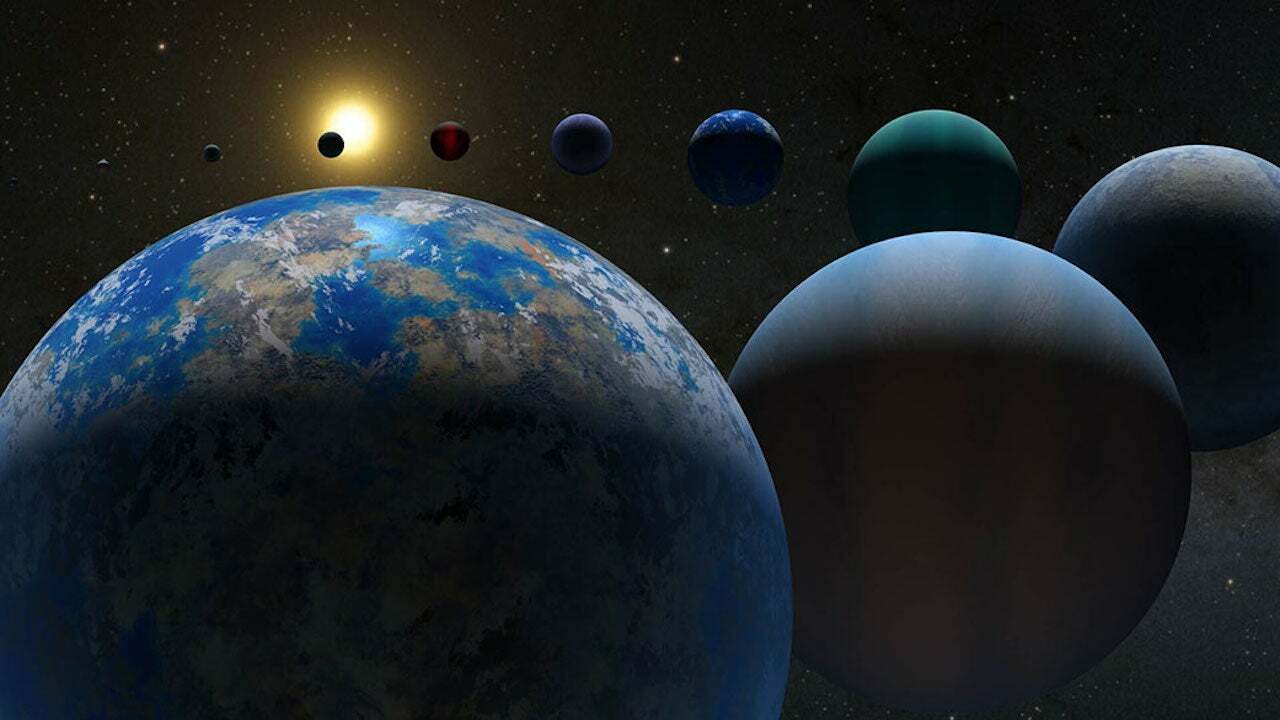
On March 21, NASA has officially added 65 new planets to its Exoplanet Archive, raising the total number of proven, detectable planets outside our solar system to over 5,000 – with 35% of these planets classified as Neptune-like, 31 percent as “super-Earths,” 30 percent as gas giants, and only 4 percent terrestrial.
READ MORE: Within a decade, China intends to offer its Tiangong space station for tourism.
The percentages indicate the many planets identified thus far, some of which are comparable to those in our solar system and others that are very different.
There are “small, rocky worlds like Earth, gas giants many times larger than Jupiter, and hot Jupiters,” as well as “super-Earths, which are potentially larger rocky worlds than our own, and mini-Neptunes.”
In a statement accompanying the news, Jessie Christiansen, science lead for the archive and a research scientist at the NASA Exoplanet Science Institute at Caltech in Pasadena, said, “It’s not just a number.” “Each one is a brand-new world, a brand-new planet. I’m intrigued by each one since we don’t know anything about them.”
The Jet Propulsion Laboratory released a film to commemorate the cosmic achievement, which was primarily accomplished through the use of powerful telescopes both in space and on Earth.
The first proven planetary finding was made in the 1990s by astronomer Alexander Wolszczan and his colleagues, who released a study demonstrating the existence of two planets around a pulsar.
“To my mind, it is unavoidable that we will find some kind of life somewhere–most likely of a primitive kind,” Wolszczan said, noting that the “close relationship between the chemistry of life on Earth and chemistry found across the cosmos, as well as the identification of ubiquitous organic compounds, implies that the detection of life itself is simply a question of time.”
Thousands of planets were discovered with NASA’s Kepler Space Telescope, and there are possibly hundreds of billions more to be discovered with next-generation sensors. The James Webb Space Telescope was just launched to help with studies into habitable circumstances, while the Nancy Grace Roman Space Telescope is set to launch in 2027.
Previously, astronomers identified 139 new “minor planets” in our solar system’s farthest reaches, barely beyond Neptune’s orbit.
A free-floating world without a host star, a “hell planet” that is curiously reminiscent of Darth Vader’s molten homeworld of Mustafar, and a Super-Earth that is nearly as ancient as the universe itself may all be found amid the wide expanse of the galaxy.
For more latest updates visit here www.geeksultd.com