The numbers tell one story—$49 versus roughly $150 for the same four-week supply of a weight-loss medicine—but the lawsuit filed Monday in Delaware federal court hints at a much deeper tension inside the $100-billion global market for obesity drugs. Novo Nordisk, whose market value has ballooned on the back of its blockbuster injections Ozempic and Wegovy, now wants a federal judge to declare that Hims & Hers Health Inc. is illegally peddling “untested knock-offs” built around the same active ingredient, semaglutide. The move is unprecedented: it is the first time the Danish pharmaceutical giant has sued anyone in the United States for compounding its crown-jewel molecule, and it arrives only four days after Hims voluntarily shelved the $49 pill that triggered the dispute.
Why sue after the product has already been pulled? How did a tele-health upstart once courted by Novo as a retail partner become its public-enemy No. 1? And what does the scuffle reveal about the fault lines running through America’s patchwork system of drug access, affordability, and safety? The answers to those questions could shape how patients get weight-loss medicines for years to come.
From Ally to Adversary in One Year
Industry observers could be forgiven for experiencing déjà vu. Hims and Novo quietly ended a distribution partnership in late 2022, people familiar with the matter say, after months of pilot programs in which Hims prescribed and shipped legitimate Wegovy to patients. The break-up occurred just as supply shortages of the injectable drug were making national headlines and tele-health platforms were scrambling to secure inventory. Insiders describe the split as “amicable but strategic,” with Novo preferring to prioritize its bricks-and-mortar pharmacy network while Hims hunted for ways to keep pace with mushrooming demand.
Fast-forward fourteen months. Hims announced on 3 February that it would compound its own oral semaglutide, priced at $49 for an introductory month, then roughly $99 thereafter. The firm touted “FDA-registered outsourcing facilities” and medical guidelines that allow compounded medicines when approved drugs are in short supply. Critics—including, now, Novo—counter that the shortage rationale vanished once the Danish company resolved its supply-chain bottlenecks last autumn. “The law is clear,” Novo’s deputy CEO Mike Doustdar told investors on a recent call. “When supply is restored, compounders must exit the market, not expand into mass-media marketing campaigns.”
Compounding pharmacies occupy a unique niche: they may legally replicate ingredients found in approved drugs, but they cannot sell products that “copy the finished dosage form” once that drug is commercially available. Novo contends Hims crossed that line by formulating a pill, the very delivery method the company itself spent years shepherding through late-stage trials. Hims, for its part, insists it halted the pill on 7 February—two days before the lawsuit—because “regulatory clarity remains a priority,” not because it concedes wrongdoing.
Patent Shield Versus Price Pressure

Novo’s 36-page complaint shifts the battleground from marketing semantics to hard intellectual property. The company holds patents on semaglutide that stretch into the early 2030s, including composition-of-matter claims the suit says Hims “indisputably infringes” by ordering bulk API (active pharmaceutical ingredient) from overseas suppliers and encapsulating it in the United States. The move is notable because Novo has, until now, relied almost exclusively on FDA safety warnings and pharmacy-board complaints to police the gray market of compounded GLP-1 drugs. Those tactics slowed—but never fully stopped—tele-health vendors and wellness clinics from promoting cheaper alternatives.
Legal analysts say a decisive courtroom victory could set a precedent that ripples well beyond Hims. More than 70 compounding pharmacies currently list semaglutide sodium or “semaglutide base” in Food & Drug Administration databases, according to data from research firm IQVIA. A ruling affirming Novo’s patents would give the company a cudgel to demand cease-and-desist letters or, in some cases, seize imported API at the border. “Patent litigation is the thermonuclear option,” notes Rachel Sachs, a health-law professor at Washington University in St. Louis. “If Novo wins, the economics for every compounder collapse overnight.”
Yet the strategy is not without risk. Public frustration over list prices—Wegovy retails for about $1,350 a month—has already prompted congressional inquiries. A high-profile lawsuit aimed at squashing a $49 alternative could amplify accusations that Novo is shielding monopoly profits rather than protecting patient safety. Hims has signaled it will lean on that narrative, arguing in a statement that “Novo’s pricing strategy, not our compounding, is what places medicines out of reach for millions.”
Regulatory Fog and Clinical Unknowns
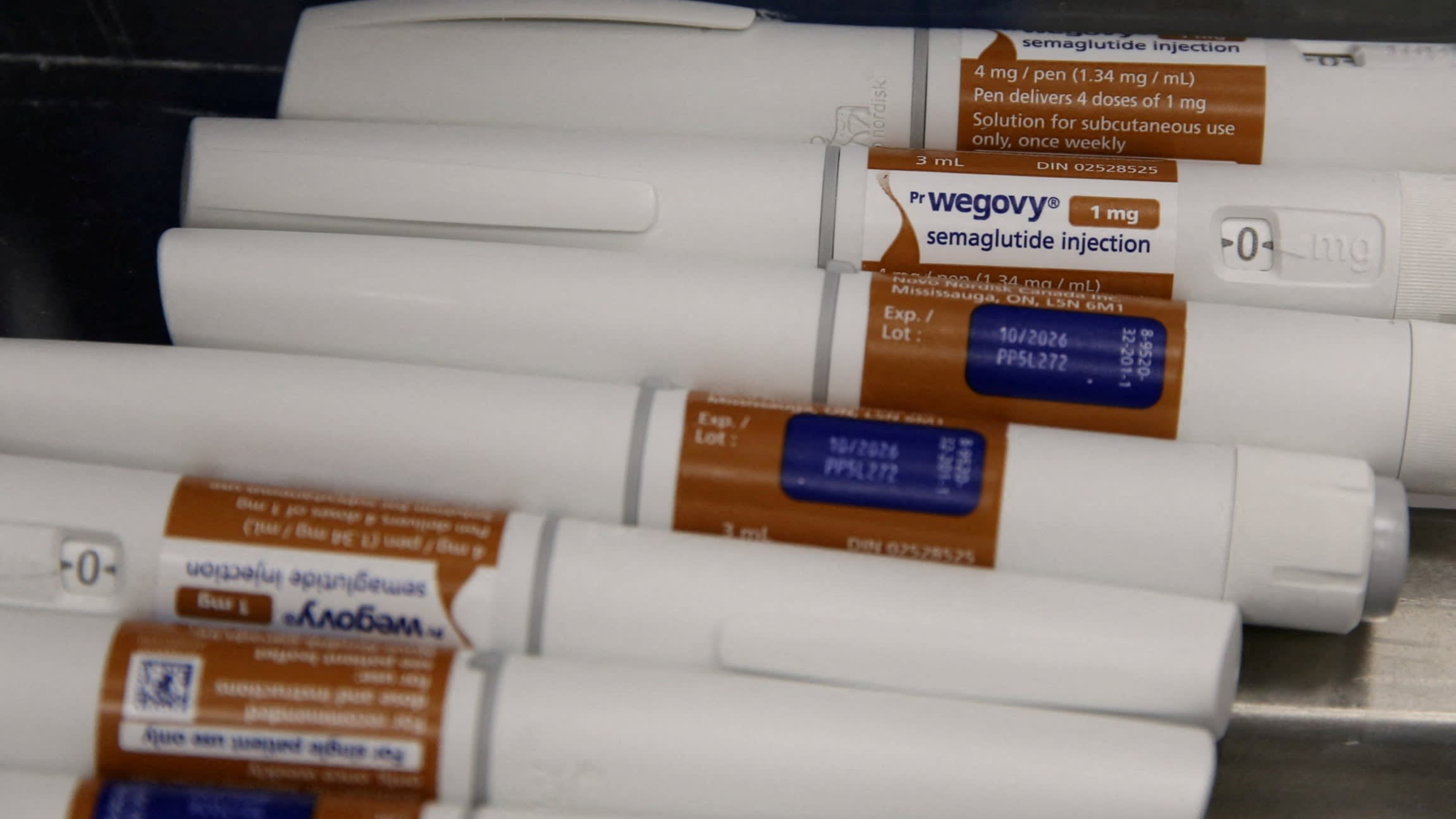
Buried beneath the dueling press releases lies a more uncomfortable reality: no one knows precisely how compounded semaglutide pills behave in the body. Wegovy’s tablets underwent 13 separate pharmacokinetic studies to calibrate timing, stomach-acid protection, and dose proportionality. The FDA has not reviewed any equivalent data for the Hims formulation, and Novo’s attorneys highlight adverse-event reports—some public, most anecdotal—involving nausea, erratic blood sugar, and compounded-injection site nodules.
Compounding pharmacists counter that they routinely purchase 98–99 percent pure API from FDA-registered facilities and subject final capsules to third-party testing. They also point to the federal Drug Quality & Security Act, which permits “essentially a copy” of an approved drug during shortages, provided the compounder files periodic reports with the agency. The statutory language leaves wiggle room: does a different salt form or capsule excipient render the product no longer “essentially” the same? Does a price one-fifth of the brand signal mass production rather than individualized patient need? Courts have reached contradictory answers, and the FDA has so far deferred to patent law.
All of which places patients in a familiar limbo: weighing a bargain against an information gap. Social-media forums dedicated to weight-loss journeys lit up this week with versions of the same question—”If the pill is gone, should I switch to the injection or wait to see if it comes back?”—illustrating how swiftly a legal skirmish can recalibrate consumer expectations. Whether those expectations will shift again depends on what happens when Novo’s next-generation oral therapy, a higher-dose tablet reportedly priced closer to competitors, reaches pharmacies later this year.
The Regulatory Gray Zone That Made This Fight Inevitable
Compounding pharmacies occupy a unique space in American healthcare—legally allowed to mix bespoke versions of approved drugs when official versions are scarce, but tightly restricted from mass-producing copies. The FDA’s current list shows semaglutide has been in intermittent shortage since March 2022, a designation that effectively shields compounders from patent claims. Novo’s lawsuit argues that Hims crossed the line from legitimate shortage-response to commercial-scale infringement by advertising a 30-day “starter kit” on Instagram and YouTube, a channel the complaint calls “a national billboard for unapproved medicine.”
Why does the shortage designation matter so much? Once the agency upgrades supply status to “available,” compounders must typically cease within 60 days. FDA data show that injectable semaglutide moved into “available” territory on 20 December 2023; oral versions were never officially listed because no FDA-approved oral GLP-1 tablet currently exists—Wegovy and Ozempic are injections. Hims formulated a capsule by mixing bulk semaglutide salt with pharmacy-grade excipients, an approach the company insists is legal under Sections 503A and 503B of the Food, Drug & Cosmetic Act. Novo counters that the pill is “a de-facto new drug” requiring full FDA review, and therefore infringes no fewer than eight patents stretching from 2031 to 2037.
| Criteria | Hims Compounded Capsule | Novo Wegovy Pen |
|---|---|---|
| FDA Status | Not approved; compounded under shortage exemption | Approved NDA; post-market safety surveillance |
| Typical Monthly Cost | $49–$149 | $1,349 list; ~$150 after rebates/coupons |
| Patent Protection | None asserted | 8 composition-of-matter patents (2031-37) |
| Manufacturing Standard | USP <795> / cGMP optional | FDA-inspected biologic plant, 24-month stability data |
The table underscores why Novo’s brief devotes pages to “quality risk”: compounded capsules are not required to complete the 12-month stability studies that branded manufacturers must submit. Still, patient forums are replete with testimonials praising the convenience of a pill over a weekly injection, illustrating how market demand can outpace the legal framework.
What the Dispute Reveals About Obesity-Drug Access
Zoom out and the clash looks less like a garden-variety patent spat and more like a referendum on who gets to set the rules for a therapy class expected to surpass $150 billion in annual sales by the early 2030s. More than 40% of U.S. adults qualify pharmacologically for GLP-1 medicines under American Gastroenterological Association criteria, yet only one in eight who meet the clinical definition currently receives them, according to a blank”>December 2023 FDA drug-shortage dashboard was “cost or prior-authorization denial,” not safety concerns.
Hims positioned its capsule as a workaround: cash-pay, no insurance paperwork, doorstep delivery. Critics see that model as an end-run around safety; supporters call it a rational response to bureaucratic rationing. The company’s own wait-list data, disclosed in a March investor presentation, showed 120,000 sign-ups within 72 hours—evidence of unmet need that Novo has been unable to satisfy despite spending $6.8 billion last year to expand Danish and French production, figures confirmed in the firm’s 2023 annual report.
Europe offers a contrasting template. In Denmark and Sweden, health-technology boards negotiate value-based contracts that cap out-of-pocket costs at roughly $30 per month, and compounders are barred from copying patented molecules regardless of shortages. The result: lower list prices, negligible black-market copying, but also tight eligibility rules that exclude patients with BMIs under 35 unless they have diabetes. The United States, lacking centralized price negotiations, effectively outsources affordability to a patchwork of coupon schemes and compounded alternatives—until patent holders decide to fight back.
The Stakes If Novo Loses
Legal scholars note that Novo faces a higher bar than in typical Hatch-Waxman cases because Hims never filed an FDA application; the court must decide whether marketing a compounded drug at national scale constitutes patent infringement “induced” by patient-specific prescriptions. If the judge declines to enjoin Hims, the precedent could embolden hundreds of outsourcing facilities to mass-compound any medicine in short supply, blurring the line between bespoke pharmacy and generic manufacturing.
Conversely, a broad injunction could invite congressional scrutiny of the compounder exemption itself. Senator Bernie Sanders, chair of the HELP Committee, has already signaled plans for hearings on “obesity drug pricing and anti-competitive abuses,” and a bipartisan group of House lawmakers wrote to the FDA in January asking whether the agency’s shortage list “inadvertently undermines patent rights.” The outcome may therefore hinge less on molecular diagrams than on which narrative—public-health safety or drug-access equity—finds more traction on Capitol Hill.
My View: A Wake-Up Call, Not a Finale
The suit will likely settle on confidential terms, but the questions it exposes won’t be briefed away. Novo can’t patent its way out of a supply-demand mismatch forever; Hims can’t compound its way out of regulatory reality. Until the United States confronts the structural issue—how to pay for breakthrough medicines that tens of millions clinically need—this week’s courtroom drama is merely the opening scene of a much longer story about affordability, innovation, and who gets squeezed in between.