Ken Burns discusses the ‘self-made man’ who helped build the United States of America
We see a page of adverts that the entrepreneurial polymath published in his newspaper, the Philadelphia Gazette, in the mid-1730s half an hour into Ken Burns’ new documentary about Benjamin Franklin.
Even though he had been an indentured servant himself, Franklin is said to have placed advertisements offering incentives for runaway indentured workers. He also received money for advertisements promising incentives for fugitive slaves, as well as for advertisements offering slaves for sale.
It’s surprising to see these advertisements since Franklin—who is celebrated as a Founder, as the “lightning tamer,” as a courageous diplomat during the Revolutionary War, and as a major abolitionist—is not well known as a slave owner, merchant, or advertiser.
This week, PBS premieres Burns’ four-hour, a two-part documentary about Franklin, which will air at various times around the country and be available to stream on PBS.org. The prolific director is noted for his extensive Civil War and Vietnam War documentaries, as well as films about key American innovations (baseball, jazz, national parks) and historical figures (Mark Twain, Huey Long, Jackie Robinson).
Burns seeks to make American history accessible to people of all ages and backgrounds, and while he has been accused of being too formulaic—his films do have a recognized and often-copied look and feel—and overly sugary, several of his works have become cultural touchstones.
Benjamin Franklin follows his subject’s life in chronological order, from his 1706 birth in Boston to his 1790 death as an old man in Philadelphia, using Burns’ trademark combination of narration, expert critics, actors providing voiceovers taken from historical texts, and closeups of archival art and texts.
The film rushes through his early years while still highlighting the most significant events. Ben was indentured to his older brother James, which meant that he was legally obligated to work for him, in this case as a printer’s apprentice.
Franklin would have employed a variety of tools in the print business, as shown by Burns. “Printers are laying type upside-down and backward,” explains historian Joyce E. Chaplin, “and you have to be incredibly hyperliterate to comprehend how language works that way.”
Ben undoubtedly learned a great deal in his brother’s store, but James, who was nine years his senior, was aggressive and occasionally beat him. So Ben violated his indenture and fled to Philadelphia, where he ultimately distinguished himself as a community pillar, an innovator, a successful publisher, and a civic and political leader.
Franklin became worldwide famous for his experiments with electricity and eventually flew to England to represent Pennsylvania as a colonial envoy, as Burns and his commentators show us. From 1757 to 1774, he spent most of his time in England.
Franklin represented three other colonies in England at the end of that period, as tensions between England and its North American colonies rose, and he found himself hampered in his goal of having Pennsylvania made a royal colony rid the citizens of its landowners, the tax-dodging Penn family.
Burns does a good job of showing how Franklin dealt with the recession as it unfolded, climaxing in a depiction of Franklin being dressed down by a British authority before the Privy Council in the Whitehall Cockpit, caught among wanting to keep the colonies a portion of the British Empire and trying to support them against the increasing restrictions imposed on them by Parliament.
When forced to make a decision, Franklin chose the Americans.
In Burns’ second episode, the Revolutionary War begins early. “It’s difficult to understand why [Franklin] even joined the Revolution,” historian Gordon Wood says—after all, Franklin was already wealthy and elderly.
“Many of the 62 other representatives [to the Continental Congress] had not even been born when he first entered political life forty years earlier,” the narrator says. It’s easy to see why Franklin joined the cause after his humiliation at the Privy Council severed his last links to the Empire.
Franklin’s failure to reconcile the familial links between England and the colonies is paralleled by the deterioration of Franklin’s relationship with his son William, the royal governor of New Jersey and a Loyalist. In this way, juxtaposing the political with the parental is a strong storytelling tool, bringing to life Franklin’s tough decisions.
After helping to write the Declaration of Independence, Franklin crossed the Atlantic again in 1776, this time to proclaim his newly independent country and discreetly seek an alliance with France. Burns had plenty of stuff to deal with during his years in France—more on that later—and they are the most hilarious part of the film.
Franklin arrived in France as the world’s most famous American; by the time he left over a decade later, he had been surpassed by war hero George Washington as the second most famous American.
We see Franklin continue to influence the country at the Constitutional Convention in 1787 and when he pressured his fellow Americans to address the problem of slavery for the first time on the ground of Congress with his Anti-Slavery Petitions in early 1790 as he grows older—and Mandy Patinkin, the actor who provides Franklin’s voiceovers, lets himself sound gravelly and creaky.
The petitions were unsuccessful, and Franklin died a few weeks later at the age of 84.
Burns integrates the perspectives of specialists from many backgrounds in the documentary, including well-known biographers like Walter Isaacson and academic historians like the late Bernard Bailyn.
Based on her on-screen contributions and her inclusion in the film’s advisers credits alongside H.W. Brands, Joyce E. Chaplin, Ellen R. Cohn, William Leuchtenburg, Jean M. O’Brien, Page Talbott, and Karin A. Wulf, Erica Armstrong Dunbar appears to have had a significant impact on the overall narrative of the documentary.
While the first episode discussed how Franklin formed affectionate friendships with women, the second episode delves much deeper into the topic, which will come as no surprise to viewers who are familiar with the popular portrayal of Franklin as a party animal and womanizer during his time in France.
The film’s nuanced discussion of Franklin’s time among the French elite, which helps provide insight into how alliances between men and women differ when crossing cultural borders, may surprise them.
Unfortunately, the documentary merely scratches the surface of how these close ties helped Franklin flourish diplomatically, despite the inclusion of Stacy Schiff’s excellent description of Franklin’s time in France.
Madame Brillon de Jouy, despite being one of Franklin’s most valuable connections in Paris and contributing to the wedge between Franklin and the prickly John Adams (voiced here by Paul Giamatti, wonderfully repeating the part of Adams from HBO’s 2008 miniseries), is barely mentioned briefly.
The very few historians who have documented Franklin’s private life and women, such as Claude-Anne Lopez, have either died or were not included in the documentary. At the very least, Sheila Skemp’s knowledge of Franklin’s wife, Deborah, and son, William, is highlighted. Regardless, it’s wonderful to see a portrayal of Franklin’s life that isn’t dominated by sex and womanizing.
The documentary’s treatment of the importance of slavery in Franklin’s daily life goes beyond expectations. In the past, biographies of Franklin and pertinent histories have tended to overlook how Franklin profited from the slavery system that existed in all thirteen of the original colonies.
The Quakers, with whom Franklin had long and tangled ties in Philidelphia, saw slavery as moral depravity and evil, according to Burns.
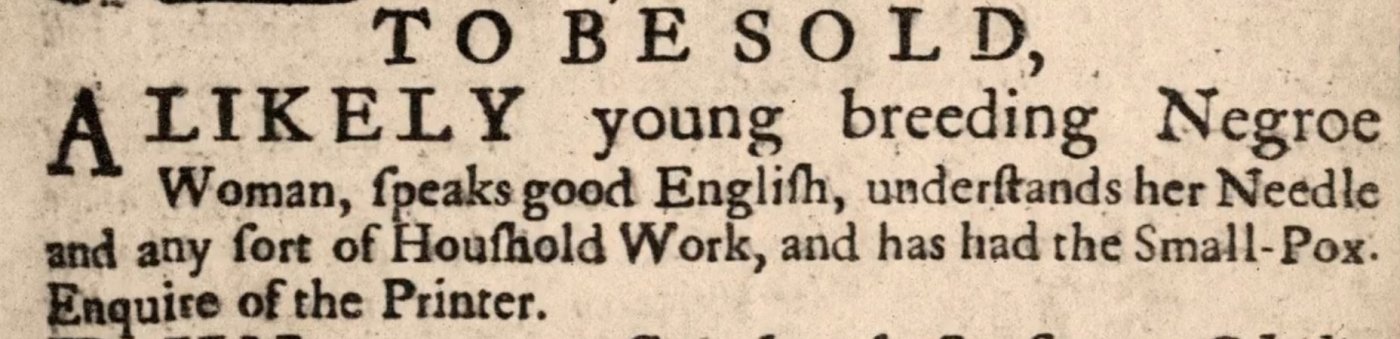
As previously stated, one of the most emotional moments in the documentary occurs when we watch Franklin’s advertisements for slaves. One advertisement offers “a choice parcel” of “lately Imported” “young Men and Girls, bred to Plantation Business.
” Another depicts an enslaved girl of “possibly young breeding,” with the words “Enquire of the Printer” prominently displayed, demonstrating that Franklin was not only profiting from the advertising printing but was also actively involved:
 Despite his participation in the slave trade, Franklin published anti-slavery papers alongside his advertisements and funded the education of enslaved black children in Pennsylvania.
This component of Burns’ documentary will help audiences have a more complete and balanced understanding of how Franklin transitioned from slaveholder to abolition in an era dominated by human slavery.
The film does not fail to educate viewers about Franklin’s important contributions to scientific and technological, politics, and countless civic projects—but by reminding us that Franklin is a flawed man, by humanizing him, Burns helps us better understand why Franklin’s messy, brilliant, and optimistic life and example remain valid today.
Always be Updated with us visit GeeksULTD for Real-time Updates