## Hold Up, Science Fans: The Trump Administration Just Took Aim at the NSF
Remember those mind-blowing discoveries that fuel your love for all things sci-fi and tech? The ones that make you wonder what’s next, what’s possible? Well, they might be a little harder to come by if the Trump administration has its way.

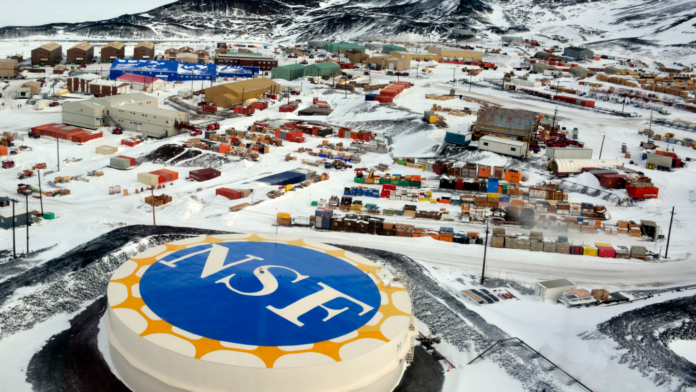
Fresh off the news cycle, the National Science Foundation (NSF), the very heart of American scientific innovation, is facing major funding cuts. This isn’t just some bureaucratic shuffle, folks. This is a direct attack on the future of groundbreaking research, from quantum computing to climate science to the mysteries of the universe.

Impact on Scientific Progress: Potential Delays and Disruptions
Halted Funding Creates Uncertainty

The abrupt freeze on new research grants at the National Science Foundation (NSF) has sent shockwaves through the scientific community. This action, orchestrated by Elon Musk’s DOGE initiative, throws the future of numerous research projects into limbo. With funding stalled, researchers face an uncertain landscape, potentially delaying groundbreaking discoveries and hindering scientific progress.
Imagine a researcher on the cusp of a major breakthrough, their project meticulously planned and ready to commence. The DOGE freeze throws a wrench into these plans, leaving the researcher in a precarious position. Not only are they unable to secure the necessary funding to continue their work, but the uncertainty surrounding the future of their project can be incredibly demoralizing.

Long-Term Consequences for Innovation
The potential consequences of these funding disruptions extend far beyond individual research projects. The NSF plays a crucial role in fostering innovation and driving technological advancements that benefit society as a whole. By hindering the flow of research funding, the DOGE initiative risks stifling innovation and potentially jeopardizing America’s competitive edge in the global scientific arena.
Consider the long-term implications for fields like medicine, renewable energy, and space exploration. The NSF’s support has been instrumental in advancing these fields, leading to breakthroughs that improve lives and address critical global challenges. Disruptions to NSF funding could have far-reaching consequences, potentially delaying solutions to pressing problems.
The Human Cost: Layoffs and Reclassification
Mass Layoffs: NSF Employees Feel the Impact
The human cost of the DOGE initiative at the NSF is undeniable. Hundreds of dedicated scientists, researchers, and support staff have been abruptly laid off, leaving many facing financial uncertainty and career disruption. These are highly skilled professionals who have contributed significantly to the advancement of science and technology, and their sudden displacement is a significant loss for the scientific community.
Imagine the emotional toll on these employees, who have poured their time, talent, and passion into their work at the NSF. The abruptness of the layoffs, coupled with the uncertainty surrounding their future, can be incredibly stressful and demoralizing. The loss of their jobs not only impacts their personal lives but also represents a setback for the scientific community as a whole.

Probationary Status Reclassification: Legal Challenges and Employee Concerns
Adding to the turmoil, the NSF has reclassified some employees’ statuses from permanent to probationary, a move that has sparked legal challenges and significant employee concerns.
This reclassification, which seemingly contravenes existing contracts, has raised serious questions about the fairness and legality of the process. Many employees feel that they have been unfairly targeted and that the reclassification is a blatant attempt to circumvent legal protections. The legal challenges brought forth by these employees underscore the gravity of the situation and the potential for long-lasting repercussions for the NSF and its workforce.
The uncertainty surrounding their employment status adds another layer of anxiety for these employees. They are left wondering if their jobs are truly secure and if they will be able to continue their valuable contributions to the NSF.
The Future of the NSF Workforce: Uncertainty and Anxiety
The future of the NSF workforce remains shrouded in uncertainty. The mass layoffs, reclassifications, and funding freezes have created an atmosphere of fear and anxiety among employees. The once-vibrant and innovative environment at the NSF has been replaced by a sense of trepidation and unease.
Will the DOGE initiative continue its relentless push to dismantle the NSF’s workforce? Will the legal challenges against the reclassifications be successful? What will the long-term impact of these actions be on the agency’s ability to fulfill its mission?
These are just some of the questions that loom over the NSF workforce, leaving many questioning the future of their careers and the very future of the agency itself.

Beyond the NSF: A Broader Attack on Science
Other Agencies Affected: A Pattern of Cuts Across Scientific Research
The DOGE initiative’s targeting of the NSF is not an isolated incident. A pattern of cuts and disruptions has emerged across numerous science agencies, raising concerns about a coordinated effort to undermine scientific research and innovation.
The National Institutes of Health (NIH), a leading funder of medical research, has also been ordered to prepare for significant staffing reductions. Similarly, the National Oceanic and Atmospheric Administration (NOAA) has faced budget cuts and program reductions, potentially hindering vital climate research and environmental monitoring efforts.
This coordinated attack on scientific agencies sends a chilling message to the research community: that science and innovation are no longer valued priorities.

Political Motivations: The Role of Ideology in Science Funding
The political motivations behind the DOGE initiative are increasingly evident. The targeting of science agencies with funding cuts and workforce reductions aligns with a broader ideological agenda that seeks to diminish the role of government in science and prioritize short-term economic gains over long-term investments in research and development.
This ideological stance poses a grave threat to the future of American science. By undermining the very foundations of scientific inquiry, the DOGE initiative risks jeopardizing America’s ability to compete in the global knowledge economy and to address the pressing challenges facing society.
Long-Term Consequences: A Threat to American Innovation
The long-term consequences of these actions could be devastating. A sustained assault on science funding and scientific institutions will have a profound impact on America’s innovation ecosystem.
The United States has long been a global leader in scientific discovery and technological advancement. This leadership is built upon a foundation of strong public investment in science and a culture that values intellectual curiosity and exploration. By undermining this foundation, the DOGE initiative risks eroding America’s competitive edge and jeopardizing its future prosperity.
Conclusion
The Trump administration’s proposed cuts to the National Science Foundation (NSF) are a stark wake-up call for anyone who believes in the power of scientific discovery. As Scientific American points out, these cuts threaten not only groundbreaking research but also the very fabric of American innovation. From fundamental physics to climate science, the NSF’s diverse portfolio of projects fuels the engine of progress that drives our economy, improves our health, and expands our understanding of the universe.
Slashing funding for basic research is a gamble with our future. It risks silencing the voices of brilliant minds who are pushing the boundaries of knowledge and developing solutions to our most pressing challenges. While the administration touts economic concerns, history has repeatedly shown that investing in science is an investment in long-term prosperity. The innovations born from NSF-funded research have created countless jobs, spurred economic growth, and improved the lives of millions. To turn our backs on this legacy is to jeopardize our nation’s standing as a global leader in science and technology.
The fight to protect scientific funding is a fight for our future. It’s a fight for a world where curiosity is celebrated, where innovation flourishes, and where the pursuit of knowledge remains a cornerstone of our society. We must urge our elected officials to prioritize science and ensure that the flame of discovery continues to burn brightly. Because in a world increasingly defined by complexity and uncertainty, the power of science is not a luxury, it’s a necessity.