The Camera Lies: Can We Still Believe What We See?
In the age of photo editing and AI-powered manipulation, the notion of a genuine visual representation has become increasingly tenuous. Apple’s latest software update has sparked a heated debate about the reliability of our eyes, as a cutting-edge AI clean-up tool promises to revolutionize the way we perceive reality. This technology, touted as a game-enhancer for photographers and videographers, raises fundamental questions about the nature of truth and deception in the digital age.
The Rise of AI-Powered Photo Editing

Apple’s Clean Up Feature: A Game-Changer in Photo Editing
You may have seen ads by Apple promoting its new Clean Up feature that can be used to remove elements in a photo. When one of these ads caught my eye this weekend, I was intrigued and updated my software to try it out. The feature has been available in Australia since December for Apple customers with certain hardware and software capabilities. It’s also available for customers in New Zealand, Canada, Ireland, South Africa, the United Kingdom and the United States.
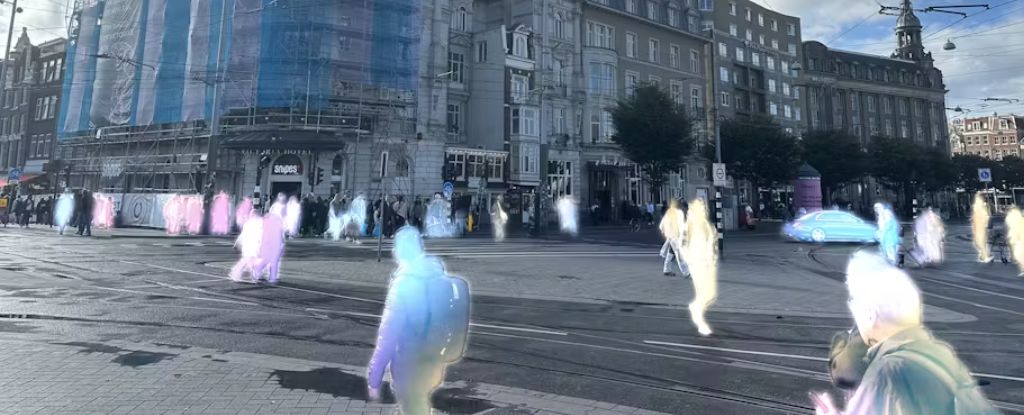
The tool uses generative artificial intelligence (AI) to analyze the scene and suggest elements that might be distracting. You can see those highlighted in the screenshot below. You can then tap the suggested element to remove it or circle elements to delete them. The device then uses generative AI to try to create a logical replacement based on the surrounding area.
Easier ways to deceive Smartphone photo editing apps have been around for more than a decade, but now, you don’t need to download, pay for, or learn to use a new third-party app. If you have an eligible device, you can use these features directly in your smartphone’s default photo app. Apple’s Clean Up joins a number of similar tools already offered by various tech companies. Those with Android phones might have used Google’s Magic Editor. This lets users move, resize, recolor or delete objects using AI. Users with select Samsung devices can use their built-in photo gallery app to remove elements in photos.
The Competition: Google’s Magic Editor and Samsung’s Built-in Photo Gallery App
There have always been ways – analogue and, more recently, digital – to deceive. But integrating them into existing software in a free, easy-to-use way makes those possibilities so much easier.
The Dark Side of AI Clean Up Tools
Deceptive Practices: Removing Watermarks and Altering Evidence
Removing watermarks is typically a way to make unauthorized use less obvious but not less legal. Others use them to alter evidence. For example, a seller might edit a photo of a damaged good to allege it was in good condition before shipping.
The implications of eroding trust in visual evidence are far-reaching. We rely on the vision these devices produce in everything from police body and traffic cams to insurance claims and verifying the safe delivery of parcels. If advances in tech are eroding our trust in pictures and even video, we have to rethink what it means to trust our eyes.
Practical Uses and Misuses of AI Clean Up Tools
The idea of removing distracting or unwanted elements can be attractive. If you’ve ever been to a crowded tourist hotspot, removing some of the other tourists so you can focus more on the environment might be appealing (before and after images below). But beyond removing distractions, how else can these tools be used?
Some people use them to remove watermarks. Watermarks are typically added by photographers or companies trying to protect their work from unauthorized use. Removing these makes the unauthorized use less obvious but not less legal. Others use them to alter evidence. For example, a seller might edit a photo of a damaged good to allege it was in good condition before shipping.
As image editing and generating tools become more widespread and easier to use, the list of uses balloons proportionately. And some of these uses can be unsavory. AI generators can now make realistic-looking receipts, for example. People could then try to submit these to their employer to get reimbursed for expenses not actually incurred.
Can anything we see be trusted anymore? Considering these developments, what does it mean to have “visual proof” of something? If you think a photo might be edited, zooming in can sometimes reveal anomalies where the AI has stuffed up. Here’s a zoomed-in version of some of the areas where the Clean Up feature generated new content that doesn’t quite match the old.
It’s usually easier to manipulate one image than to convincingly edit multiple images of the same scene in the same way. For this reason, asking to see multiple outtakes that show the same scene from different angles can be a helpful verification strategy. Seeing something with your own eyes might be the best approach, though this isn’t always possible. Doing some additional research might also help. For example, with the case of a fake receipt, does the restaurant even exist? Was it open on the day
Verifying Visual Proof in the Age of AI
As AI editing tools become more prevalent and user-friendly, the question of trust in visual evidence arises. Can we rely on the images and videos produced by these devices? With the ability to edit and generate images with such ease, it’s essential to develop strategies for verifying the authenticity of visual proof.
Spotting Anomalies: Zooming in on Edited Images
One approach to verifying the authenticity of an image is to zoom in on the edited areas. Sometimes, the AI may not perfectly blend the edited content with the original image, leaving behind anomalies that can be detected upon closer inspection. For instance, when using Apple’s Clean Up feature, zooming in on the edited areas may reveal inconsistencies in the generated content.
Verification Strategies: Multiple Outtakes and Additional Research
Another strategy for verification is to request multiple outtakes of the same scene from different angles. This can make it more difficult for someone to convincingly edit multiple images in the same way. Additionally, conducting further research can also help to establish the authenticity of an image. For example, in the case of a fake receipt, checking if the restaurant exists and was open on the day in question can help to verify the legitimacy of the document.
Rethinking Trust in the Digital Age
The proliferation of AI editing tools has significant implications for our understanding of trust in visual evidence. If images and videos can be so easily edited and generated, what does it mean to have “visual proof” of something?
The Erosion of Trust in Visual Evidence
The ease of use and accessibility of AI editing tools have led to a erosion of trust in visual evidence. We can no longer take images and videos at face value, and instead, must approach them with a healthy dose of skepticism. This has significant implications for various industries, from law enforcement to insurance claims, where visual evidence is often relied upon.
Seeing is No Longer Believing: The Future of Visual Proof
In this new era of AI editing, seeing is no longer believing. We must reevaluate what constitutes visual proof and develop new strategies for verifying the authenticity of images and videos. This may involve a combination of technical approaches, such as digital watermarking, and more traditional methods, such as eyewitness testimony. Ultimately, the future of visual proof will require a more nuanced understanding of the role of technology in shaping our perceptions of reality.
Conclusion
In the article “Can We Trust Our Eyes Anymore? The Dark Side of Apple’s New AI Clean Up Tool – ScienceAlert,” we’ve delved into the complexities surrounding Apple’s latest AI-powered image editing technology. The key points discussed reveal that this tool uses AI to automatically clean up images, but in doing so, it can also alter the original context and meaning of the photos. This raises significant questions about the reliability of our visual perception and the potential for manipulation. The main arguments presented suggest that while this technology may seem like a convenient solution for image editing, it also poses risks to our understanding of reality and our ability to trust our own senses.
The implications of this technology are far-reaching and have significant consequences for the way we consume and interact with visual media. As AI-powered editing tools become increasingly prevalent, we must consider the potential for widespread manipulation and the erosion of trust in our visual perceptions. This raises important questions about the role of technology in shaping our understanding of reality and the need for transparency and accountability in the development and deployment of AI-powered tools. As we move forward, it’s essential that we prioritize critical thinking and media literacy to ensure that we’re not misled by the filtered reality presented to us.
In conclusion, the introduction of AI-powered image editing tools like Apple’s new clean up tool serves as a stark reminder of the complexities and challenges associated with the intersection of technology and perception. As we continue to rely on these tools to shape our understanding of the world, we must remain vigilant and critical, recognizing the potential for manipulation and the need for transparency and accountability. Ultimately, the question “Can we trust our eyes anymore?” serves as a sobering reminder of the importance of critically evaluating the world around us, and the need to remain vigilant in the face of a rapidly evolving technological landscape.