## Health Insurance Stocks Take a Hit: Is the UHC Forecast a Canary in the Coal Mine? The healthcare sector is a rollercoaster, and today, it took a sharp dip. UnitedHealth, the industry titan, just dropped a bombshell forecast that’s sent ripples through the market, causing health insurance stocks to plummet. Is this a temporary blip or a sign of deeper trouble brewing in the world of healthcare? We’re diving into the details of UnitedHealth’s prediction and exploring what it means for your investments, with a healthy dose of Geeksultd insight. Buckle up, because things are about to get interesting.
Deciphering the Profit Warning
UnitedHealth’s recent decision to slash its profit forecast sent shockwaves through the market, prompting investors to scrutinize the factors driving this downturn. The company attributed the reduced earnings outlook to a confluence of challenges, primarily escalating medical costs and increased utilization of healthcare services.
Medical costs have been steadily rising for several years, fueled by factors such as an aging population, the increasing prevalence of chronic diseases, and advancements in expensive medical technologies. These escalating costs put pressure on health insurers’ bottom lines, as they grapple with rising claims payouts while striving to maintain competitive premiums.
UnitedHealth’s warning suggests that these pressures may be intensifying, potentially signaling a deeper systemic issue within the healthcare industry. The company’s vast scale and market dominance provide valuable insights into broader trends affecting the sector. Investors are now closely watching to see how UnitedHealth and its peers navigate these challenges in the coming quarters.
Impact of Rising Medical Costs
The relentless rise in medical costs poses a significant threat to UnitedHealth’s profitability. As a health insurer, a substantial portion of its revenue is tied to premiums collected from individuals and employers. When medical costs soar, the company incurs higher claims payouts, squeezing its margins.
To mitigate these pressures, UnitedHealth could explore several strategies:
- Negotiating lower drug prices: UnitedHealth could leverage its bargaining power to secure more favorable pricing agreements with pharmaceutical companies. This could involve negotiating rebates, volume discounts, or alternative payment models.
- Promoting preventive care: Investing in programs that encourage preventive screenings and early intervention can help reduce the incidence of costly chronic diseases, potentially lowering claims expenses in the long run.
- Implementing cost-containment measures: UnitedHealth could explore measures such as utilization review, prior authorization, and formularies to manage the use of healthcare services and control costs.
- Expanding into value-based care: Shifting towards payment models that incentivize quality outcomes and cost efficiency could align UnitedHealth’s financial interests with those of its patients and providers.
Navigating the Regulatory Landscape
Political pressures and legislative proposals, particularly those targeting pharmacy benefit managers (PBMs), are creating uncertainty for UnitedHealth and the broader healthcare industry. PBMs are third-party administrators that negotiate drug prices on behalf of insurers and employers.
Recent scrutiny of PBMs has focused on their role in the rising cost of prescription drugs. Critics argue that PBMs’ practices, such as spread pricing and rebates, contribute to inflated drug prices and limit transparency.
Earlier this week, lawmakers unveiled a federal spending bill that included several proposals targeting PBMs, aiming to enhance transparency, limit spread pricing, and regulate their rebate practices. While these proposals are still subject to negotiation and debate, they signal a potential shift in the regulatory landscape that could impact UnitedHealth’s business model.
Analysts believe that the bill, while ambitious, allows PBMs ample time to adjust their business practices. However, the long-term implications of these regulatory changes remain uncertain. UnitedHealth and other insurers will need to closely monitor legislative developments and adapt their strategies accordingly.
Technical Analysis: A Closer Look at UNH’s Charts
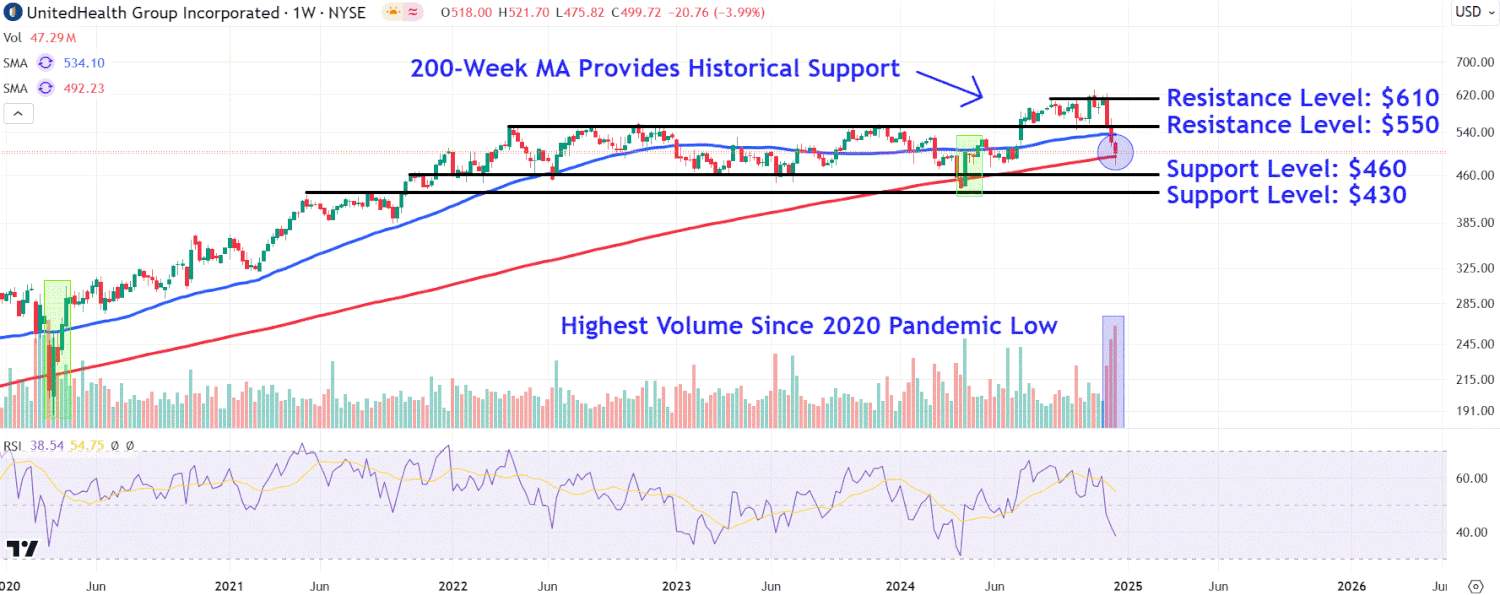
UnitedHealth Group (UNH) shares have been experiencing a period of volatility, prompting investors to turn to technical analysis for insights into potential future price movements.
Identifying Key Support and Resistance Levels
Analyzing historical price action and chart patterns can reveal key support and resistance levels that may act as turning points for UNH’s share price.
Support Levels: Investors should closely monitor crucial support levels around $460 and $430. The $460 level corresponds to a trendline connecting the November 2021 peak with multiple troughs on the chart between January 2022 and April 2023. A break below this level could signal further downward momentum. The $430 level represents another potential support zone, coinciding with prominent swing highs formed in May and August 2021.
Resistance Levels: On the upside, investors should be aware of key resistance levels near $550 and $610. The $550 level, situated just above the 50-week moving average, could pose a hurdle for UNH’s share price. Finally, the $610 level represents a more bullish target, coinciding with a period of consolidation just below the stock’s record close.
Analyzing the 200-Week Moving Average
The 200-week moving average (MA) is a widely respected technical indicator that smooths out price fluctuations and highlights long-term trends. For UNH, the 200-week MA currently stands near $480.
Recently, UNH’s share price tested the 200-week MA, finding buying interest around this crucial support level. Historically, whenever the price has closed below the 200-week MA, it has rebounded strongly. In March 2020 and April 2023, the stock experienced significant rallies following dips below the 200-week MA, rising by 41% and 19%, respectively, over the subsequent five weeks.
However, a sustained breach of the 200-week MA could signal a potential shift in the long-term trend for UNH, warranting further investigation by investors.
Utilizing Charting Tools and Indicators
Beyond the 200-week MA, a range of technical charting tools and indicators can provide valuable insights into UNH’s near-term and long-term prospects.
- Relative Strength Index (RSI): The RSI measures the magnitude of recent price changes to evaluate overbought or oversold conditions. A reading above 70 suggests an overbought condition, while a reading below 30 indicates an oversold condition.
- Moving Averages: In addition to the 200-week MA, other moving averages, such as the 50-week and 200-day MAs, can provide insights into short-term and medium-term trends.
- Trendlines: Connecting key price points on a chart can reveal potential support and resistance levels, as well as the overall direction of the trend.
- Volume Analysis: Examining trading volume alongside price movements can help confirm the strength and sustainability of trends.
Conclusion
Conclusion: A Market Shift in Health Insurance Stocks
In the recent news, UnitedHealth Group’s forecast has sent shockwaves throughout the health insurance sector, causing stocks to plummet. As discussed in our article, this development has significant implications for investors, analysts, and healthcare stakeholders alike. The key takeaways from this story are that UnitedHealth’s downbeat forecast has led to a broader decline in health insurance stocks, highlighting concerns about the sector’s growth prospects and profitability. Furthermore, the company’s cautious outlook has renewed concerns about the Affordable Care Act (ACA) and its impact on the health insurance market.
The significance of this event cannot be overstated, as it serves as a reminder of the fragility of the health insurance sector. The sector’s volatility is a testament to the inherent risks and uncertainties associated with the business. Moreover, this development has far-reaching implications for the broader healthcare industry, as changes in health insurance policies and regulations can have a ripple effect on the entire ecosystem. As we look to the future, it is likely that this trend will continue, with investors and analysts alike closely monitoring developments in the sector.
In conclusion, the recent drop in health insurance stocks after UnitedHealth’s forecast is a stark reminder of the sector’s volatility and the need for investors to remain vigilant. As we navigate the complex landscape of healthcare, one thing is certain: the health insurance sector will continue to evolve, and those who are prepared to adapt will be the ones to reap the benefits. Will you be ready for the next market shift? Only time will tell.