The Trump administration, known for its hardline immigration policies, is facing a serious legal challenge. A federal judge, questioning the administration’s actions, has demanded answers: did they intentionally disregard a court order halting deportation flights? This isn’t just a legal battle; it’s a clash over fundamental principles of justice and the rule of law.
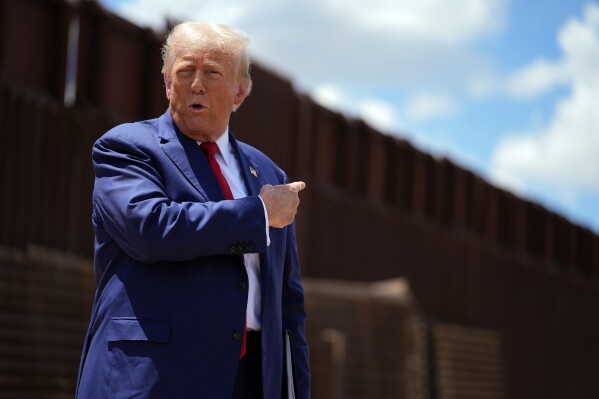
US Judge Questions Trump Administration Over Deportation Flights
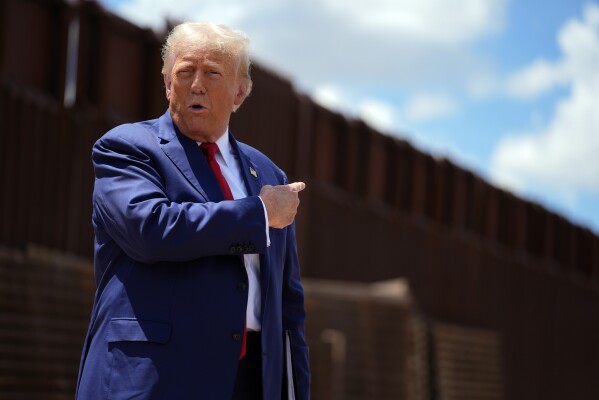
A federal judge has raised concerns over whether the Trump administration ignored a court order to turn around deportation flights carrying hundreds of immigrants. The flights were in the air when the order was issued, and the administration’s response has sparked controversy.
US District Judge James E. Boasberg issued an order temporarily blocking the deportations under the Alien Enemies Act of 1798, which targets Venezuelan gang members. However, lawyers told him that there were already two planes with immigrants in the air, one headed for El Salvador and the other for Honduras. Boasberg verbally ordered the planes to be turned around, but they apparently were not, and he did not include the directive in his written order.
The Trump administration has denied allegations of non-compliance with the court order, with White House Press Secretary Karoline Leavitt saying that the order “had no lawful basis” and was issued after terrorist aliens had already been removed from US territory.

Trump Administration’s Response to the Allegations
Trump defended the deportations, calling the individuals “bad people.” When asked about invoking presidential powers used in times of war, Trump said, “This is a time of war,” describing the influx of criminal migrants as “an invasion.”
The Trump administration’s response has been met with criticism from experts and advocates, who argue that the administration’s actions are a clear violation of the court’s order.
- Steve Vladeck, a professor at the Georgetown University Law Center, said that Boasberg’s verbal directive to turn around the planes was not technically part of his final order but that the Trump administration clearly violated the “spirit” of it.
- Vladeck added that the administration’s actions will incentivize future courts to be hyper-specific in their orders and not give the government any wiggle room.
The Alien Enemies Act of 1798
The Alien Enemies Act has been used only three times in US history, and its invocation has significant implications for the country’s immigration policies.
The Act allows the President to declare a national emergency and suspend the writ of habeas corpus for individuals deemed enemies of the state. In this case, Trump’s declaration targets Venezuelan gang members, who have been accused of being involved in terrorist activities.
Historical Context and Previous Usage
The Alien Enemies Act has been used in the past to detain and deport individuals deemed enemies of the state. However, its usage has been limited, and its application in the current context raises concerns about the administration’s use of executive power.
Experts argue that the Act’s provisions are designed for times of war and are not intended for use in peacetime. The administration’s invocation of the Act has sparked debate about the limits of executive power and the role of the judiciary in checking the President’s authority.
- The Act has been used only three times in US history: during World War I, World War II, and the Cold War.
- Its provisions are designed to suspend the writ of habeas corpus and allow for the detention and deportation of individuals deemed enemies of the state.
International Cooperation and Diplomacy
The deal between the US and El Salvador has raised concerns about the administration’s use of diplomacy and the potential consequences of its actions.
Under the deal, El Salvador has agreed to take in hundreds of immigrants, including those who have been deported from the US. However, the administration’s actions have sparked controversy, and the deal has been criticized by experts and advocates.
Concerns Over the Deal
Experts argue that the deal with El Salvador is a clear example of the administration’s use of executive power to bypass Congress and the judiciary. The deal has also raised concerns about the potential consequences of deporting individuals without due process.
Advocates argue that the deal is a violation of international law and the principles of human rights. They argue that the administration’s actions are a clear example of the use of executive power to target specific groups and individuals.
- El Salvador has agreed to take in hundreds of immigrants, including those who have been deported from the US.
- The deal has been criticized by experts and advocates, who argue that it is a clear example of the administration’s use of executive power to bypass Congress and the judiciary.
Uncertainty Over the Fate of Deportees
The deportation of hundreds of immigrants to El Salvador has created panic among families who fear that their relatives are among those handed over by the Trump administration to the Salvadoran authorities.
Relatives of the deportees express concern over the lack of information and due process. They argue that the administration’s actions are a clear violation of human rights and international law.
Consequences of the Deportations
The deportations have significant consequences for the individuals involved and their families. The lack of information and due process has raised concerns about the administration’s use of executive power and the potential consequences of its actions.
Experts argue that the deportations are a clear example of the administration’s use of executive power to target specific groups and individuals. The consequences of the deportations will be felt for years to come, and the administration’s actions will have significant implications for the country’s immigration policies.
- The deportations have created panic among families who fear that their relatives are among those handed over by the Trump administration to the Salvadoran authorities.
- The lack of information and due process has raised concerns about the administration’s use of executive power and the potential consequences of its actions.
Personal Stories and Human Impact
Families Affected by the Deportations
Stories of relatives trying to locate their loved ones have been emerging, highlighting the emotional toll on families and communities. Mirelis Casique’s 24-year-old son last spoke to her on Saturday morning from a detention center in Laredo, Texas. He told her he was going to be deported with a group of other Venezuelans, but he didn’t know where they were headed. Shortly after, his name disappeared from the website of the U.S. immigration authorities. She has not heard from him since. “Now he’s in an abyss with no one to rescue him,” Ms. Casique said on Sunday in an interview from her home in Venezuela.
The deportation of 238 Venezuelans to El Salvador this weekend has created panic among families who fear that their relatives are among those handed over by the Trump administration to the Salvadoran authorities, apparently without due process. The men were described by the White House press secretary, Karoline Leavitt, as “terrorists” belonging to the Tren de Aragua gang. She called them “heinous monsters” who had recently been arrested, “saving countless American lives.”
But several relatives of men believed to be in the group say their loved ones do not have gang ties. On Sunday, the Salvadoran government released images of the men being marched into a notorious mega-prison in handcuffs overnight, with their heads newly shaven. Like other Venezuelan families, Ms. Casique has no proof that her son, Francisco Javier García Casique, is part of the group, which was transferred to El Salvador on Saturday as part of a deal between President Nayib Bukele and the Trump administration.
Neither government has made public the names of the Venezuelan deportees, and a spokeswoman for the Salvadoran government did not respond to a request for confirmation that Ms. Casique’s son was part of the group. The U.S. Department of Homeland Security, which oversees Immigration and Customs Enforcement, did not respond to a request to confirm whether Mr. García had been deported to El Salvador, either.
Ms. Casique said she had identified Mr. García by the tattoos on one of his arms, as well as by his build and complexion, though his face was not visible. The photo shows a group of men in white shirts and shorts with shaved heads, their arms restrained behind their backs.
Concerns Over Due Process and Human Rights
Analysis of the deportation process and potential human rights violations has raised concerns among human rights organizations and advocacy groups. The use of the Alien Enemies Act of 1798, which has been used only three times in U.S. history, has sparked debate over its legality and potential consequences for international cooperation and diplomacy.
Expert opinions on the legality of the deportations have varied, with some arguing that the Trump administration’s actions violate international law and human rights conventions. Others have defended the administration’s actions, citing national security concerns and the need to protect American lives.
The reactions from human rights organizations and advocacy groups have been swift and critical, with many calling for greater transparency and accountability in the deportation process. The lack of due process and potential human rights violations have raised concerns over the Trump administration’s commitment to upholding international human rights law.
Analysis and Implications
Legal Analysis of the Court Order and Trump’s Actions
Expert opinions on the legality of the deportations have varied, with some arguing that the Trump administration’s actions violate international law and human rights conventions. Others have defended the administration’s actions, citing national security concerns and the need to protect American lives.
The use of the Alien Enemies Act of 1798, which has been used only three times in U.S. history, has sparked debate over its legality and potential consequences for international cooperation and diplomacy. Steve Vladeck, a professor at the Georgetown University Law Center, said that Boasberg’s verbal directive to turn around the planes was not technically part of his final order but that the Trump administration clearly violated the “spirit” of it.
“This just incentivizes future courts to be hyper specific in their orders and not give the government any wiggle room,” Vladeck said. The immigrants were deported after Trump’s declaration of the Alien Enemies Act of 1798, which has been used only three times in U.S. history.
Broader Implications for US Immigration Policy
Analysis of the current state of US immigration policy and potential long-term consequences of the Trump administration’s actions have raised concerns over the impact on regional and global relations. The use of the Alien Enemies Act of 1798 has sparked debate over its legality and potential consequences for international cooperation and diplomacy.
The Trump administration’s actions have been defended by some as necessary to protect national security and prevent the influx of criminal migrants. However, critics argue that the administration’s actions violate international law and human rights conventions, and have sparked concerns over the impact on regional and global relations.
The potential long-term consequences of the Trump administration’s actions on US immigration policy are far-reaching, with implications for international cooperation and diplomacy. The use of the Alien Enemies Act of 1798 has sparked debate over its legality and potential consequences for international cooperation and diplomacy.
Regional and Global Implications
Impact on US relations with other countries in the region
The Trump administration’s actions have sparked concerns over the impact on regional relations, with many countries in the region criticizing the administration’s actions as a violation of international law and human rights conventions.
The use of the Alien Enemies Act of 1798 has sparked debate over its legality and potential consequences for international cooperation and diplomacy. The Trump administration’s actions have been defended by some as necessary to protect national security and prevent the influx of criminal migrants.
However, critics argue that the administration’s actions violate international law and human rights conventions, and have sparked concerns over the impact on regional and global relations. The potential long-term consequences of the Trump administration’s actions on US immigration policy are far-reaching, with implications for international cooperation and diplomacy.
Potential consequences for international cooperation and diplomacy
The Trump administration’s actions have sparked concerns over the impact on international cooperation and diplomacy, with many countries criticizing the administration’s actions as a violation of international law and human rights conventions.
The use of the Alien Enemies Act of 1798 has sparked debate over its legality and potential consequences for international cooperation and diplomacy. The Trump administration’s actions have been defended by some as necessary to protect national security and prevent the influx of criminal migrants.
However, critics argue that the administration’s actions violate international law and human rights conventions, and have sparked concerns over the impact on regional and global relations. The potential long-term consequences of the Trump administration’s actions on US immigration policy are far-reaching, with implications for international cooperation and diplomacy.
Conclusion
The judge’s questioning of the Trump administration raises serious concerns about potential disregard for established legal processes. The article details a specific instance where deportation flights were allegedly continued despite a court order for their cessation. This raises the question of accountability and adherence to the rule of law, even within the context of contentious immigration policies. The implications of this case extend far beyond the immediate situation. It underscores the fragility of legal protections and the potential for abuse of power when executive orders clash with judicial mandates. The judge’s probing questions serve as a stark reminder that even in the face of political pressure, the judiciary must remain vigilant in upholding the Constitution and safeguarding individual rights. The outcome of this case will undoubtedly shape future legal battles over immigration enforcement and set a precedent for the balance of power between the executive and judicial branches. The future depends on ensuring that justice prevails, not political expediency.