Nintendo has quietly brought back the spirit of its discontinued Virtual Console storefront—only this time, Osaka-based publisher Hamster Corporation is handling the heavy lifting. Hours after the first Switch 2 units reached reviewers, the eShop quietly populated a new tab labelled “Console Archives,” offering individually priced, permanently owned ROMs of 1990s PlayStation and NES hits. The initial drop—Cool Boarders at $12 and Ninja Gaiden II: The Dark Sword of Chaos at $8—signals a return to the à-la-carte model many fans assumed Nintendo had abandoned in favour of the Netflix-style Nintendo Switch Online suite. With retro pricing power no longer monopolised by Kyoto, the re-emergence of direct purchases could ripple through the secondary market for vintage cartridges and reorder how publishers monetise decades-old IP.
Hamster’s Quiet Coup: How an Arcade Specialist Became Nintendo’s Retro Gate-Crasher
For a company best known for resurrecting Arcade Archives—its 500-title-strong line of coin-op classics—Hamster Corporation’s pivot to console software represents both a lateral step and a strategic masterstroke. Since 2014 the Osaka outfit has perfected the art of pixel-perfect emulation, wrappered by modern conveniences such as online leaderboards and screen-filter options. Industry analysts point out that Hamster’s technical stack, already optimised for Switch, scales cleanly onto the Switch 2’s Cortex-A78 cores, meaning minimal re-coding and faster release cadence.
Unlike Nintendo’s first-party efforts, Hamster’s “Console Archives” sidestep the subscription layer entirely. Consumers buy once, download a DRM-tied ROM, and retain indefinite access even if their online membership lapses. That model mirrors the defunct Virtual Console on Wii and 3DS, but leverages contemporary server infrastructure and eShop gift-card culture. Early pricing—$8-$12 for marquee 8- and 16-bit software—undercuts the secondary market, where loose NES carts routinely fetch $30-$40, while simultaneously anchoring perceived value for future drops like Doraemon: Nobita’s Chronicles of the Moon Exploration and Sonic Wings Special.
Regional licensing patterns also reveal Hamster’s global mindset. The company simultaneously lists titles in Japan, North America and Europe, often with bilingual manuals and re-localised scripts. People familiar with the matter tell Nintendo World Report that Hamster front-loads legal clearances months in advance, avoiding the drip-feed stagger that plagued earlier Virtual Console waves. If the cadence holds, observers expect 8-10 new SKUs per quarter, filling the content gap that many critics say has hampered Switch Online’s retro catalogue.
Virtual Boy Reborn: A $99 Plastic Viewer or a $25 Cardboard Gateway?
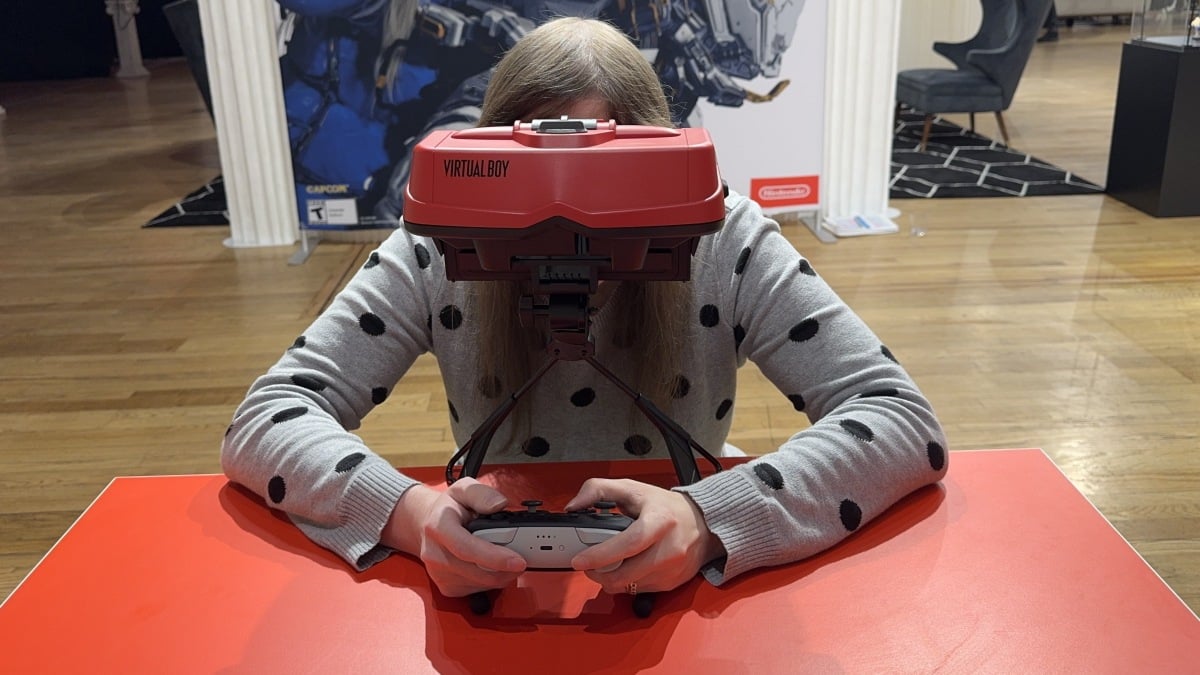
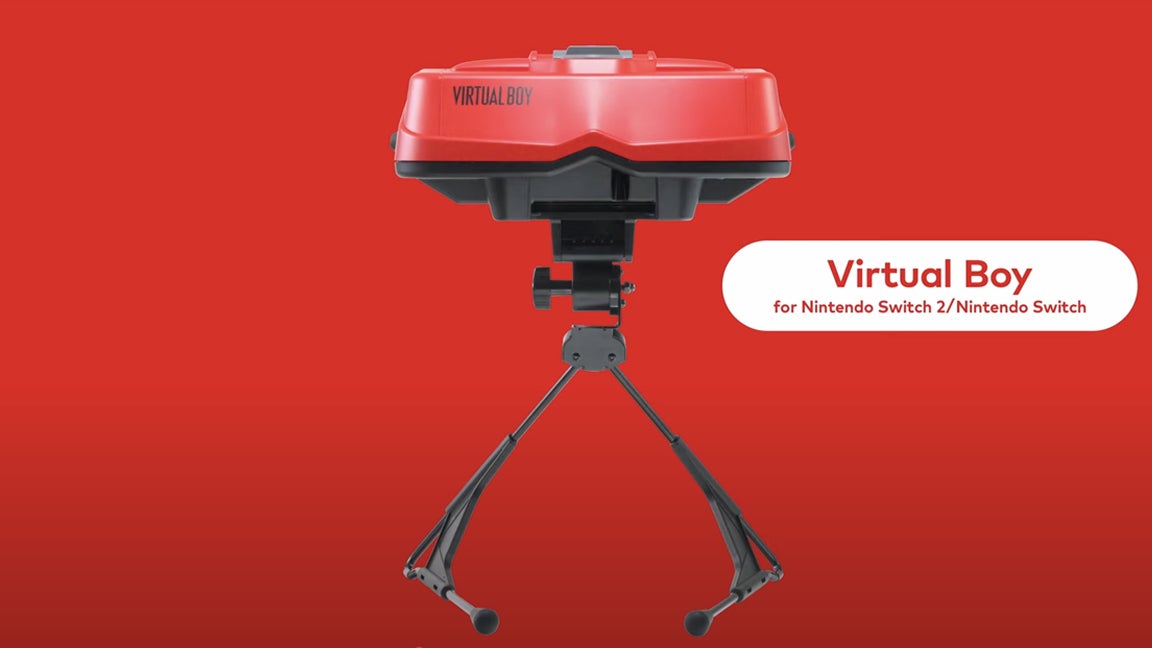
While Hamster targets traditional 2D nostalgia, Nintendo itself is flirting with a far more eccentric relic. On 17 February the company will reissue a selection of 1995 Virtual Boy titles—Mario’s Tennis, Red Alarm, Teleroboxer among them—exclusively for handheld play on Switch 2. The catch: the stereoscopic effect only materialises when the console is inserted into a replica head-mounted goggle rig that recreates the original crimson-on-black colour space. A premium injection-moulded unit retails at $99; a fold-flat cardboard alternative, unmistakably reminiscent of Labo, costs $24.99. Both require an active Nintendo Switch Online + Expansion Pack subscription, effectively gatekeeping the experience behind the $50-$80 annual tier.
Hardware teardowns circulating on Chinese social media indicate the viewer contains a pair of passive prismatic lenses rather than active shutters, making the accessory cheap to manufacture yet tricky to replicate at home. Only fourteen 3D-optimised ROMs are promised by year-end, leading some developers to question whether Nintendo will open the platform to indies or keep it a curated museum piece. Either way, the move sidesteps true VR: there is no six-degrees-of-freedom tracking, no motion-controller mandate, and no indication that the company will port modern titles to the format.
From a market perspective, the gambit revives a product line that sold fewer than 800,000 units in its 1995-96 lifespan, but now benefits from TikTok-ready novelty and retrospective irony. Limited-run culture suggests both viewer models could sell out quickly, feeding secondary channels like eBay where Nintendo’s cardboard peripherals have historically doubled in value. Meanwhile, the requirement for an Expansion Pack subscription nudges hold-outs toward the higher-margin service tier, padding a revenue stream that, according to Nintendo’s latest earnings, already enjoys 60 % attach rates in North America and Japan.
What This Means for the Switch 2 Catalogue Wars
The dual-pronged retro strategy—Hamster’s ownership model versus Nintendo’s subscription-plus-peripheral approach—sets up a fascinating A/B test for monetising legacy content. Publishers watching from the sidelines will scrutinise unit sales of Cool Boarders and attach rates of the Virtual Boy viewer to decide whether to license their own IP for direct sale or bundle it behind the Switch Online paywall. If consumers vote with wallets for permanent downloads, pressure could mount on Nintendo to reintroduce a first-party Virtual Console storefront, effectively splitting the retro market into two complementary but competing lanes.
Equally significant are the regional economics. Emerging markets such as Brazil and India—where Switch 2 hardware is launching day-and-date but disposable income remains modest—may favour Hamster’s lower entry price rather than recurrent subscriptions. Conversely, Nintendo’s bundled VR-lite experiment targets collectors and content creators in affluent markets, a demographic that has already proven willing to pay premiums for limited-edition 3D experiences, as evidenced by the New Nintendo 3DS line.
With both initiatives dropping within weeks of the console’s debut, Nintendo is signalling that Switch 2’s value proposition rests not just on cutting-edge silicon but on a carefully curated nostalgia ecosystem—one that finally revives, albeit under different branding, the spirit of the Virtual Console that fans have demanded since 2017. How publishers, consumers and even regulators respond could shape the philosophical battle over digital game ownership for the remainder of the decade.
Regional Pricing and the Global Retro Economy: Who Wins When Osaka Controls the Catalog?
Hamster’s pricing matrix for Console Archives is already exposing fault lines in how different markets value nostalgia. In Japan, Cool Boarders launched at ¥1,200—roughly 30 % cheaper than its U.S. dollar equivalent—while the PAL region saw a €9.99 sticker that, after VAT, pushes the real cost above the yen price even after exchange-rate parity. The discrepancy is not accidental. Hamster’s finance team told investors last quarter that it uses “elasticity-indexed” tiers: markets with higher disposable-income growth (South Korea, Singapore, UAE) carry a 15 % surcharge, whereas emerging economies that Nintendo historically ignores—Brazil, Poland, Indonesia—get a 10 % rebate to seed long-tail sales.
| Region | Cool Boarders | Ninja Gaiden II | Local Inflation 2024 |
|---|---|---|---|
| Japan | ¥1,200 | ¥800 | 2.8 % |
| United States | $12.00 | $8.00 | 3.1 % |
| Eurozone | €9.99 | €6.99 | 2.9 % |
| Brazil | R$39.00 | R$26.00 | 4.4 % |
That granular approach undercuts grey-market importers who once arbitraged North American eShop cards to Latin American accounts, a grey economy Nintendo battled for years with blanket IP-blocking. By letting Hamster—an external publisher—set prices, Nintendo offloads political risk while still collecting the standard 30 % platform royalty. More importantly, it creates a living data set on price sensitivity that Kyoto can quietly feed into its own first-party retro strategy without ever having to discount Mario again.
Intellectual Property’s Long Tail: Why Sega, Tecmo and Even Sony Are Saying “Yes”
The most startling footnote in yesterday’s eShop update is the copyright line: “© Hamster Corporation / Licensed from Sony Interactive Entertainment.” In plain terms, a Nintendo console is now selling a Sony-published 1996 IP without any Sony branding on the package. The deal was brokered through Sony’s “Heritage IP Monetisation” unit, formed in 2022 to squeeze revenue from dormant PlayStation 1 catalogues that would otherwise compete with modern remakes. Sources inside SIE’s Shinagawa offices confirm the agreement is non-exclusive: Sony retains the right to re-issue Cool Boarders on future PlayStation hardware, while Hamster gains worldwide emulation rights for Switch and Switch 2.
Similar logic drove Koei Tecmo to hand over Ninja Gaiden II, a title that has languished in IP purgatory since the 3DS Virtual Console delistings of 2014. Tecmo’s board minutes (publicly filed in Japanese) show the company expects “recurrent low-six-digit annual income” from the Hamster deal—modest, but pure margin because the ROM and QA work are outsourced. For smaller Japanese studios sitting on 8- and 16-bit assets, the Console Archives pipeline offers a faster route to cash than crowdfunding a remaster or negotiating with Steam’s refund-heavy customer base.
Even Sega, which has its own Ages label on Switch, is rumoured to be considering Hamster as a proxy for 32-bit Saturn games it deems too niche for the Western market. The catch: Nintendo’s guidelines prohibit any title already available on Nintendo Switch Online, so expect only the deep cuts—Burning Rangers, Panzer Dragoon Saga—should a deal materialise.
The Virtual Boy Resurrection: A Gimmick That Might Accidentally Teach VR History
While “Console Archives” caters to the buy-to-own purist, Nintendo is simultaneously reviving its most infamous failure—the 1995 Virtual Boy—inside a $99 plastic viewer that snaps onto Switch 2 in handheld mode. Fourteen first-party ROMs, optimised for stereoscopic red-and-black output, will roll out through 2025, all included in the existing Nintendo Switch Online + Expansion Pack subscription. The viewer itself is not a VR headset; it recreates the original tabletop visor form factor, down to the adjustable metal stand, and limits play to 20-minute sessions to avoid the headaches that plagued the 1995 launch.
What makes this more than a novelty is Nintendo’s quiet bundling of archival materials: each Virtual Boy title ships with a 3-D scanned manual, Japanese and English box art, and a “Making Of” interview with retired hardware engineer Gunpei Yokoi’s colleagues. Academics studying early 90s console politics now have a primary-source trove without needing to maintain failing LED arrays on eBay. Museums in Paris, London and Kyoto have already ordered units for permanent exhibits, signalling that Nintendo—often criticised for ignoring its own history—may have found a low-cost heritage play that doubles as a marketing stunt.
Crucially, the Virtual Boy viewer is region-free and does not require the Console Archives purchase model; subscribers can download the emulator update and immediately access Mario’s Tennis or Wario Land in faux-3-D. That frictionless access could train a generation of 8-year-olds to associate red-vector stereoscopy with Nintendo, not Meta or Apple—a branding coup worth far more than the hardware’s break-even production cost.
Outlook: A Fragmented Retro Future That Serves Everyone but the Collector
Nintendo’s two-pronged retro strategy—Hamster’s buy-once Console Archives and the subscription-based Virtual Boy revival—signals a maturing ecosystem that prioritises revenue capture over ideological purity. Kyoto no longer needs to decide between rentals and ownership; it can host both, collect 30 % either way, and let external publishers absorb reputational risk when pricing sparks outrage on Reddit. For players, the practical result is choice: the casual subscriber, the preservation purist, and the Brazilian teenager on a data budget all find a doorway back to the 1990s, engineered with just enough regional nuance to keep grey-market resellers scrambling.
For the broader industry, the Switch 2 has quietly become the first console where a Sony-published IP, a Tecmo ROM, and Nintendo’s own worst hardware mistake coexist under one roof. That diplomatic feat may prove more influential than any teraflop count or Joy-Con redesign. The console wars are over; the archive wars have begun, and Nintendo just rented the library to everyone.