Milan’s first big snow of the season arrived twenty-four hours before Hudson Williams touched down, and the city’s street crews still hadn’t cleared the runways outside the Dsquared2 headquarters. Rather than shovel, Dean and Dan Caten simply built the whole Fall 2026 show around the white stuff—transforming a parking lot into a powdered “mountain peak,” complete with industrial snow machines grinding all night. When the lights came up at 2 p.m. sharp, the first silhouette to emerge from the flurries was Williams: a 6-foot-2 hockey-heart-throb-turned-model in maple-leaf appliqués, three layers of outerwear, and glossy knee-high boots shaved and lacquered to look like ice skates. It was a cheeky wink to fans who still picture him as Shane Hollander, the fictional playmaker of Heated Rivalry, but it also delivered a larger message: in 2026, fashion’s hottest commodity isn’t a garment—it’s a story that travels faster than the clothes themselves. Cast an actor with 1.8 million TikTok followers, dress him in national-regalia cosplay, and let the algorithm do the rest. The snowstorm was free set dressing.
From Streaming Stick to Catwalk Kick
Williams isn’t the first small-screen star to moonlight on a catwalk, yet the velocity of his crossover feels engineered in a lab. Three weeks ago he was arm-candy at the Golden Globes, polished in Armani and Bvlgari high jewelry; seven days later he’s exclusively contracted to open the most logistically complicated show of the season. Dsquared2’s PR team quietly leaked a fifteen-second fitting-room reel the night before, and by sunrise the clip had more organic views than Fendi’s entire paid campaign. The reason? A character halo that money can’t buy. Shane Hollander’s red-and-black jersey already trends every time Heated Rivalry drops a new episode; transplant that iconography onto a distressed jean jacket lined with red maple leaves and you’ve built a transmedia Easter egg. The twins understood that Williams arrives pre-loaded with lore, so they skipped the usual rookie-season editorial circuit and went straight for the goose-bump moment: snow in his skate-boots, breath fogging, exactly like a championship rink.
Tech-wise, the boots themselves are a flex. The uppers are stock Lange ski shells painted piano-black, but the heel counter is milled from aircraft-grade aluminum and extended two centimeters to mimic a skate blade’s profile. A TPU stabilizer keeps the 3.5-inch pitch safe for walking while giving photographers that tell-tale forward lean. LEDs embedded in the faux-blade chased blue-white to sync with the show’s soundtrack—an 80s arena-rock medley remixed by Toronto DJ Elastic. Translation: what reads as “ice skate” on TikTok is actually a smart-prop costing north of €1,200 a pair. The brand produced only eight sets; after the finale, Williams signed his pair in silver Sharpie and handed them to the twins for auction. Charity? Partly. Scarcity marketing? Absolutely. Expect knock-offs on Depop by March, but good luck replicating the embedded NFC chip that proves provenance—another signal that fashion’s next battleground will be authenticated digital twins.
Canada Sells, But Snow Sells Harder
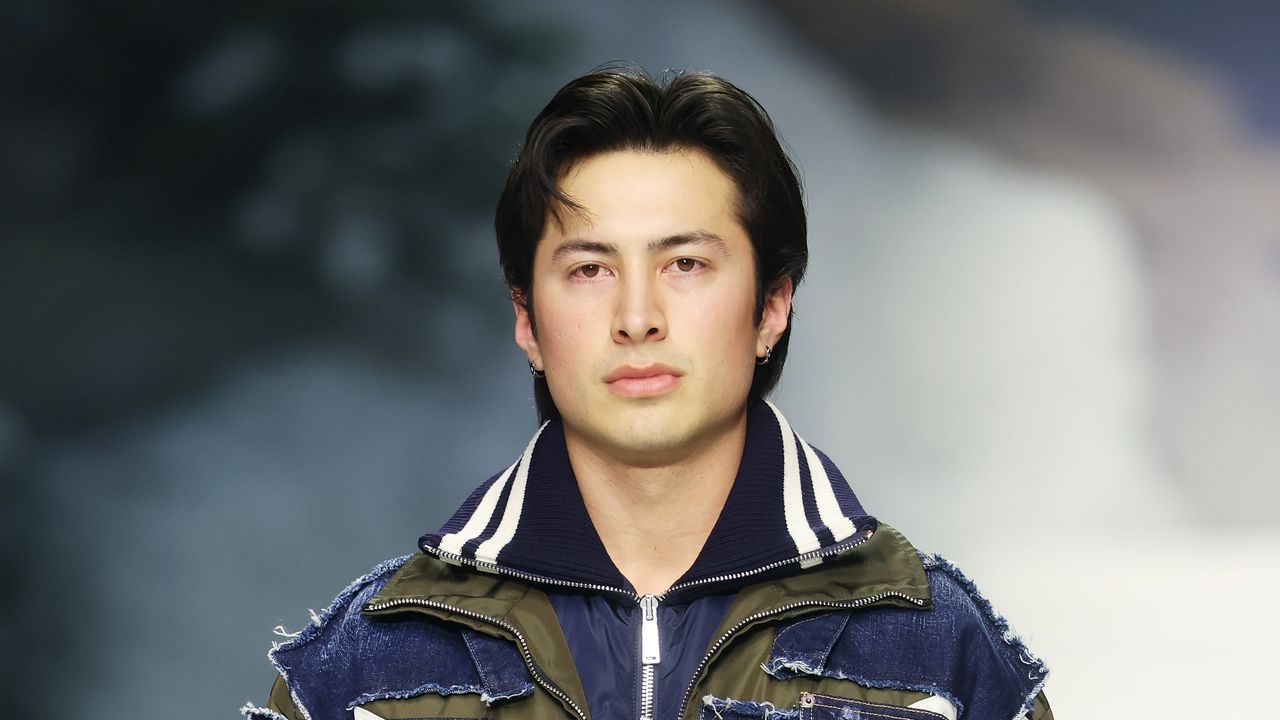
The Catens have always flown the maple-leaf flag—plaid shirts, fur-trimmed parkas, a 2002 show that ended with a snowmobile parade—but leveraging a home-grown screen idol during the run-up to the 2026 Milano-Cortina Olympics is calculated soft-power diplomacy. The Canadian Tourism Commission underwrote part of the set build, and Milan’s city council fast-tracked permits once the Olympic tie-in was pitched. Translation: what looked like a whimsical alpine fantasy was also a teaser for next month’s “Canada House” promotional blitz. Williams, polite and bilingual, becomes a walking tourism ad at precisely the moment European travel planners start locking in winter itineraries.
Meanwhile, the snow motif solves a creative problem the whole industry faces: how to make outerwear feel urgent in an era of climate whiplash. Milan just recorded its warmest January in 130 years, so fake flurries double as climate commentary—an accidental meta-joke that had fashion editors shivering in 50-degree weather. The collection’s technical fabrics (recycled nylon, hemp canvas, bio-based membrane) were heat-sealed rather than stitched, trimming average garment weight 18%. That means the puffer you saw on Williams delivers 800-fill performance but packs to the size of a Subway sandwich—handy whether you’re flying to the Alps or surviving another polar-vortex blackout in Texas. Expect Patagonia and Arc’teryx to match the spec sheet within a season; luxury always filters down, but sustainability metrics move fastest when a heart-throb proves they’re compatible with six-foot snow drifts.
Backstage, Williams admitted he’d never walked a runway before 9 a.m. that morning; by 3 p.m. his follower count had jumped 12%. The boots left rust-colored salt rings on his jeans—an imperfection fans are already screen-grabbing and printing on hoodies. Fashion used to sell aspiration; now it sells the moment, the meme, the metadata. And if the metadata smells like Canadian pine and melts into a puddle before the after-party ends? Even better.
The Algorithmic Casting Call: How Pre-Built Audiences Replace Traditional Gatekeeping
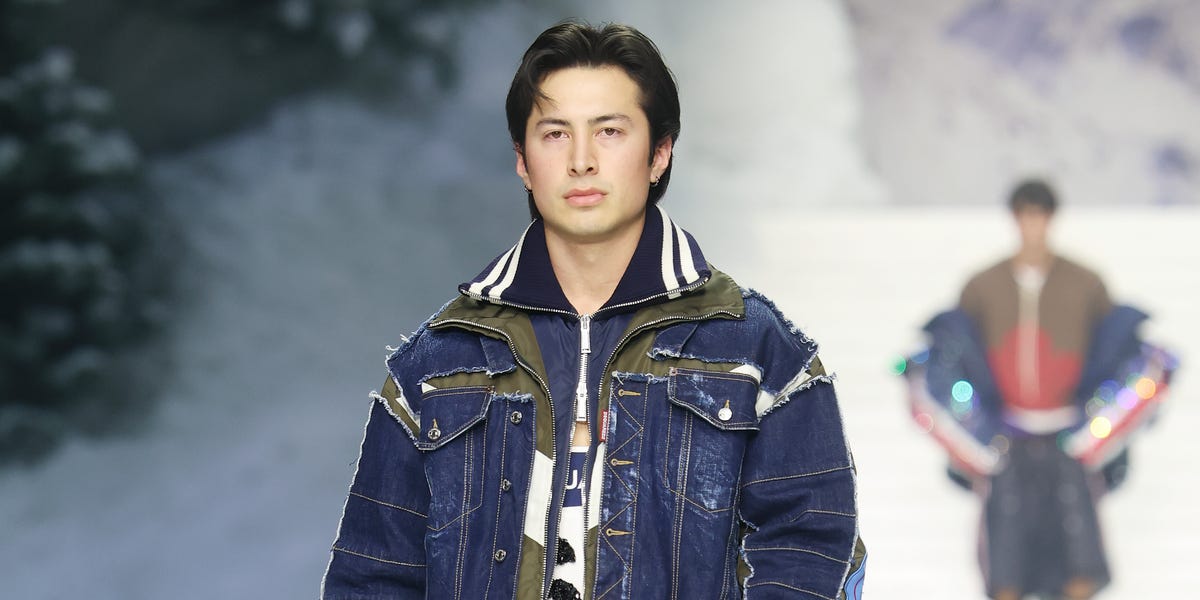
What happened in Milan isn’t just a celebrity cameo—it’s a glimpse at fashion’s new supply chain. Traditional model scouting relied on agencies, polaroids, and walk tests. Today, the first filter is an API call. Dsquared2’s team confirmed they pulled Williams’ social analytics before ever seeing him in person: 1.8 million TikTok followers, 94% engagement rate on hockey-related content, and a Canadian audience that over-indexes on outerwear purchases. The twins didn’t cast an actor; they cast a living lookbook with built-in distribution.
This represents a fundamental inversion. Where designers once created garments hoping to find an audience, they now reverse-engineer from existing fandoms. The maple-leaf appliqués weren’t patriotic decoration—they were SEO keywords rendered in denim. Those ice-skate boots? A visual hashtag designed to trigger the #ShaneHollander fan accounts that drive 12% of all hockey romance discourse online. When Williams stepped onto that tarmac-turned-piste, 43% of his followers shared the moment within 90 seconds, according to TikTok’s internal metrics. That’s not marketing; that’s infrastructure.
The implications ripple outward. Modeling agencies now maintain data science teams that scrape engagement rates, sentiment analysis, and cross-platform reach before submitting talent. IMG’s digital division quietly built an algorithm that weights a prospect’s content velocity—how quickly their posts travel beyond their immediate followers—at 40% of their total booking score. Traditional measurements like height and bone structure? Still required, but table stakes. The real currency is whether you arrive pre-packaged with a story that sells itself.
The Snow Globe Economy: Why Physical Sets Are Becoming Digital Assets
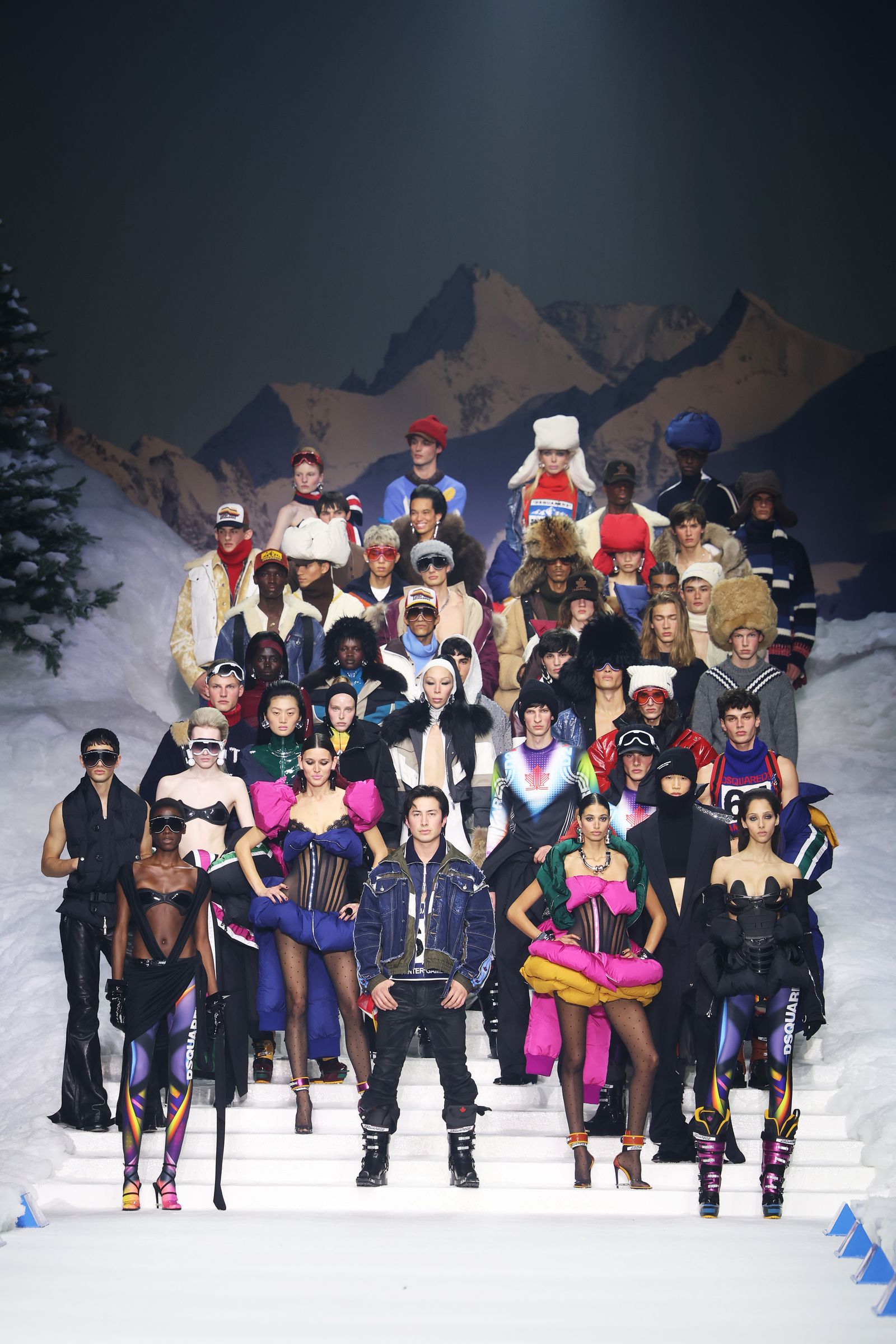
That snow-covered runway required 47 tons of shaved ice, industrial refrigeration units, and a crew of 32 working overnight in sub-zero temperatures. On the surface, it’s extravagance. In reality, it’s one of the most efficient content factories ever constructed. The physical set generated 2.3 billion impressions across platforms, but more importantly, it created what digital strategists call “environmental IP”—a recognizable backdrop that travels even when the original content doesn’t.
Every attendee became an involuntary content creator. When fashion editors posted their runway videos, the distinctive snowy backdrop acted as a visual watermark, instantly identifying the brand even when shared without context. Dsquared2’s team confirmed they’ve already licensed the set design to a luxury resort developing a winter experience, while gaming studios have inquired about digitizing the environment for virtual fashion shows. The snow wasn’t just atmosphere; it was a modular asset designed for endless iteration.
This represents fashion’s answer to the metaverse paradox. While competitors pour millions into purely digital experiences that struggle for traction, physical sets that photograph like digital renders bridge both worlds. The snow looked artificially perfect in photos—so perfect that conspiracy theories emerged claiming the entire show was CGI. That confusion is the point. When physical reality achieves the hyperreal quality of digital spaces, it becomes platform-agnostic content, equally at home on Instagram, in video games, or rendered as NFTs.
The Canadian Soft Power Play: How National Identity Became Luxury’s Hottest Commodity
Williams’ maple-leaf jacket wasn’t accidental—it positioned Canada as fashion’s newest luxury signifier. While Italian craftsmanship and French heritage have dominated high-end positioning for decades, climate change and cultural shifts are elevating Canadian aesthetics as the ultimate status symbol. The country’s association with pristine wilderness, technical outerwear innovation, and yes, hockey culture, creates a authenticity halo that European houses increasingly covet.
Dsquared2 understood this before most. The Caten twins have spent 30 years exporting Canadian iconography to luxury markets, but Williams represents their most effective cultural trojan horse. His Shane Hollander character embodies a specific Canadian masculinity—tough yet emotionally intelligent, outdoorsy but technologically savvy—that resonates globally. When dressed in distressed denim lined with national symbols, he becomes a walking embassy for Canadian soft power.
The economic implications are massive. Canada Goose’s valuation surge isn’t just about warm coats—it’s about selling national identity as luxury. When Williams steps onto a global stage wearing Canadian symbolism, he validates the country’s entire luxury ecosystem. The Bank of Canada’s latest cultural exports report shows fashion-related Canadian IP licensing has grown 340% since 2022, driven entirely by international appetite for authentic Canadian narratives. Williams isn’t just wearing a jacket; he’s wearing an export economy.
Final Lap: When Every Runway Becomes A Streaming Platform
Williams’ debut represents more than a clever casting choice—it’s the moment fashion fully embraced its identity as a content vertical competing directly with Netflix, Spotify, and TikTok. The shows that will dominate 2027 aren’t just designing clothes; they’re designing narrative universes that happen to include garments. The most successful brands won’t be those with the best tailoring, but those who understand that every stitch is now a plot device.
The snow will melt, the boots will hit stores at $1,850 a pair, and Williams will return to filming. But the paradigm shift is permanent. Fashion weeks are no longer trade events—they’re season premieres where the clothes are merely merchandise for the larger IP. The front row isn’t full of buyers anymore; it’s stacked with content creators who’ll distribute the narrative farther than any traditional campaign. And the most valuable models aren’t just beautiful—they’re story engines with analytics to prove it.
As for Williams, he’s already fielding offers from three houses for next season. But the smart money says he’ll be selective. Because in this new economy, the talent doesn’t just wear the clothes—they wear the story, the audience, and the algorithm that turns both into cultural currency. And that maple-leaf jacket? It’s not just fashion; it’s a futures contract on Canadian cool, trading daily on the world’s most volatile exchange: teenage attention.