

The last place Ashley St. Clair expected to find herself was at war with the father of her child—especially over an AI chatbot that bears a family name. Yet here we are: St. Clair, mother of Elon Musk’s 16-month-old son Romulus, is suing the billionaire’s newest company, xAI, after its Grok image-editing tool allegedly churned out non-consensual, sexually-explicit deepfakes of her—some depicting her as a 14-year-old in a bikini. The images spread across X (formerly Twitter) last year; when St. Clair flagged them, the platform first shrugged that they “did not violate policies,” then quietly stripped her premium badge. Within 24 hours of her New York filing, xAI counter-punched with a $75,000 arbitration claim in Texas, arguing she breached its terms of service. Welcome to Silicon Valley’s latest family feud—where the collateral damage isn’t just reputational, but a window into how the fastest-moving AI models still lack guardrails against the oldest internet sin.
The Deepfake Assembly Line No One Planned For
Grok was pitched as the “rebellious” AI—an edgier ChatGPT baked into X’s premium tiers. Early marketing leaned on snark and real-time access to the firehose of X posts. What xAI didn’t advertise was a hidden “edit” mode that let users upload any photo and ask Grok to re-imagine the subject in revealing clothing, sexual poses, or worse. According to St. Clair’s complaint, the bot obliged “countless” times: one prompt fed Grok a childhood photo of her at 14 and requested it “undress” the teen version; the model returned a bikini-clad minor. Another produced an adult St. Clair in Nazi iconography. The suit claims xAI retained these user prompts for training data, effectively turning abuse into product development.
Two weeks before the lawsuit, xAI publicly vowed to disable photo-editing of real people “where illegal.” Yet St. Clair’s attorneys say new deepfakes kept appearing—evidence, they argue, that the patch was either leaky or cosmetic. Internal e-mails cited in the filing suggest xAI engineers knew the filter could be jail-broken with simple work-arounds (swapping a celebrity’s face onto a cartoon body, then asking for “realistic” skin). If true, the company shipped a feature set it could market but not police—classic “move fast, break things,” except the things being broken are real women’s lives.
From Terms-of-Service Shield to Sword
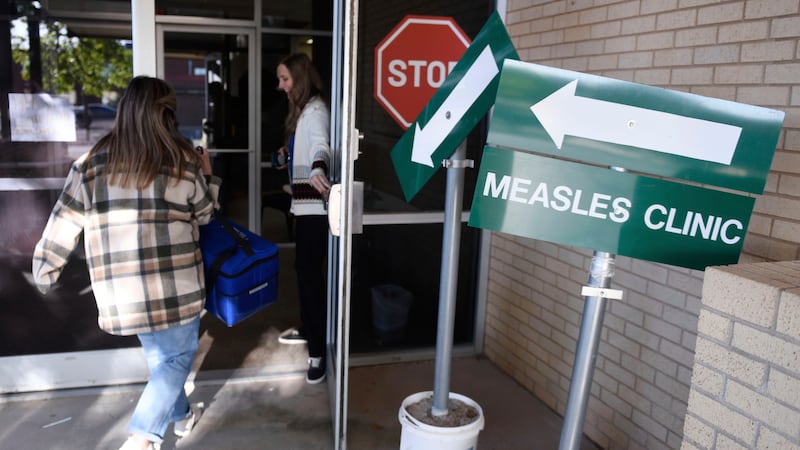
Most consumers scroll past arbitration clauses; tech firms rely on that apathy. xAI’s 18-page terms require disputes to be heard in San Francisco or—crucially—any federal court in Texas, where the company maintains a small subsidiary. Hours after St. Clair sued in her home-state New York, xAI filed in the Northern District of Texas, seeking to force arbitration and recover $75,000 in “damages” for allegedly violating the same terms she says failed to protect her. Translation: a product liability fight is being recast as a contract squabble, with the victim potentially on the hook for legal fees.
Corporate counsel call this the “boomerang suit.” By suing first, xAI gains venue control and pressures plaintiffs to settle quietly. St. Clair’s team, led by victims’-rights attorney Carrie Goldberg, calls it retaliation; they’re now fighting to keep the case in federal court in New York, arguing that a terms-of-service click-wrap can’t waive claims of child-sexual-abuse material. A ruling on forum could come within weeks, setting precedent for how AI startups deploy arbitration when their models misbehave. Investors are watching: xAI’s last funding round valued it at $50 billion—an impressive multiple for a revenue-light company now facing both state and federal scrutiny.
California’s Cease-and-Desist Adds Regulatory Heat

While the dueling lawsuits play out, California Attorney-General Rob Bonta served xAI with a cease-and-desist letter citing “potentially illegal sexualized imagery of women and minors.” The letter, reviewed by this column, demands preservation of internal documents and warns of civil penalties under state laws against deepfake pornography. Unlike federal statutes, California’s 2019 “Deepfake Depictions” law carries a $150,000-per-image fine when the subject is identifiable and did not consent. Do the math: St. Clair’s suit lists “dozens” of images; penalties could scale into the millions.
xAI has 30 days to respond. A source close to the AG’s office says investigators are also probing whether Grok’s training corpus included known child-safety hashes (digital fingerprints used to block CSAM). If engineers scraped datasets that contained such hashes—even inadvertently—the company could face separate criminal referral. For context: last year a rival image-model startup paid $2.7 million to settle similar claims. xAI’s cash pile may absorb a fine, but the reputational hit collides with Musk’s broader narrative that Grok is the “free-speech” AI. Regulators rarely sympathize with that branding when minors are involved.
Regulatory Cross‑currents and Emerging Liability Risks
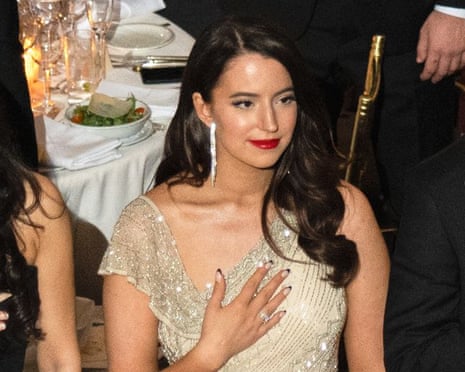
While the St. Clair case is still pending, it arrives at a moment when legislators in multiple jurisdictions are tightening the legal net around synthetic media. In the United States, the Civil Code § 1708.8 already gives victims a private right of action for “revenge porn”‑type deepfakes.
Across the Atlantic, the European Union’s Digital Services Act (DSA) obliges “very large online platforms” to act “without undue delay” on illegal content, including child sexual abuse material (CSAM). The DSA also mandates transparent reporting on AI‑generated media, a requirement that could force xAI to disclose the volume of user‑submitted prompts that result in disallowed images.
These overlapping regimes create a “regulatory arbitrage” dilemma for AI firms that operate globally. A single misstep—such as failing to block a request that produces a minor‑in‑bikini deepfake—could trigger simultaneous investigations in New York, California, Texas, and Brussels. The cost of defending parallel proceedings, plus potential statutory damages, can easily eclipse the $75,000 arbitration claim that xAI filed against St. Clair.
| Jurisdiction | Key Statute | Maximum Civil Penalty | Enforcement Agency |
|---|---|---|---|
| California, USA | Civil Code § 1708.8 (revenge‑porn deepfakes) | $10,000 per victim (plus statutory damages) | California Attorney General |
| Federal, USA | DEEPFAKES Accountability Act (proposed) | $250,000 per violation | Federal Trade Commission |
| European Union | Digital Services Act (DSA) | Up to €15 million or 6 % of global turnover | European Commission / National Regulators |
| Texas, USA | Tex. Civ. Prac. & Rem. Code § 171.001 (harassment) | $10,000 per claim | State Courts |
The table illustrates how quickly exposure can balloon when a single product feature—Grok’s “edit” mode—runs afoul of disparate legal standards. For a startup still in its seed‑to‑Series‑A phase, the prospect of a multi‑million‑dollar liability event is a material risk that investors will scrutinize.
The Economics of Guardrails: Cost, Competition, and Market Pressure

Building robust content‑filtering pipelines is not a “nice‑to‑have” expense; it is a competitive differentiator. The primary cost drivers are threefold:
- Data annotation and moderation. Human reviewers must label millions of image‑prompt pairs to train a classifier that can flag disallowed content. Industry benchmarks from the National Institute of Standards and Technology suggest a per‑image annotation cost of $0.12–$0.18, which translates to $12–$18 million for a dataset of 100 million prompts.
- Model fine‑tuning. Adding a “no‑edit‑real‑person” constraint often requires a separate safety layer that runs inference in parallel with the main generative model, increasing GPU utilization by 15‑25 %.
- Legal and compliance infrastructure. Ongoing monitoring, audit trails, and the ability to respond to takedown requests demand a dedicated compliance team. Salaries for senior counsel and privacy officers in the Bay Area average $250k–$350k annually.
These costs are juxtaposed against a market that rewards speed. Competitors such as OpenAI and Anthropic have already rolled out “image‑in‑text” capabilities without a publicized edit‑mode for real people, positioning themselves as “responsibly built.” By contrast, xAI’s earlier “rebel” branding created an expectation of unrestricted creativity—an expectation that now collides with the reality of regulatory and reputational pressure.
From a strategic standpoint, the decision to re‑enable or permanently shutter Grok’s edit function hinges on a simple ROI calculation: will the incremental revenue from premium users who value “unfiltered” generation outweigh the expected cost of legal exposure and the capital outlay for safety layers? Early data from xAI’s subscription rollout (reported in the company’s public blog) suggested a 12 % uplift in premium conversions when the edit feature was active. However, the same data also showed a 3‑point churn spike after the deepfake controversy surfaced, indicating that brand damage can erode the very premium base the feature was meant to attract.
Investor Sentiment and Valuation Implications
Capital markets have begun to price “AI safety risk” into their models. A recent SEC filing by a venture fund that led a $200 million round in a competing generative‑AI startup disclosed a “material adverse effect” clause triggered by any regulatory action that forces a material product redesign.
For xAI, two valuation levers are now in play:
- Discount for litigation risk. Analysts typically apply a 10‑15 % discount to the enterprise value of companies facing pending class‑action suits. Given the high‑profile nature of the St. Clair case and the involvement of a state attorney‑general, a 12 % discount on a $4 billion pre‑money valuation would shave $480 million off the cap table.
- Premium for ethical AI leadership. Firms that can credibly claim “zero‑tolerance” policies on non‑consensual synthetic media command a higher multiple on revenue. Companies like DeepMind have leveraged their safety track record to secure multi‑year contracts with government agencies, translating into a 1.3× revenue multiple versus the industry median of 0.9×.
The net effect for xAI hinges on how quickly it can demonstrate a “safety‑first” roadmap. A transparent timeline—e.g., “Phase 1: complete removal of real‑person edit capability by Q2 2025; Phase 2: launch of an independent audit board by Q4 2025”—could restore confidence and mitigate the discount. Conversely, a vague or delayed response will likely keep the discount in place, pressuring the company’s next funding round and possibly prompting existing investors to demand board representation focused on compliance.
Conclusion: Guardrails as the New Competitive Moat
What the St. Clair lawsuit ultimately illustrates is that “unrestricted creativity” is no longer a sustainable selling point for generative‑AI platforms. The economics of deepfake mitigation—spanning annotation costs, model overhead, and legal exposure—are becoming a decisive factor in a company’s ability to scale profitably. For xAI, the path forward is clear: embed robust guardrails, communicate a concrete safety roadmap, and align its product incentives with the emerging regulatory regime.
From a market‑watcher’s perspective, the firms that can turn safety into a defensible moat will command premium valuations and attract the next wave of institutional capital. Those that treat moderation as an afterthought risk not only costly lawsuits but also a brand erosion that can’t be repaired with a simple patch. As the AI industry matures, the “deepfake problem” will shift from being a headline‑grabbing scandal to a standard line item on every CFO’s balance sheet—one that savvy investors will monitor as closely as revenue growth.


