Quinton Aaron had just reached the seventh step of his Atlanta apartment staircase when his world went sideways. One moment the 6-foot-8 actor—whose gentle-giant portrayal of Michael Oher in The Blind Side made millions misty-eyed—was gripping the banister, humming an old church hymn. The next, both legs turned to concrete. No pins-and-needles warning, no buckle, no pain. They simply quit, as if someone had yanked the power cord on the 41-year-old’s lower body. Aaron pitched backward, shoulders slamming against the treads, cell phone clattering down into the gloom below. By the time neighbors heard the thud and rushed out, the actor’s famous frame lay crumpled like a fallen oak, his dark eyes wide with something deeper than fear: the crushing realization that the body he’d spent two years reshaping—shedding 200 pounds, swapping late-night wings for 5 a.m. treadmill sessions—had still found a new way to fail him.
A Fall That Shocked Everyone—Doctors Included
Inside the ICU at Piedmont Atlanta, the questions keep piling up faster than the gauze pads on Aaron’s bedside tray. Blood panels, spinal taps, MRIs—each test returns a fresh shrug. “Idiopathic leg paralysis” is the working phrase, a Latin-smothered way of saying we don’t know yet. What the team does know is chilling enough: a rampaging blood infection has parked itself in Aaron’s cardiovascular highway, sending inflammatory flares through every capillary. One minute his blood pressure surges like a fire hose; the next it plummets, leaving monitors shrieking. Physicians whisper about sepsis, about how a routine bug can morph into a body-wide blaze when immunity is already worn thin.
Three months earlier, Aaron had been boasting to radio hosts about his rebound from a March bout with Type A flu and bilateral pneumonia. “I dodged a bullet,” he laughed, describing the 2019 respiratory infection that once left him gasping for air in a Beverly Hills hotel as “the storm before this rainbow.” Friends say he treated fitness like a second chance at life, posting sweaty selfies captioned #StillHere. Yet the very discipline that carved 200 pounds off his 575-lb peak may have masked warning signs—fatigue he chalked up to extra cardio, calf cramps he blamed on dehydration, a low-grade fever he cooled with Tylenol and prayer. In Hollywood’s weight-loss mythology, transformation equals triumph; no one scripts the sequel where the body, stripped of the padding it once relied on, becomes newly vulnerable.
Conflicting Reports, One Frightened Family
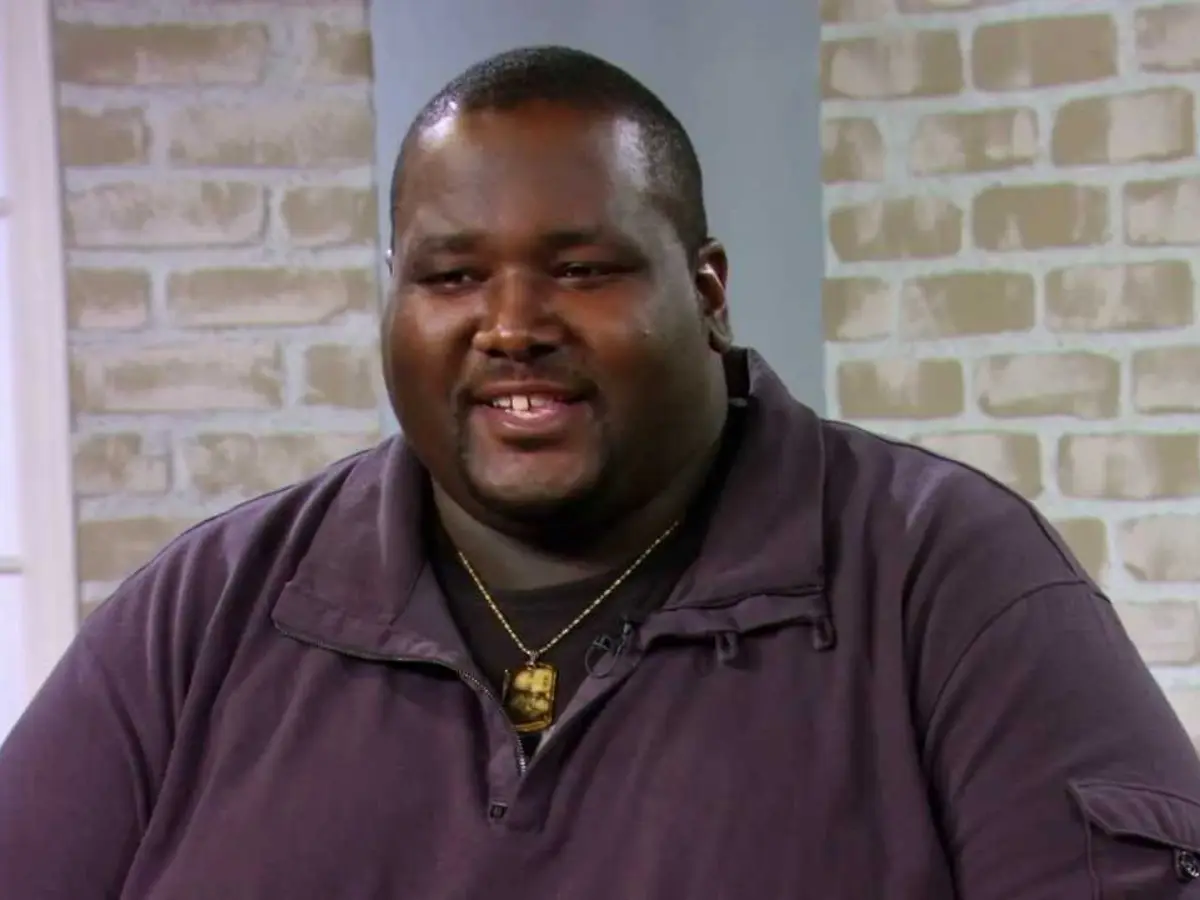
Outside the hospital, the story grows legs faster than the actor can move his. A GoFundMe page launched by a cousin claims Aaron is “on life support,” painting a dire scene of ventilators and beeping countdowns. Within hours, donations crest six figures—fans trading memories of popcorn-fueled nights watching The Blind Side for $25 pledges. Then the actor’s longtime manager, Derek, fires off a statement: Aaron is “stable, alert, Face-Timing his mom between tests.” Life support? “An exaggeration,” Derek insists, though he concedes oxygen by nasal cannula and a steady drip of broad-spectrum antibiotics count as “supportive care.” The contradiction ricochets across TMZ, Twitter, TikTok—each platform trimming nuance like a barber chasing the perfect fade.
Inside the waiting room, the PR spin feels obscene. Aaron’s mother, Clarice, hasn’t left the vinyl recliner since admission night; she clutches a Ziploc of her son’s favorite sour gummies, hoping the familiar crinkle might coax a smile. “I don’t care what they call it—life support, leg support, love support,” she tells me, voice cracking. “My baby can’t walk. That’s all I need to know.” She keeps replaying their last conversation: Quinton teasing that he’d outrun her one day, maybe buy her a double-wide porch to watch him sprint past. Now every beep from the cardiac monitor feels like a metronome counting down possibilities.
The family’s finances are as fragile as his prognosis. SAG-AFTRA health insurance covers a chunk, but out-of-network specialists demand retainers up front. The GoFundMe cash offers breathing room, yet Derek worries the “life-support” wording could taint donor trust if Aaron pulls through quickly. It’s a cruel paradox: Hollywood’s gentle giant built a brand on sincerity; now sincerity needs a marketing strategy.
From Red-Carpet Cheers to ICU Silence
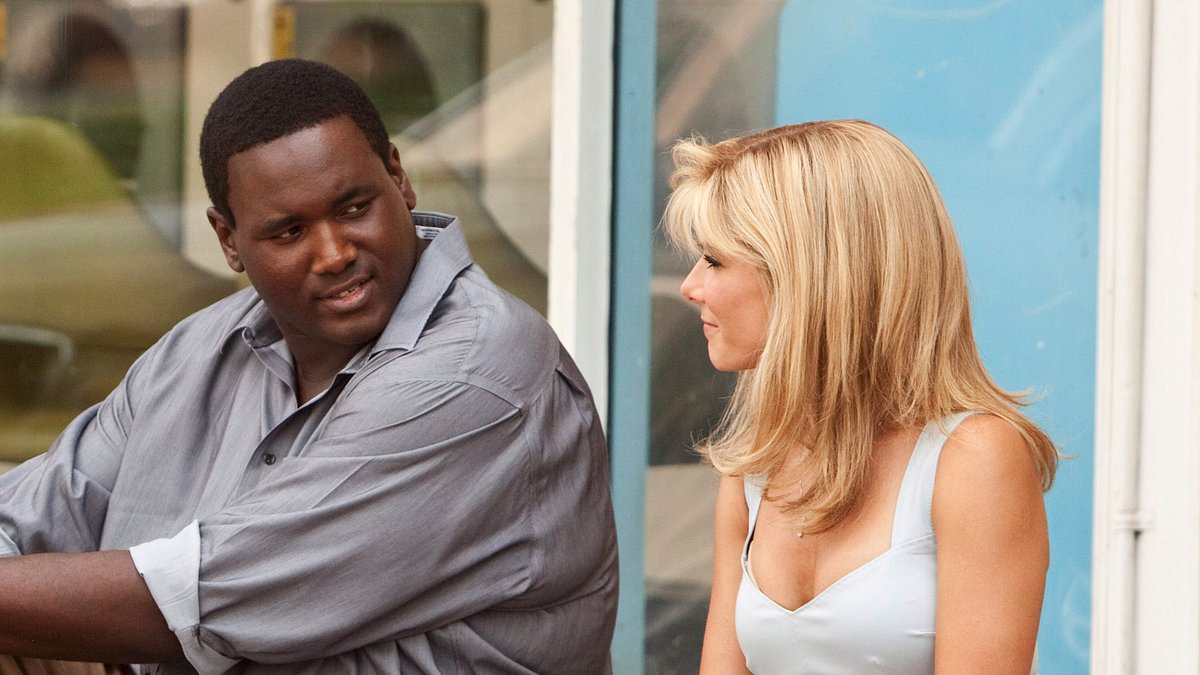
There’s a photo on Quinton Aaron’s Instagram grid from last November: tuxedo sleeves cinched at the wrist, 175-lb weight-loss grin, standing beside Sandra Bullock at a charity gala. The caption reads “Still can’t believe this is my life.” Scroll back further and you’ll find him holding a toddler in a hospital ward, visiting kids who idolize the oversized kid who made good. Those images cemented an archetype—big heart, bigger hugs, the world’s cuddliest underdog. But in the ICU, archetypes dissolve into anatomy. Nurses chart urine output; respiratory therapists measure tidal volume. Fame buys you visitors—actor friends trickle in with baseball caps pulled low—but it doesn’t buy answers.
Doctors have floated everything from Guillain-Barré syndrome to a rare paraneoplastic syndrome, though oncology scans show no tumors. Infectious-disease specialists grilled him about travel—had he been hiking? eating raw oysters?—but Aaron’s recent world has been Atlanta-Fulton County Library readings and outpatient physical therapy. The only souvenir he brought home was a stubborn cough he blamed on seasonal allergies. Now that cough is gone, replaced by the soft click of a peripheral IV flushing heparin into his left arm.
His weight-loss journey complicates the puzzle. Rapid drops can stress the immune system; loose skin folds invite fungal infections; vitamin deficiencies sneak past routine labs. Yet friends insist he did everything “by the book,” guided by a physician-approved plan. If anything, the discipline that saved his life may have camouflaged the wolf now tearing through his bloodstream. Somewhere between 575 and 375 pounds, the line between healthy and hollow wafer-thin—and Aaron stepped over it without noticing.
The Weight of Transformation: When Progress Masks Peril
Aaron’s 200-pound weight loss—from 575 to 375 pounds—was supposed to be his redemption arc, the third-act twist that Hollywood scripts are built on. He’d traded drive-thru combos for salmon fillets, posted grinning selfies from empty gyms at 4 a.m., and spoken openly about the “gift of a second chance.” But rapid weight reduction can yank the rug from under an immune system already battered by years of inflammation. Visceral fat doesn’t vanish quietly; it floods the bloodstream with free fatty acids that can stress the liver and scramble immune signals. Add a recent bout of Type A flu and pneumonia, and the body’s repair crews were already working overtime.
| Risk After Major Weight Loss | Why It Matters |
|---|---|
| Immune suppression | Caloric deficit lowers T-cell production |
| Micronutrient gaps | Rapid fat loss releases stored toxins |
| Residual inflammation | Can trigger autoimmune flares |
Doctors now suspect the stairway collapse may be the visible tip of a sub-clinical avalanche: a dormant viral fragment re-ignited, or a blood-borne bacteria that slipped past a weakened gut barrier. In other words, the same transformation that saved Aaron’s career may have quietly mortgaged his health.
Between Life Support and Life Assertion: The Conflicting Narratives
Scroll through the GoFundMe launched by his cousin and you’ll read “life support” in bold, accompanied by a $200,000 goal to keep the actor “stable while his organs decide whether to stay or go.” Yet Aaron’s manager insists the star is “alert, texting, and joking with nurses.” The dueling accounts feel less like PR spin and more like the fog that descends when medical billing codes collide with human panic. Hospitals bill by the hour; GoFundMes bill to our hearts.
The truth is likely somewhere between the monitors. Pressors—drugs that squeeze blood vessels tight enough to keep a crashing patient conscious—can make a person look vibrantly awake even as their kidneys flirt with shutdown. Likewise, “life support” can mean anything from full intubation to a temporary balloon pump assisting the heart. What both camps agree on is the price tag: ICU care in Georgia averages $4,500 per diem before antibiotics, imaging, or specialist consults. For an actor whose last studio paycheck arrived before the streaming boom, that math turns a medical crisis into a solvency cliff.
From Blind Side to Blind Spot: The Danger of Being the “Feel-Good Story”
America loves a transformation tale—especially one starring a soft-spoken Black man who once outweighed an NFL linebacker. Aaron’s weight-loss posts went viral because they let viewers believe grit and grace can outrun genetics, poverty, and the ghost of childhood trauma. But public affection can mutate into silent expectation: if you conquered 200 pounds, surely you can lick a little blood infection, right? That narrative pressure can delay care; stars postpone ER trips to avoid paparazzi flashbulbs, and fans flood timelines with “you got this” instead of “get help now.”
Psychologists call it the “benefit-of-the-doubt paradox”: the more beloved the figure, the more we assume someone, somewhere, must be taking immaculate care of them. Meanwhile, Aaron’s single biggest advocate remains his mother, Connie, sleeping on a vinyl recliner and fielding calls from creditors who still address her son by his character’s name. She keeps a handwritten list of every nurse who’s gentled a needle into his bruised forearms, because in the hush between vitals checks, gratitude is the only currency that still spends.
The Next Scene Hasn’t Been Written
Whether Aaron walks out of Piedmont under his own power or wheels into months of rehab, his stairway fall is a stark reminder that bodies are not morality plays. Weight loss can save a life and still leave it vulnerable; infections can ambush the diligent and the careless with democratic cruelty. What remains is the raw humanity we glimpsed in that seventh step—an instant when a man who once protected a quarterback on screen couldn’t protect his own legs from gravity.
So check in on the strong friend. Donate if you can. And the next time a headline trumpets another celebrity miracle, remember the outtakes: the midnight tremors, the insurance pre-authorizations, the cousin refreshing a GoFundMe dashboard while the city sleeps. Healing, real healing, rarely fits a three-act structure. Sometimes it’s just Connie squeezing her son’s hand, whispering the same line over and over until the monitors finally level out: “I’m still here, baby. We got more stairs to climb.”