

Canada’s decision to open its market to Chinese electric vehicles (EVs) has sparked concerns among US officials and Canadian politicians, marking a significant divergence in the traditionally aligned auto industry policies between the two countries. The deal reduces tariffs on Chinese EVs from 100% to 6.1%, making them more affordable for Canadian buyers, with prices potentially dipping to around $35,000 Canadian ($25,000 US).
A Break from the US on Anti-China Tariffs
The Canadian government’s decision to reduce tariffs on Chinese EVs represents a notable shift in its trade policies, decoupling from the US stance on Chinese goods. For years, Canada has followed the US lead on trade policies; however, this new deal indicates a change, potentially increasing competition in the region and benefiting Canadian buyers who may be able to purchase cheaper Chinese EVs.
The agreement includes an initial annual cap of 49,000 Chinese EV exports to Canada, growing to 70,000 over five years. Canadians purchase around 1.8 million vehicles annually, nearly a tenth of the US sales volume. The reduced tariffs are expected to provide Canadian consumers with more affordable and climate-conscious EV options, increasing their choices and access to advanced technology. With over 100 EV brands in China, including prominent names like Geely, Chery, MG, Wuling, and Tesla, Canadian buyers are likely to benefit from the increased competition.
Cybersecurity Risks and Diplomatic Concerns
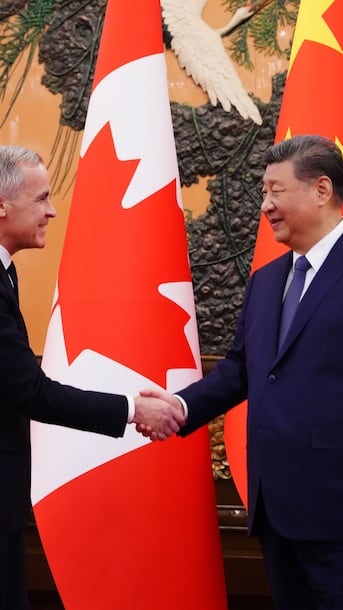
However, not everyone is pleased with Canada’s decision to open its market to Chinese EVs. Concerns have been raised about cybersecurity risks associated with Chinese EVs, given the increasing reliance on connected technology in modern vehicles. The US has been vocal about its concerns, and this issue is likely to remain a point of contention between the two countries.
The diplomatic fallout from Canada’s decision is also noteworthy. The US and Canada have a long-standing relationship in the auto industry, with many American companies operating in Canada. The decision to reduce tariffs on Chinese EVs could potentially strain this relationship, particularly if the US views it as a betrayal.
Implications for the North American Auto Industry

The impact of Canada’s decision on the North American auto industry remains to be seen. With reduced tariffs, Chinese EVs are likely to become more competitive in the Canadian market, potentially disrupting the dominance of traditional automakers. The big question is whether this will have a ripple effect on the US market, forcing American automakers to adapt to the changing landscape.
As Canada navigates its new relationship with China on EVs, the US is likely to be watching closely. The implications of this deal will be far-reaching, and a continued debate about free trade versus protectionism is expected.
Assessing the Impact on North America’s Auto Industry

The introduction of Chinese EVs into the Canadian market is expected to have significant implications for the North American auto industry. Canadian buyers will have access to a wider range of affordable EV options, potentially disrupting the market dominance of traditional North American automakers. The increased competition could lead to a shift in market share as Chinese EV manufacturers capitalize on their competitive pricing and advanced technology.
| Country | Annual Vehicle Sales | Initial EV Import Cap | Projected EV Import Cap (5 years) |
|---|---|---|---|
| Canada | 1.8 million | 49,000 | 70,000 |
| US | 18 million (approx.) | N/A | N/A |
The initial EV import cap of 49,000 is relatively small compared to Canada’s annual vehicle sales. However, the growing cap over five years could lead to increased market penetration by Chinese EV manufacturers, potentially prompting North American automakers to reassess their strategies and invest in more competitive EV technologies.
Geopolitical Implications and Future Trade Relations
The Canadian government’s decision to reduce tariffs on Chinese EVs has sparked concerns about the potential impact on Canada-US trade relations. The US has maintained a Section 301 tariff on Chinese goods, including EVs, citing concerns over intellectual property theft and unfair trade practices. Canada’s divergence from US trade policies on this issue may lead to tensions between the two countries, potentially affecting future trade agreements.
The Canadian government’s move may also be seen as a test case for potential future trade agreements between Canada and China. As Canada navigates its trade relationships with both the US and China, monitoring the diplomatic fallout and potential consequences for the North American auto industry will be crucial.
Long-Term Consequences for the EV Market
The introduction of Chinese EVs into the Canadian market is expected to accelerate the adoption of EVs in North America. With over 100 EV brands in China, Canadian buyers will have access to a wider range of EV options, driving innovation and investment in the EV sector and ultimately benefiting consumers and the environment.
Canada’s decision to open its market to Chinese EVs marks a significant shift in the North American auto industry. While concerns about cybersecurity risks and diplomatic tensions remain, the move is likely to accelerate EV adoption in Canada and potentially beyond. The industry’s evolution will be crucial to monitor, particularly in terms of its impact on the North American auto industry and the global EV market.


