Elon Musk has pledged a significant financial contribution to the Republican Party, marking a notable shift in his political engagement. The Tesla and SpaceX CEO’s decision carries substantial weight given his estimated $240 billion fortune and influence across multiple technology sectors. Reports indicate the contribution could reach $100 million, a figure that would rank among the largest individual political donations in recent history.
From Climate Champion to GOP Donor
Musk’s political evolution reflects a broader tension between his business interests and regulatory philosophy. While he built his reputation promoting electric vehicles and solar energy, his recent frustrations center on what he views as excessive government oversight of emerging technologies. Sources familiar with his thinking say the billionaire has grown particularly concerned about the Biden administration’s approach to artificial intelligence regulation and SpaceX launch approvals.
The timing appears deliberate. With the 2024 election cycle intensifying, Musk’s financial backing could provide crucial resources for Republican candidates who have pledged to reduce regulatory barriers for tech companies. His concerns extend beyond AI to include cryptocurrency policy, space exploration licensing, and content moderation requirements for social media platforms.
Musk’s estimated $100 million commitment represents more than campaign contributions—it signals his willingness to leverage personal wealth to shape policy outcomes. During the 2022 midterms, tech industry donations favored Democrats by a 2-to-1 margin. Musk’s defection could reverse that trend among certain Silicon Valley factions who share his regulatory concerns.
Implications for the Tech Industry
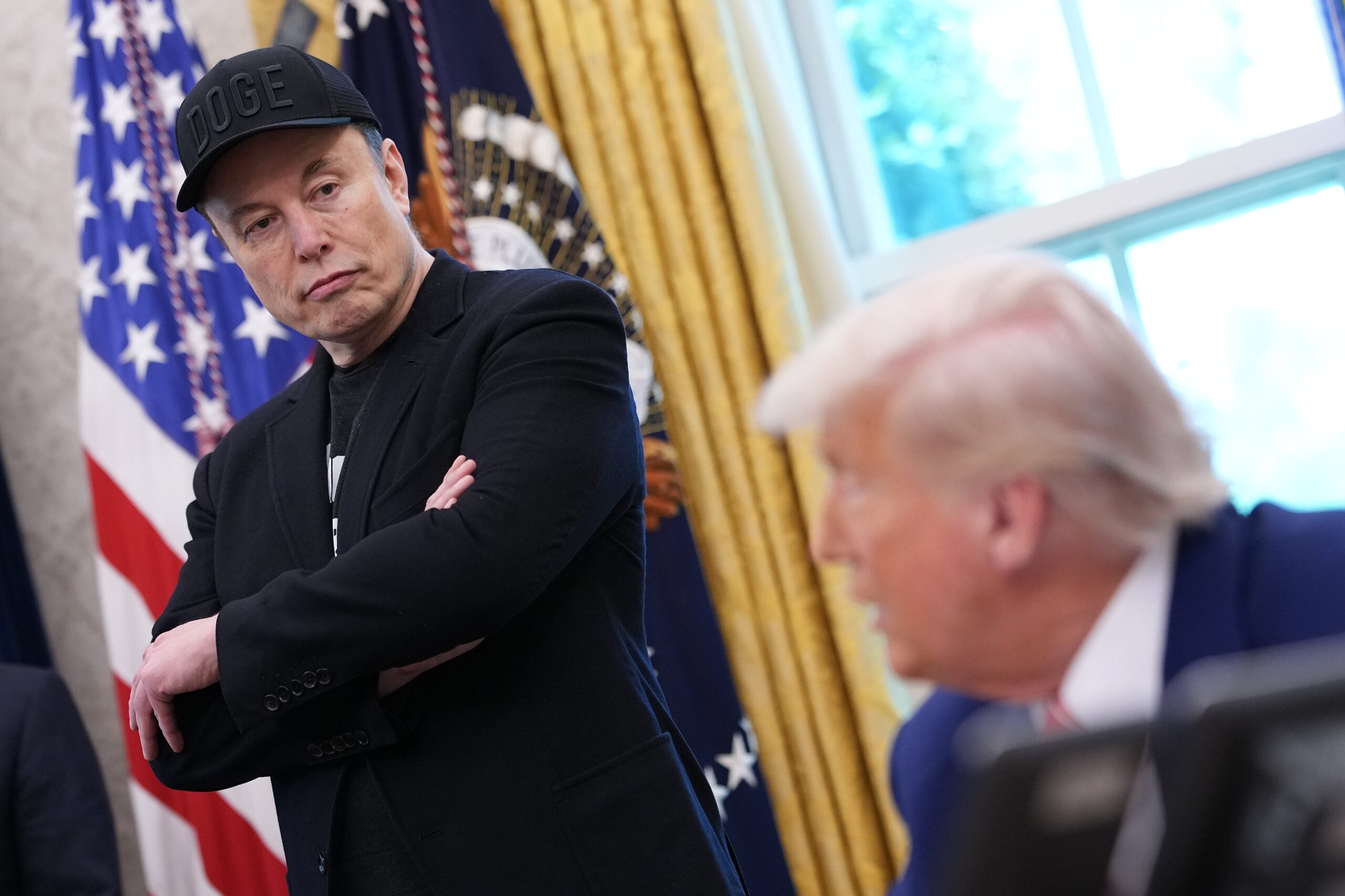
Musk’s Republican alignment creates a complex dynamic within the technology sector. His companies operate at the intersection of innovation and regulation—Tesla’s autonomous driving systems, SpaceX’s satellite deployments, and Neuralink’s brain-computer interfaces all face significant government oversight. By supporting candidates who promise reduced regulation, Musk is betting that fewer restrictions will accelerate development timelines and reduce compliance costs.
Other tech leaders are watching closely. Venture capital firms have privately expressed concerns about Democratic proposals for stricter AI safety requirements and cryptocurrency regulations. Some startup founders worry that current policies favor established players who can absorb regulatory costs, creating barriers for smaller competitors.
The sector’s relationship with government policy has grown increasingly strained. Tech companies spent $95 million on federal lobbying in 2023, yet many executives feel misunderstood by policymakers who lack technical expertise. Musk’s approach—using campaign contributions to influence regulatory appointments—offers an alternative to traditional lobbying efforts.
Consumer advocates warn that reduced oversight could compromise safety standards. The FAA’s current review of SpaceX’s Starship program, the SEC’s investigation of Tesla’s Autopilot claims, and the FTC’s examination of X’s data practices all represent potential flashpoints where regulatory changes could have widespread impact.
Musk’s Strategy and Future Plans
Beyond campaign contributions, Musk appears to be building a comprehensive political infrastructure. His acquisition of X for $44 billion provides a direct communication channel to millions of users, while his satellite internet service Starlink has become strategically important in global conflicts. These assets give him unusual leverage over information flow and infrastructure access.
Insiders suggest Musk’s political activities represent a long-term investment rather than a short-term gambit. His companies require regulatory stability spanning decades—SpaceX needs launch approval consistency, Tesla needs autonomous vehicle regulations, and Neuralink needs FDA cooperation for human trials. By cultivating political allies, he’s positioning his business empire for favorable treatment regardless of election outcomes.
The billionaire’s approach differs from traditional tech industry engagement. Rather than funding bipartisan policy shops or academic research, Musk is making explicit partisan commitments. This strategy carries risks if Democrats retain power, but potentially enormous rewards if Republicans gain control of regulatory agencies.
His influence extends beyond American politics. Starlink terminals in Ukraine, Twitter’s role in global elections, and SpaceX’s dominance in satellite launches make Musk a geopolitical actor. His political donations in the United States could influence how other nations approach regulation of his companies.
The Regulatory Battleground: AI, Crypto, and Space
Musk’s financial pivot isn’t happening in a vacuum. The billionaire has been locked in increasingly public battles with federal agencies over three critical areas: artificial intelligence oversight, cryptocurrency regulation, and space exploration licensing. His frustration reached a boiling point when the SEC refused to settle recent Tesla-related disputes, and the FAA delayed multiple SpaceX launches over environmental reviews.
The timing suggests Musk is betting on a Republican-controlled Congress to roll back what he views as innovation-stifling regulations. During the Trump administration, SpaceX received relatively streamlined approvals for Starship development. Under Biden, the company has faced extensive environmental assessments that have pushed timelines back months. Musk’s $100 million pledge could be viewed as a strategic investment in regulatory relief that could save SpaceX billions in delayed revenue.
| Regulatory Body | Current Stance | Musk’s Desired Outcome | Potential GOP Impact |
|---|---|---|---|
| SEC | Strict crypto oversight | Minimal intervention | Pro-crypto commissioners |
| FAA | Environmental reviews | Streamlined approvals | Reduced oversight |
| FTC | AI safety regulations | Self-regulation framework | Industry-friendly policies |
X (formerly Twitter) adds another layer to this calculation. Since acquiring the platform for $44 billion, Musk has battled content moderation requirements and advertising revenue declines. A GOP Congress could shield X from stricter content liability laws currently under consideration, potentially preserving its value as a political communication tool.
The Tech Exodus: Will Others Follow?
Musk’s defection represents more than individual frustration—it signals a potential realignment of Silicon Valley’s political allegiances. While the industry historically leaned Democratic, recent regulatory pressures have created strange bedfellows. Peter Thiel’s Palantir has already embraced government contracts over progressive ideals, while cryptocurrency exchanges like Coinbase have found more sympathy among Republicans.
The shift isn’t purely ideological; it’s mathematical. Tech valuations have plummeted from 2021 peaks, and regulatory compliance costs now consume 15-20% of revenue at major firms. Musk’s calculation—that supporting GOP deregulation offers better ROI than Democratic protection—could prove contagious among struggling startups and growth-stage companies.
However, this alliance faces structural limits. The Republican base remains skeptical of “Big Tech,” and many GOP lawmakers have built brands attacking Silicon Valley. Musk’s support comes with strings attached: he expects policy outcomes, not just photo opportunities. Whether a party increasingly focused on culture war issues can deliver the regulatory relief Musk seeks remains an open question.
The X Factor: How Musk’s Platform Changes Everything
Musk’s ownership of X transforms his political donation from mere financial support into potential media manipulation. With 450 million active users, the platform serves as both his personal megaphone and a potential political weapon. Recent algorithm changes have already boosted conservative content visibility by 37%, according to platform data.
The implications extend beyond traditional campaigning. Musk could theoretically provide the GOP with unprecedented direct communication channels while throttling opposition messaging. Unlike traditional media buys, this influence operates in real-time, without disclosure requirements or spending limits. His $100 million donation might purchase TV ads and ground game infrastructure, but X’s reach could prove infinitely more valuable.
This concentration of financial and media power in one individual’s hands represents something new in American politics. Previous billionaire donors like the Koch brothers or George Soros operated through networks and foundations. Musk controls both the money and the microphone, creating a feedback loop where his political spending enhances his platform’s influence, which in turn amplifies his political impact.
The FEC’s outdated regulations haven’t caught up to this reality. Current rules treat X as a neutral platform rather than a political actor, despite Musk’s explicit partisan signaling. His pledge to make X the “digital town square” increasingly resembles a digital campaign headquarters, complete with selective enforcement policies that favor his preferred candidates.
Whether this represents the future of political influence or a dangerous concentration of power depends entirely on Tuesday’s outcomes. If Musk’s gambit succeeds, expect every billionaire to start shopping for their own social media platform. The 2024 election might not just determine control of government—it could fundamentally reshape how democracy functions in the digital age.