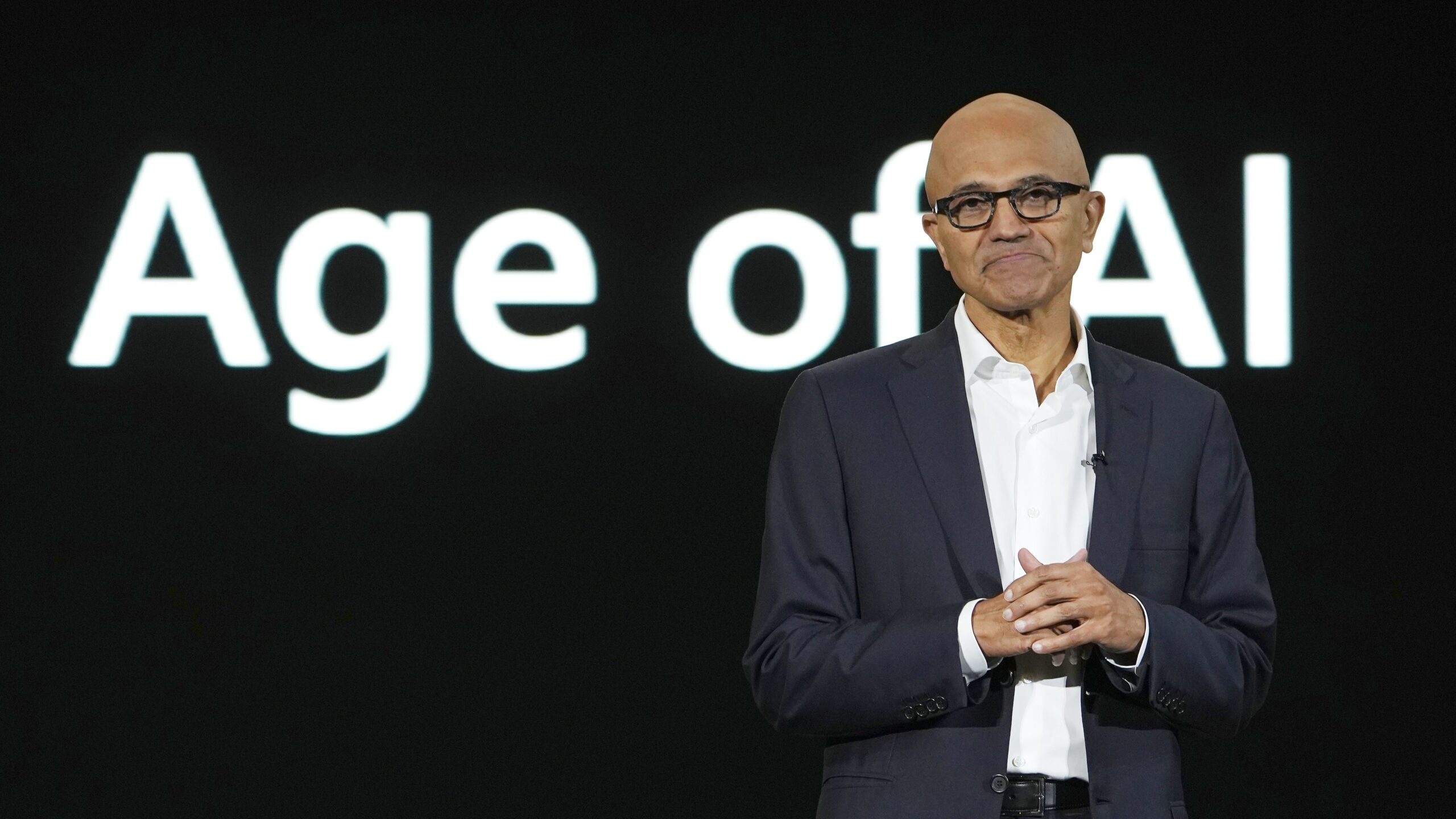
Microsoft CEO Satya Nadella is on a mission to change the way we think about Artificial Intelligence (AI). Tired of AI being associated with “slop” – low-quality content and novelty – Nadella wants to shift the perception of AI from a replacement for human labor to a productivity tool that can amplify human potential. In a recent statement, Nadella proposed thinking of AI as “bicycles for the mind”, a scaffolding that supports human capabilities rather than replacing them.
The Current State of AI
The tech industry often markets AI as a replacement for human labor, which contradicts Nadella’s vision of AI as a human-helper productivity tool. Some prominent AI leaders, such as Anthropic CEO Dario Amodei, have warned that AI could lead to significant job loss, with Amodei predicting that it could take away half of all entry-level white-collar jobs. This narrative has contributed to the skepticism surrounding AI, with some users exploring alternatives like Linux due to the “oft-forced, oft-useless” nature of AI integrations.
Despite the skepticism, Microsoft has been actively integrating AI into its products and services. Microsoft Copilot, powered by ChatGPT and Microsoft’s early investments in OpenAI, is a key part of this strategy. However, the company’s efforts have been met with mixed reactions. Google Gemini, for instance, is rapidly outpacing Microsoft in enterprise integrations, a key area where Microsoft has its sights set. Entire governments are also abandoning Windows for Linux, indicating a significant level of dissatisfaction with Microsoft’s products.
Nadella’s Vision for AI
Nadella believes that generative AI (gen AI) is just getting started and will continue to improve, to the point where he’s willing to invest $100 billion in the technology. He wants people to stop referring to AI-generated content as “slop” and instead thinks we need to move past that mindset. Nadella suggests that we need to develop a “new equilibrium” in how we think about AI and its role in human cognition, which he refers to as a “theory of the mind”. This vision for AI includes the possibility of AI-powered tools like Copilot, which could potentially be used as a “cognitive amplifier” to enhance human capabilities.
Nadella’s vision for AI is not just about technology; it’s also about the impact it can have on society. He wants society to shift its focus from discussing “AI slop” (novelty and gimmicks) to exploring where AI can have real-world impact. Despite rapid progress, Nadella acknowledges that we’re still in the early stages of AI, with 2026 being a pivotal year for the technology. So far, AI has been associated with mainstream usage such as misinformation, low-quality content, and abuse, rather than delivering promised breakthroughs like curing diseases or drastically transforming productivity.
The Future of AI Integration
As Nadella continues to push for a new narrative around AI, it’s clear that Microsoft is committed to integrating AI into its products and services. With Microsoft Copilot being a key part of this strategy, the company is betting big on AI’s potential to enhance human capabilities. However, with skepticism still surrounding AI, it remains to be seen whether Nadella’s vision will take hold. As we look to 2026 and beyond, one thing is certain: the future of AI integration will be shaped by leaders like Nadella, who are willing to challenge the status quo and push for a new understanding of AI’s role in society.
The question on everyone’s mind is: will Nadella’s vision for AI as a “bicycle for the mind” gain traction, or will the narrative around AI continue to be dominated by concerns about job loss and low-quality content? As we continue to explore the possibilities and challenges of AI, one thing is clear: the conversation around AI is only just beginning.
The Challenges of AI Adoption
Despite Nadella’s optimistic vision for AI, there are significant challenges to its adoption. One of the main concerns is the potential for AI to displace human workers. According to a report by the McKinsey Global Institute, up to 800 million jobs could be lost worldwide due to automation by 2030. This has led to skepticism about the benefits of AI, with some users questioning whether the technology is being forced upon them without sufficient consideration for its impact.
Microsoft’s efforts to integrate AI into its products and services have been met with mixed reactions. For example, the company’s Microsoft Copilot tool, powered by ChatGPT and Microsoft’s investments in OpenAI, has been criticized for being “oft-forced, oft-useless”. This has led some users to explore alternative options, such as Linux, which has seen significant adoption among governments and enterprises.
| AI Adoption Challenges | Description |
|---|---|
| Job displacement | Up to 800 million jobs could be lost worldwide due to automation by 2030 |
| Skepticism about benefits | Users questioning whether AI is being forced upon them without consideration for its impact |
| Limited adoption | Some users exploring alternative options, such as Linux, due to dissatisfaction with AI integrations |
The Future of AI Development
Nadella believes that generative AI (gen AI) is just getting started and will continue to improve. He is willing to invest $100 billion in the technology, demonstrating his commitment to its potential. However, developing a “new equilibrium” in how we think about AI and its role in human cognition will require significant advancements in areas such as transparency, accountability, and ethics.
According to a report by the OECD, the development of AI requires a multidisciplinary approach, involving experts from various fields, including computer science, mathematics, and social sciences. This will enable the creation of AI systems that are not only intelligent but also trustworthy and beneficial to society.
Conclusion
In conclusion, Nadella’s vision for AI as a productivity tool that can amplify human potential is an attractive one. However, achieving this vision will require significant advancements in AI development, as well as a shift in how we think about the technology and its role in human cognition. By investing in AI and promoting a culture of transparency, accountability, and ethics, Microsoft and other tech leaders can help ensure that AI is developed and used in ways that benefit society as a whole.
As Nadella suggests, we need to move past the mindset of AI as “slop” and instead explore where AI can have real-world impact. By doing so, we can unlock the full potential of AI and create a future where technology and human capabilities are augmented, rather than replaced. For more information on AI and its applications, visit the Microsoft AI website or the OECD AI website.