## Netflix is Serving Up Ads: A New Era of Streaming
Remember those days when Netflix was a haven from commercials? Well, hold onto your popcorn because the streaming giant is changing the game. Forget ad-free binges; Netflix is now entering the realm of targeted advertising with a bang. Forget whispers, too – Netflix isn’t tiptoeing into this new territory; they’re launching a full-blown ad suite, spearheaded by their Ads VP Nicolle Pangis.
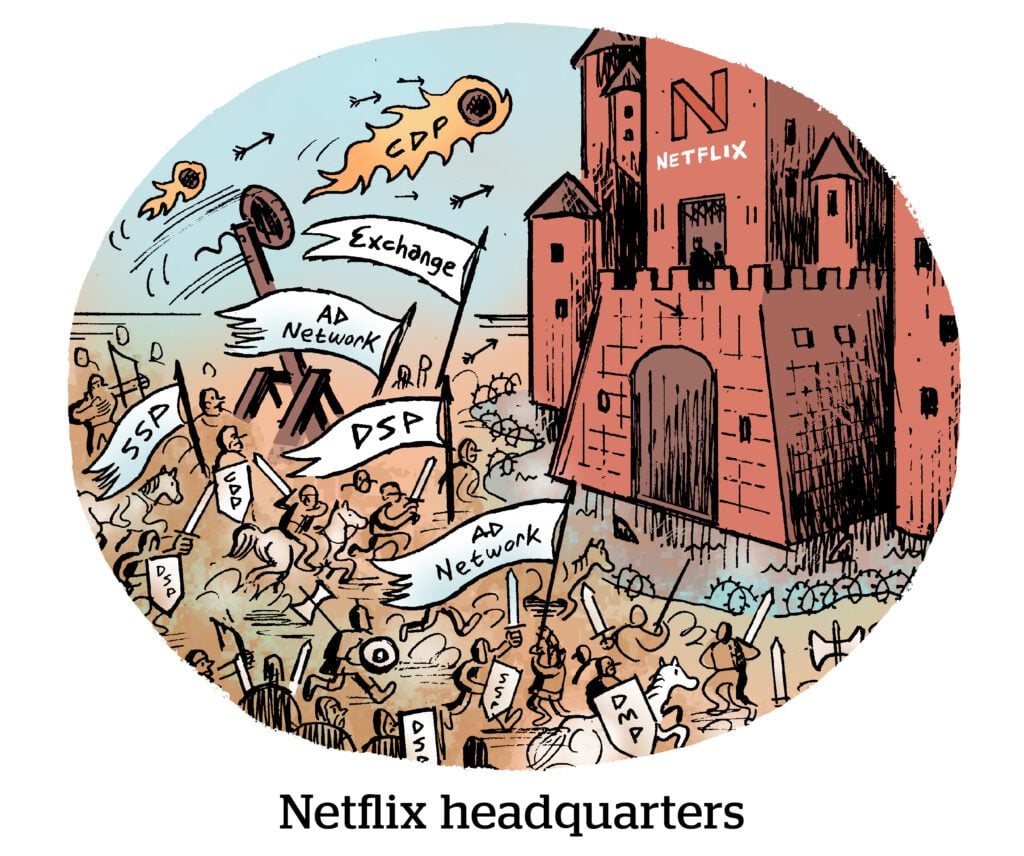
The Rise of Netflix Ads Suite
Netflix has long been a global leader in streaming entertainment, and with its recent foray into ad tech, the company is poised to revolutionize the advertising landscape. Netflix’s expansion into programmatic advertising is a strategic move that leverages its vast member data and sophisticated algorithms to deliver highly personalized ad experiences. This initiative marks a significant shift in how Netflix approaches advertising, moving away from traditional linear broadcasting methods and into a more dynamic, tech-driven ecosystem.
Netflix’s Foray into Ad Tech: A New Era of Personalization
Netflix’s entry into the ad tech space is not just about monetizing its content; it’s about creating a seamless and engaging ad experience that aligns with its members’ viewing habits. By integrating its own ad tech stack, Netflix can offer advertisers the same level of personalization that members enjoy with recommended shows and movies. This move is part of a broader trend where streaming services are enhancing their ad offerings to compete with traditional broadcasters and other digital platforms.
Introducing NAS: Netflix Ads Suite and its Features
Netflix’s ad tech initiative is centered around the Netflix Ads Suite (NAS), which will launch on April 1. NAS includes an in-house ad server and a supply-side platform (SSP) through a partnership with Magnite. This suite allows Netflix to offer advertisers a range of features and capabilities that were previously unavailable. Key features of NAS include:
- Custom Formats: NAS enables the creation of custom ad formats that can seamlessly integrate with Netflix’s content, providing a more immersive ad experience.
- Member Insights: Leveraging its vast repository of member data, Netflix can offer advertisers insights into viewing habits, preferences, and behaviors, allowing for highly targeted and relevant advertising.
- Flexibility and Speed: With its own ad tech stack, Netflix can move faster and offer more flexibility to advertisers, adapting to market trends and member preferences more quickly.
NAS is designed to provide a holistic member experience, focusing on delivering ads that are relevant and engaging without disrupting the viewing experience.
A Better Ad Experience
One of the standout features of Netflix’s ad strategy is its commitment to maintaining a lower ad load while ensuring high engagement. This approach is a departure from many traditional and digital ad platforms, where ad load and frequency can significantly impact viewer experience.
Lower Ad Load, Higher Engagement: Netflix’s Winning Formula
According to Netflix VP of Advertising, Nicolle Pangis, the company has demonstrated that a lower ad load does not necessarily mean lower engagement. “Our ad load is lower, but our engagement of members who are watching ads stays the same,” Pangis explained. This means that members continue to pay attention to ads even hours into their viewing experience, a testament to Netflix’s ability to integrate ads seamlessly into its content.
This winning formula is a result of Netflix’s deep understanding of its audience and its ability to deliver ads that are relevant and engaging. By analyzing member data, Netflix can ensure that ads are not only seen but also noticed and acted upon. This approach is a significant departure from traditional ad models, where high ad loads often lead to viewer fatigue and decreased engagement.
The Power of Relevance: How Netflix’s Insights Can Benefit Advertisers
Netflix’s ability to offer highly relevant ads is one of the key advantages of NAS. By leveraging its member insights, Netflix can provide advertisers with data on what types of content members are viewing and what advertising might be most relevant to them. This level of personalization can lead to better ad performance and higher return on investment for advertisers.
For example, an advertiser promoting a new movie can use Netflix’s insights to target members who have shown interest in similar genres or actors. This targeted approach ensures that ads are not only seen by the right audience but also resonate with them, leading to higher engagement and conversion rates.
Netflix’s ad tech suite also allows for real-time optimization, enabling advertisers to adjust their campaigns based on performance data. This dynamic approach ensures that ads are constantly optimized for relevance and effectiveness, providing a more efficient and cost-effective advertising solution.
Competing with Amazon and Others
Netflix is not alone in its pursuit of ad tech innovation. Amazon, for example, has also made significant strides in streaming ads. However, Netflix’s approach is distinct, focusing on creating a holistic member experience and delivering ads that are relevant and engaging.
Netflix vs. Amazon: A Tale of Two Ad Strategies
While Amazon has taken a more aggressive approach to streaming ads, with ads enabled by default and a focus on scale and lower CPMs, Netflix is moving at its own pace, focusing on quality and relevance. Pangis emphasizes that Netflix’s goal is to make it easy to buy Netflix ads, providing a seamless and strategic partnership for advertisers and agencies.
Netflix’s approach is more measured, prioritizing the member experience and delivering ads that align with viewing habits. This strategy is in line with Netflix’s overall mission to provide a high-quality, personalized viewing experience, which extends to its ad offerings.
Balancing Buyer Demands with Netflix’s Vision
Netflix’s decision to move to a proprietary ad tech stack has raised questions about balancing buyer demands with the company’s vision. While some buyers may wish for more open systems and third-party integrations, Netflix is committed to its own tech stack to advance its capabilities. However, Netflix is not entirely closed off to third-party data and integrations. It is integrated with platforms like DV360, The Trade Desk, and Xandr, and it is also bringing in third-party data providers like Teads.
This balanced approach allows Netflix to maintain control over its ad tech stack while also meeting some of the demands from buyers. By integrating with major ad tech platforms, Netflix ensures that advertisers have the tools and data they need to run effective campaigns, even if it means working within Netflix’s proprietary system.
Netflix’s focus on a lower ad load and high engagement sets it apart from other streaming services with higher ad loads, such as Hulu. As seen in a comparison study, Hulu’s ad load can be significantly higher, with episodes of older shows having over seven minutes of ads. This high ad load can lead to viewer fatigue and decreased engagement, which Netflix aims to avoid with its lower ad load strategy.
A Different Approach: Netflix’s Focus on Holistic Member Experience
Netflix has separated itself from the pack of TV streaming services, at least in the minds of its viewers, whom Netflix refers to as members. Just hearing that “ta-dum” sound can elicit a “Pavlovian response” from viewers, AdExchanger Executive Editor Sarah Sluis said during a fireside chat with Netflix’s new VP of Advertising Nicolle Pangis. Can Netflix do the same for advertisers? It’s certainly trying to. Netflix recently announced its in-house ad tech – an SSP, which is Magnite, and Netflix’s own ad server – capable of bringing the Netflix-style personalization that members know from recommended shows and movies, but for advertising purposes. The Netflix Ads Suite, as the company is calling it, is set to launch April 1, Pangis disclosed during the Cynopsis and AdExchanger CTV Connect event in New York City.
“I think this is the first time we’re actually saying it out loud,” she said during the fireside. Since this is Netflix’s foray into ad tech, it’s only fitting to add a new three-letter acronym to the programmatic pile. “We do talk about it internally as NAS,” Pangis said. Let the “Hit the NAS button” jokes commence.
Programmatic Advertising: A Key to Expanding Capabilities
Pangis brought more detail during the fireside on the features available with the NAS platform and how Netflix approaches advertising differently than linear broadcasters.
“We do talk about it internally as NAS,” Pangis said. “We are looking at what is best for the holistic member experience first and foremost. And we’re very focused on expanding capabilities into programmatic, as an example. Programmatic is a way to get to the same quality content at the same price point. It is a pipe to get to Netflix content, right? Just like a direct IO is a way to get directly to Netflix content. And there’s a variety of ways that we will make those available.”
Our goal is to make it easy to buy Netflix ads. Because we know advertisers and agencies are leaning into fewer and more strategic partners. And obviously we are very focused on being one of them.
Netflix seems to have taken a walled-garden approach like YouTube, to not allow ad tags on inventory. How are you balancing the things on buyers’ wish lists with what you’re willing to build?
We’re moving to our own tech stack, but we’re integrated with DV360, with The Trade Desk and with Xandr. We’re bringing in third-party data right of Teads On The Brain Now that Teads and Outbrain are one, the vision, explained CEO David Kostman when the deal was first announced, is to become an “end-to-end, full-funnel platform for the open internet.”
Implications and Analysis
What Netflix Ads Suite Means for Advertisers and Agencies
Netflix is moving in a very specific direction with very specific intent. We are looking at what is best for the holistic member experience first and foremost. And we’re very focused on expanding capabilities into programmatic, as an example. Programmatic is a way to get to the same quality content at the same price point. It is a pipe to get to Netflix content, right? Just like a direct IO is a way to get directly to Netflix content. And there’s a variety of ways that we will make those available. Our goal is to make it easy to buy Netflix ads. Because we know advertisers and agencies are leaning into fewer and more strategic partners. And obviously we are very focused on being one of them.
The Future of Streaming Ads: A Shift Towards Quality Over Quantity
The verdict? Hulu’s ad experience is a mixed bag. Based on my two-day binge, Hulu seems to have a pretty good handle on its frequency capping. Unlike some other streaming services, I didn’t feel like Hulu was showing me the same ads over and over (and over). But a tolerable frequency rate doesn’t make up for a less-than-impressive ad load – and Hulu has a much higher ad load than the other streaming services I’ve sampled recently. Too many ads I can’t get enough of reality TV, so I watched entire seasons of “Wife Swap,” “Hoarders” and “My 600-Lb. Life.”
Conclusion
Netflix’s foray into the advertising realm with its Ads Suite, as spearheaded by VP Nicolle Pangis, marks a significant shift in the streaming giant’s strategy. The platform is no longer just about exclusive, ad-free content. It’s embracing a new avenue for revenue generation, one that opens doors for a wider audience and diversifies its financial model. The Ads Suite, with its focus on granular targeting and diverse ad formats, aims to attract advertisers seeking a potent, precise platform to reach their desired demographics.
This move has far-reaching implications for the advertising industry. It intensifies competition in the streaming space, forcing established players to adapt and innovate. For advertisers, it presents a compelling opportunity to tap into a highly engaged user base. The success of Netflix’s Ads Suite will depend on its ability to strike a delicate balance – offering compelling ad experiences that don’t detract from the core value proposition of streaming entertainment.