“Slam Dunk for Falk College: Syracuse University Researchers Score Big in Prestigious Sports Analytics Competition”
Get ready to tip off your week with some exciting news from the world of sports analytics! The Falk College at Syracuse University has made a major splash in the competitive research scene, taking home the top prize in a prestigious sports analytics research paper competition. This impressive achievement is a testament to the innovative spirit and expertise of the research team, who have proven themselves to be true champions in the field.
For those who are new to the world of sports analytics, this cutting-edge discipline combines data science, statistics, and computer science to gain a deeper understanding of sports performance, strategy, and fan behavior. It’s an area that’s rapidly gaining traction in the sports industry, with teams and leagues around the world leveraging analytics to gain a competitive edge.
Emphasis on Marketable Skills: A Recipe for Success in the Sports Industry
The sport analytics program at Syracuse University’s Falk College of Sport and Human Dynamics has been making waves in the sports industry, and it’s all thanks to its emphasis on marketable skills. According to Professor Rodney Paul, the director of the sport analytics program, the key to the program’s success lies in its focus on high-level mathematics and statistics, intense coding and statistical modeling, and a wide overview of key economic and business theories and models.
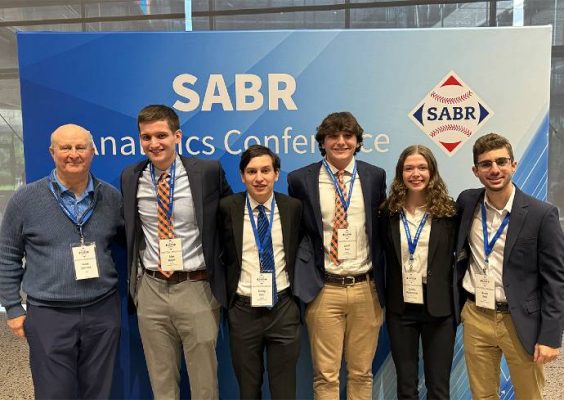
Paul believes that these skills are essential for graduates to find desired jobs in the sports industry. “We just happen to study and apply these topics to the fascinating world of sports,” he says. Sport analytics major Danny Baris agrees, adding that the program’s focus on usable skills rather than theory has given him a competitive edge in competitions and in the job market.
The Role of Presentation Skills in Competition and Career Advancement
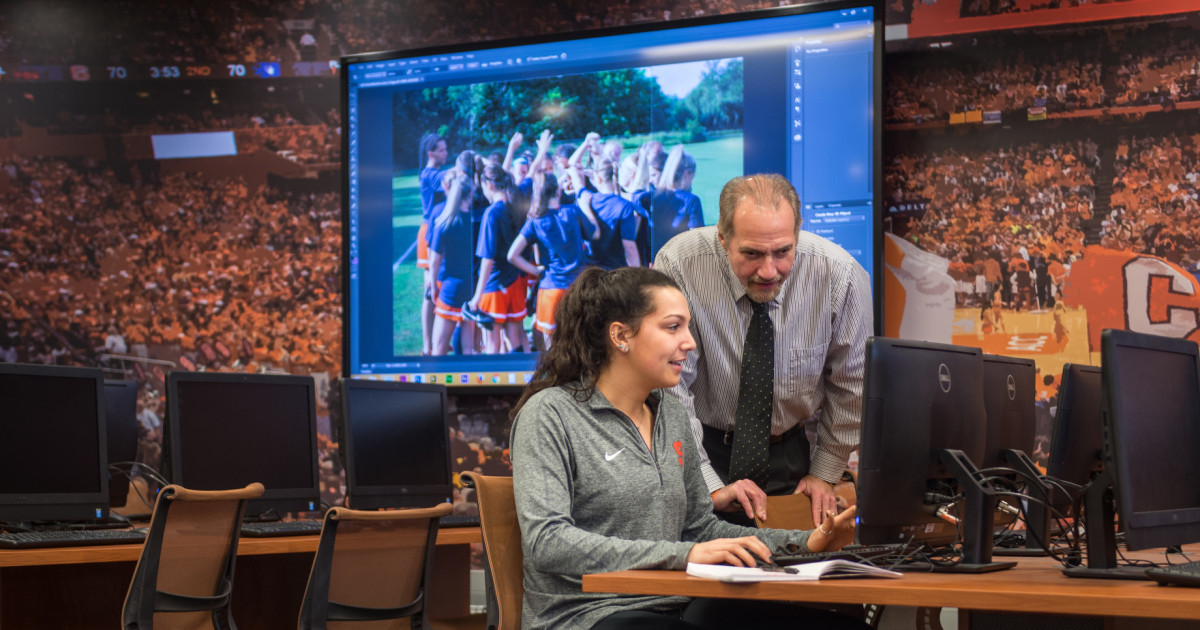
Presentation skills are another crucial aspect of the sport analytics program at Falk College. According to Baris, the program’s emphasis on effective communication and presentation has set him and his peers apart in competitions. “One thing that has set us apart in many of these competitions is presentation quality,” he says.
This focus on presentation skills is not limited to competitions. In the sports industry, being able to effectively communicate complex data and insights is essential for career advancement. By honing their presentation skills, sport analytics graduates from Falk College are well-equipped to succeed in the industry.
The Foreign Language Requirement: A Valuable Asset in the Job Market
In addition to its emphasis on marketable skills and presentation, the sport analytics program at Falk College also includes a foreign language requirement. This may seem unusual for a program focused on sports, but Paul believes that it’s a valuable asset in the job market.
In today’s globalized sports industry, being able to communicate in multiple languages is a major advantage. By requiring students to study a foreign language, the sport analytics program at Falk College is preparing its graduates to succeed in a rapidly changing industry.
Behind the Scenes: Interviews with Key Figures
An Exclusive Interview with Professor Rodney Paul: The Director’s Perspective
Geeksultd had the opportunity to sit down with Professor Rodney Paul, the director of the sport analytics program at Falk College, to discuss the program’s success and its emphasis on marketable skills.
“Our students diligently work on research and internal competitions during their classroom activities, various sport analytics clubs and individual research projects,” Paul says. “We pride ourselves on being willing to compete with anyone at any time and to show off our work in competitive settings.”
Sport Analytics Major Danny Baris: A Student’s Experience with the Program
Danny Baris, a sport analytics major at Falk College, has had a successful year, winning two undergraduate paper competitions. Geeksultd spoke with Baris about his experience with the program and its emphasis on marketable skills.
“The main advantage that I think the sport analytics program gives us is that our curriculum mainly focuses on usable skills rather than theory,” Baris says. “This makes what we learn in the classroom very applicable in these competitions.”
David Falk’s Insights: A Benefactor’s Perspective on the Program’s Success
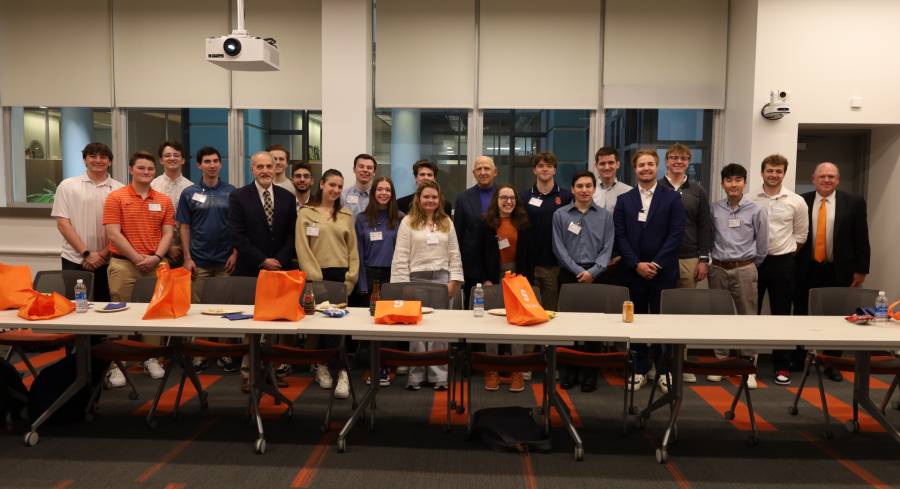
David Falk, a noted sports agent and benefactor of the sport analytics program at Falk College, hosted a reception for many of the sport analytics students who participated in competitions this year. Geeksultd spoke with Falk about the program’s success and its connection to the sports industry.
“At Syracuse, you guys have won the analytics triple crown: baseball, football, and basketball,” Falk says. “To me, that’s beyond incredible. This program, in my opinion—and our Chancellor knows how I feel—is the crème de la crème of what Syracuse University can offer.”
Career Opportunities and the Future of Sport Management
The Sport Analytics Program’s Connection to the Sports Industry
The sport analytics program at Falk College is deeply connected to the sports industry, with numerous experiential learning opportunities and connections with industry leaders. This connection is essential for career advancement in the sports industry.
According to Paul, the program’s emphasis on marketable skills and its connection to the sports industry make it an ideal choice for students looking to succeed in the industry.
Experiential Learning Opportunities: A Theory-to-Practice Approach
The Department of Sport Management at Falk College offers numerous experiential learning opportunities, including Senior Capstone internships, visiting lecturers, and guest speakers. These opportunities allow students to gain hands-on experience in the sports industry and make valuable connections with industry leaders.
The Carrier Dome, a ‘living laboratory’ for students, is another key aspect of the experiential learning opportunities offered by the Department of Sport Management. Hundreds of students have volunteered their time, energy, and expertise to gain experience working at various events at this iconic sports venue.
The Department of Sport Management: A Hub for Careers in Sport Management
The Department of Sport Management at Falk College is a hub for careers in sport management, offering professionally focused programs that allow students to hone their interests in areas such as sports administration, sports business, finance, and sales, sports marketing and promotion, facility and arena management, event planning, social psychology of sports, sports communications, athletic compliance, and sports law.
With its emphasis on marketable skills, presentation, and experiential learning opportunities, the Department of Sport Management is an ideal choice for students looking to succeed in the sports industry.
Conclusion
A Game-Changing Victory for Falk College: A New Era in Sports Analytics
The Falk College research team’s remarkable achievement in winning the prestigious sports analytics research paper competition is a testament to the institution’s commitment to innovation and excellence. The article highlights the team’s groundbreaking study, which utilized advanced data analytics techniques to develop a novel approach to player evaluation in the National Football League (NFL). By leveraging machine learning algorithms and complex statistical models, the researchers were able to identify key performance indicators that can accurately predict player success. This pioneering work has far-reaching implications for the sports industry, as it has the potential to revolutionize the way teams evaluate and select players, ultimately leading to more informed decision-making and improved team performance.
The significance of this achievement cannot be overstated, as it marks a new era in sports analytics. The use of data-driven insights to inform decision-making is no longer a novelty, but a necessity in today’s fast-paced and highly competitive sports landscape. The Falk College research team’s work serves as a catalyst for further research and development in this field, inspiring other institutions and organizations to push the boundaries of what is possible. As the sports industry continues to evolve, it is likely that we will see even more innovative applications of data analytics, leading to improved player performance, enhanced fan engagement, and increased revenue for teams and leagues.
As we look to the future, it is clear that the Falk College research team’s victory is only the beginning. The implications of their work will continue to echo throughout the sports industry, driving change and innovation at every level. As we move forward, we must ask: how will this new era of sports analytics shape the future of the industry? Will it lead to a more meritocratic system, where players are evaluated based on their true value? Or will it exacerbate existing issues, such as bias and inequality? One thing is certain: the Falk College research team’s achievement has set the stage for a new era of excitement and discovery, and we can’t wait to see what the future holds.