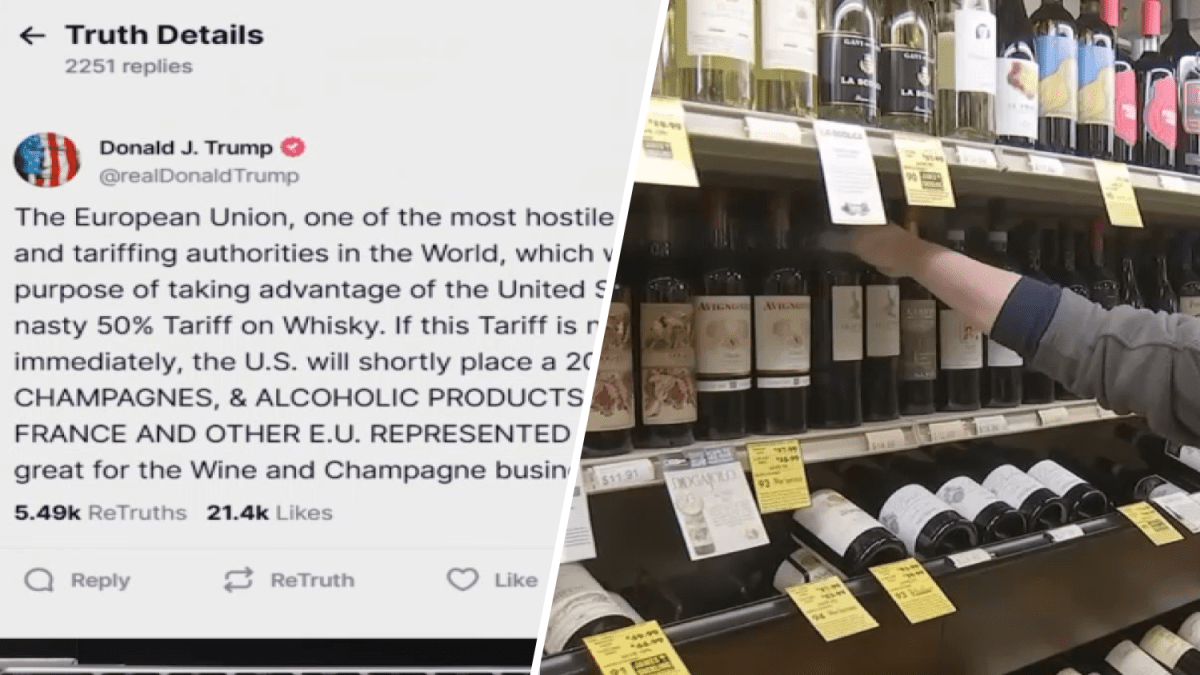
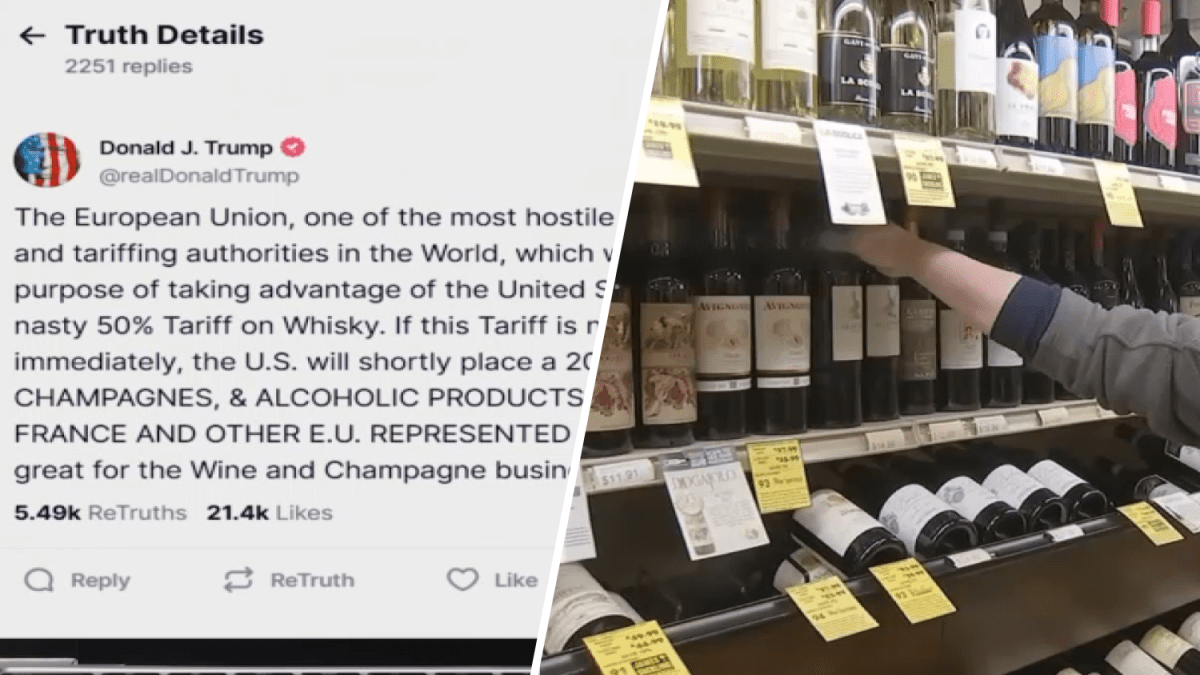
“A Sip of Trade Tensions: Unpacking the Brewing Storm Between Trump and the EU Over Wine and Liquor Tariffs” In a move that’s sending shockwaves through the wine and spirits world, US President Donald Trump has announced plans to impose a whopping 200% tariff on European Union wine and liquor imports, citing allegations of unfair trade practices. This latest escalation in the ongoing trade tensions between Washington and Brussels has left the global wine industry reeling, with many questions hanging in the air. As the world’s two largest economies engage in a battle of wits, one thing is clear: the stakes are high, and the consequences of this showdown could be far-reaching. In this article, we’ll delve into the complex web of trade agreements, tariffs, and geopolitics that’s driving this crisis, and explore what it means for consumers, producers, and the global economy.
The Brewing Crisis: Consequences for EU Winemakers and American Wine Enthusiasts
A 200% tariff on EU wines could lead to a significant decrease in imports from countries like France, impacting US consumers who prefer certain wines. The tariffs could also affect US wine exports, as EU winemakers may struggle to compete with US producers.
American wine enthusiasts may face a loss of access to their preferred wines, leading to increased demand for domestic alternatives. This could potentially benefit US producers and distributors, but also disrupt the supply chain, affecting wine distributors and retailers.
Impact on US Consumers
US consumers rely heavily on imports of wine and champagne, with the former comprising $4.9 billion in annual sales and the latter more than $1.7 billion. A 200% tariff could lead to a significant increase in prices for these products, making them less accessible to consumers.
Ernst Büscher, spokesperson for the German Wine Institute, notes that a 200% tariff would be a “catastrophe” for German winemakers, who rely heavily on the US market. Büscher also notes that when a tariff of 25% was placed on German wines during the first Trump administration, importers and winemakers shared the cost to shield the US and consumers from the price increase.
This would likely be impossible with a 200% tariff, according to Büscher. Chris Swonger, Distilled Spirits Council President and CEO, also expressed concerns about the impact of tariffs on US consumers. “We urge President Trump to secure a spirits agreement with the EU to get us back to zero-for-zero tariffs, which will create U.S. jobs and increase manufacturing and exports for the American hospitality sector,” Swonger said.
Impact on US Wine Exports
US wine exports rank fifth among all nations at about $1 billion, while its exports of champagne and sparkling wine total just $67 million, 12th in the world. A 200% tariff on EU wines could make it difficult for US winemakers to compete in the EU market.
EU winemakers may struggle to compete with US producers, leading to a decrease in US wine exports. This could have a negative impact on US winemakers, who rely on exports to generate revenue.

Impact on Local Businesses
Local businesses, such as wine stores and restaurants, may need to adapt their supply chains and pricing strategies to navigate the changing market landscape. This could lead to increased costs for businesses, which may be passed on to consumers.
General Manager Gary Brady of Canal’s Discount Liquor in Pennsauken, New Jersey, notes that the store carries many wines from Europe and is paying attention to the situation. “Definitely paying attention, yeah. It’s very important, because what happens is those tariffs will get passed to the consumer. Anytime that happens, it always disrupts your regular retail business,” Brady said.
Brady also notes that it’s likely suppliers and distributors currently face more uncertainty than retailers at this point. “I’m sure the suppliers and distributors are thinking about it more than we are, only because they’re buying the product before they’re selling it to us. So, I think there’s probably a little more concern on their part. Once they commit to that purchase, they own it,” Brady said.

Practical Implications and Analysis
The trade war could lead to a surge in demand for domestic wines, potentially benefiting US producers and distributors. However, the tariffs could also disrupt the supply chain, affecting wine distributors and retailers.
Surge in Demand for Domestic Wines
A 200% tariff on EU wines could lead to a surge in demand for domestic wines, potentially benefiting US producers and distributors. This could be a positive development for the US wine industry, which has been growing in recent years.
However, this surge in demand could also lead to increased costs for businesses, which may be passed on to consumers. This could have a negative impact on consumers, who may face higher prices for wine and champagne.
Disruption of the Supply Chain
The tariffs could also disrupt the supply chain, affecting wine distributors and retailers. This could lead to increased costs for businesses, which may be passed on to consumers.
Assistant Teaching Professor Sergei Kostiaev at Drexel University’s Department of Politics notes that a 200% tariff on EU wines could mean the amount of imports from France, for example, will decrease. “When you impose let’s say a 15% tariff or even a 20%, that can be absorbed. People can still buy their preferred French wine if they like it, but if it’s 200%, it’s basically an embargo on trade,” Kostiaev said.
Kostiaev also notes that a 200% tariff would be a “catastrophe” for US consumers, who rely heavily on imports of wine and champagne. “Normal, average bottle of French wine…it will be a lot more expensive. I anticipate the amount of wine coming to America, it will decrease,” Kostiaev said.
Conclusion
The brewing crisis surrounding the 200% tariff on EU wines has significant implications for EU winemakers, American wine enthusiasts, and local businesses. The tariffs could lead to a significant decrease in imports from countries like France, impacting US consumers who prefer certain wines.
The trade war could also disrupt the supply chain, affecting wine distributors and retailers. However, it could also lead to a surge in demand for domestic wines, potentially benefiting US producers and distributors.
Ultimately, the impact of the tariffs will depend on how businesses and consumers adapt to the changing market landscape. It remains to be seen how the trade war will play out, but one thing is certain: the US wine industry will be affected in significant ways.
Conclusion
“A New Era of Trade Tensions: The Trump Administration’s Threats to the E.U. Wine and Liquor Industry”
In a move that has sent shockwaves through the global wine and liquor industry, the Trump administration has threatened to impose a 200% tariff on E.U. wine and liquor imports. This development marks a significant escalation in the ongoing trade tensions between the U.S. and the E.U., with the U.S. president claiming that the world is “ripping us off” with unfair trade practices. The key points of this narrative revolve around the U.S. administration’s perception of the E.U.’s support for the European Aviation Safety Agency (EASA) and the U.K.’s decision to impose tariffs on U.S. whiskey. The administration’s stance has sparked concerns among E.U. officials, who argue that such tariffs would unfairly penalize small businesses and damage the global economy.
The significance of this topic extends beyond the wine and liquor industry, serving as a microcosm for the broader trade tensions between the U.S. and the E.U. The Trump administration’s actions have significant implications for the global economy, with potential consequences for U.S. trade partners, farmers, and consumers. As the trade war escalates, the world waits with bated breath to see how this dispute will play out and what the long-term consequences will be for global trade and commerce. One thing is clear: the stakes are high, and the world is watching.
As the global trade landscape continues to shift, it’s time to ask ourselves: can we afford to let petty squabbles over tariffs and trade agreements come between nations? The answer, much like the future of the E.U.-U.S. trade relationship, remains uncertain. But one thing is clear: the world needs to think carefully about the kind of trade relationship we want to build – one that prioritizes cooperation, mutual understanding, and the well-being of all people – or risk being left behind in the dust of a global trade war.