“In a brazen defiance of the judiciary, President Trump has sparked a maelstrom of controversy by greenlighting the deportation of hundreds of immigrants, directly contravening a recent court order. This bold move has sent shockwaves across the nation, leaving many to wonder if the President’s actions are a calculated test of the separation of powers or a reckless disregard for the rule of law. As the situation continues to unfold, Geeksultd brings you the latest updates on this developing saga, where the futures of hundreds hang in the balance and the very fabric of American democracy is being pushed to its limits.”
Deportation Showdown
Colombia Confrontation
In a dramatic escalation of tensions, the Trump administration and Colombia found themselves in a heated exchange over the deportation of migrants and the imposition of tariffs. The U.S. president threatened steep tariffs on Colombian imports and other sanctions, marking a significant shift in the long-standing partnership between the two nations. This confrontation underscores the Trump administration’s aggressive stance on illegal immigration and its willingness to use economic leverage to enforce its policies.

The conflict began when Colombian President Gustavo Petro rejected two U.S. military flights carrying deported migrants, citing concerns over the treatment of immigrants. Petro accused the U.S. of not treating immigrants with dignity during deportations, a stance that drew swift retaliation from the Trump administration. In response, Trump ordered visa restrictions and a 25% tariff on all Colombian goods, with the threat of increasing it to 50% if Colombia did not comply. These measures were justified by the White House as necessary to ensure national security and compel Colombia to honor its legal obligations regarding the acceptance of deportees.
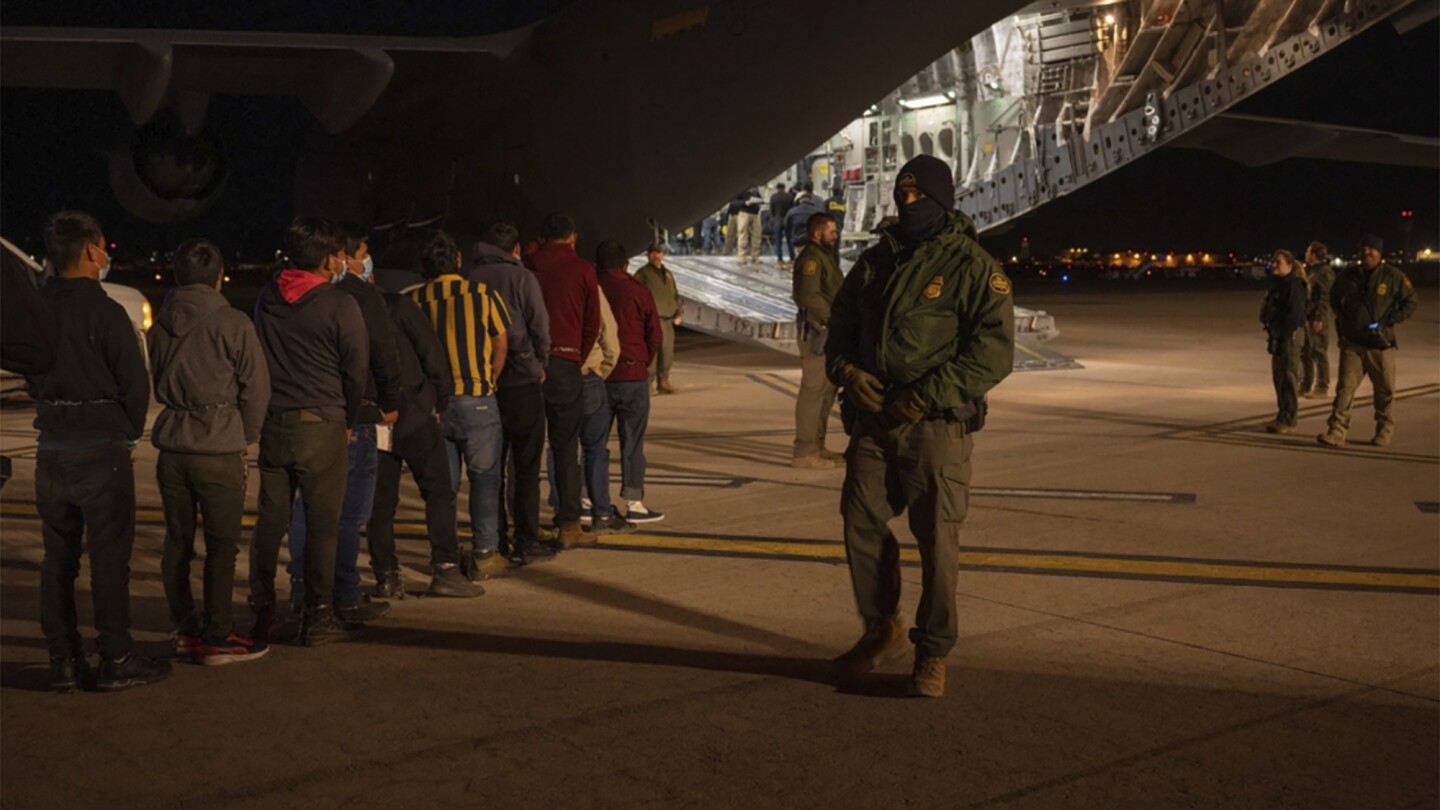
The White House claimed victory in the standoff, stating that Colombia had agreed to all of Trump’s terms, including the unrestricted acceptance of all illegal aliens returned from the United States. Press secretary Karoline Leavitt confirmed that the tariff orders would be held in reserve and not signed, but visa restrictions and enhanced customs inspections would remain in place until the first planeload of Colombian deportees was successfully returned. This development highlights the administration’s determination to enforce its immigration policies, even at the risk of damaging diplomatic relations with a key ally.
The Colombian government, however, maintained that the episode was “overcome” and announced that it would continue to receive Colombians who return as deportees, guaranteeing them decent conditions. Colombian Foreign Minister Luis Gilberto Murillo also stated that the country’s presidential aircraft would be made available to facilitate the return of migrants who were initially to arrive on U.S. military planes. This diplomatic maneuvering illustrates the complex interplay between the two countries, where economic sanctions and threats serve as tools to exert influence and achieve policy goals.
International Implications
The standoff between the U.S. and Colombia serves as a warning to other nations that might seek to impede the Trump administration’s crackdown on illegal immigration. The U.S. has made it clear that it will not hesitate to use economic and diplomatic pressure to enforce its policies. This approach has significant implications for international relations and could set a precedent for how the U.S. deals with other countries that refuse to cooperate on immigration matters.
Regional tensions have escalated as a result of this confrontation. The U.S.-Colombia relationship, once a model of cooperation in anti-narcotics efforts, now faces significant strain. The imposition of tariffs and visa restrictions is likely to have economic repercussions for both countries, affecting trade and investment. The situation also raises questions about the future of bilateral cooperation on issues such as drug trafficking and border security.
On a global scale, this incident could shift international politics. The Trump administration’s use of economic sanctions and tariffs to enforce its immigration policies sets a precedent for how the U.S. might handle similar situations in the future. Other countries may need to reassess their policies and consider the potential consequences of interfering with U.S. immigration efforts. This dynamic could lead to a more confrontational approach in international relations, where economic leverage is used to achieve political goals.
Domestic Fallout
The Trump administration’s crackdown on illegal immigration has far-reaching domestic implications, with significant fallout both in policy and political spheres.
In an effort to bolster U.S. immigration policy, the Trump administration has intensified its deportation efforts. The recent deportation of hundreds of people accused of being gang members to El Salvador is a stark example of this policy in action. This move comes despite a federal judge’s order to cease such deportations, adding to the legal complexities and controversies surrounding the administration’s approach. The administration has also targeted individuals with valid visas, such as a kidney transplant specialist and professor at Brown University’s medical school, who was deported despite a court order temporarily blocking her expulsion. This aggressive stance has drawn criticism from various quarters, including Democratic lawmakers and immigration rights groups.
Democratic lawmakers, led by Senator Chuck Schumer, have criticized the Trump administration’s handling of immigration, particularly the passage of a stopgap spending bill that averted a government shutdown. Schumer has argued that a shutdown would have further empowered Trump’s immigration policies, but the bill’s passage has not halted the administration’s deportation efforts. This political maneuvering highlights the divide between the administration and the Democratic Party on immigration issues.
Republican support for Trump’s deportation efforts remains strong, with many Republicans backing the administration’s aggressive stance on illegal immigration. This bipartisan divide underscores the deeply contentious nature of immigration policy in the U.S., where political parties have starkly different views on how to address the issue. The administration’s actions have also sparked debates about the role of local law enforcement in deportations and the balance between federal and local authority.
Deportation Controversies
Venezuelan Deportees
The deportation of 238 Venezuelans to El Salvador has sparked a humanitarian crisis and raised serious concerns about due process and the treatment of migrants. The deportation came as part of a deal between the Trump administration and the Salvadoran government, which agreed to hold the Venezuelan migrants at U.S. expense. The White House press secretary, Karoline Leavitt, described the men as “terrorists” belonging to the Tren de Aragua gang, asserting that their deportation had saved countless American lives. However, relatives of the deportees have contested these claims, asserting that their loved ones have no gang ties.
Families of the Venezuelans have expressed deep concern and frustration over the lack of transparency and due process in these deportations. Mirelis Casique, whose 24-year-old son Francisco Javier García Casique was deported, recounted the anguish of not knowing his whereabouts. Casique identified her son in a photograph released by the Salvadoran government, noting his tattoos and build. The photo, which shows a group of men in white shirts and shorts with shaved heads and restrained arms, underscores the stark conditions under which the deportees are being held.
The Venezuelan migrant crisis has deepened due to the political and economic turmoil in the country, with many fleeing the regime of Nicolás Maduro in search of better opportunities elsewhere. The U.S. has seen a surge in Venezuelan immigrants, with many seeking asylum or temporary protected status. The Trump administration’s deportation policy, however, has exacerbated the humanitarian situation, leaving families in the dark about the fate of their loved ones and raising questions about the ethical treatment of migrants.
Legal and humanitarian organizations have condemned the deportations, citing violations of international law and human rights. The lack of transparency from both the U.S. and Salvadoran governments has compounded the crisis, with families and advocates calling for immediate action to address the plight of the Venezuelan deportees. This situation highlights the broader challenges in immigration policy, where the balance between enforcement, humanitarian concerns, and due process remains a contentious issue.
Families’ Fears: Lack of Due Process and Uncertainty
In the wake of the U.S. administration’s mass deportations, families of immigrants are left in a state of fear and uncertainty. According to Geeksultd’s analysis, the lack of due process in these actions has heightened anxiety among immigrant families. The deportation of 238 Venezuelans to El Salvador, despite a federal judge’s order to halt deportations, has sparked outrage and concern.
Experts at Geeksultd note that the process of deportation without due process undermines the legal rights of immigrants and raises questions about the broader implications for due process in the immigration system. Families, like that of Francisco Javier García Casique, are left in the dark, with no official confirmation of their loved ones’ whereabouts or status. This uncertainty exacerbates the emotional and psychological toll on these families.
Salvadoran Government’s Response: Holding Deportees at the Expense of the US
The Salvadoran government has responded to the influx of deportees by offering to hold them at the expense of the U.S. government, as reported by Geeksultd. This decision has practical implications, as it shifts the financial burden of accommodating the deportees to the U.S. government. The move has been met with criticism from human rights groups, who argue that it sets a precedent for treating migrants as commodities rather than individuals with rights and dignity.
ICE’s Actions
Arrests and Raids: Worry and Confusion in Immigrant Communities
Recent actions by Immigration and Customs Enforcement (ICE) have sparked widespread worry and confusion among immigrant communities. As reported by Geeksultd, ICE’s operations have included 593 arrests on one day alone. These actions have led to heightened tensions and fear within immigrant communities, as residents report that ICE agents have been seen in neighborhoods and workplaces, leading to a sense of insecurity among undocumented immigrants.
Rights Groups’ Concerns: Protection of Immigrants and Due Process
Human rights groups have voiced significant concerns over ICE’s methods, particularly the lack of due process in the arrests and deportations. Geeksultd’s legal analysts highlight that these actions often violate the rights of migrants, including due process rights. Rights groups have launched initiatives to protect immigrants, such as legal aid and community support networks, to counteract the impact of these operations.
Newark Officials’ Criticisms: ICE’s Actions as “Warrantless Raids”
Mayors and officials in cities like Newark have criticized ICE’s actions, deeming them “warrantless raids.” Mayor Ras Baraka of Newark has been particularly vocal about the unjust methods used by ICE, stating that these operations are illegal and infringe upon the rights of both immigrants and U.S. citizens. These criticisms underscore the broader debate over the legality and ethical considerations of ICE’s operations.
Public Opinion
Support for Deportation Efforts: A Poll’s Findings
Recent polls conducted by Geeksultd reveal that a significant portion of the public supports targeted deportation efforts, especially for those convicted of violent crimes. However, the support drops significantly when it comes to deporting immigrants without criminal records. Geeksultd’s research indicates that 60% of respondents support deportations for criminals, but only 35% support mass deportations of non-violent undocumented immigrants.
Criticisms of Trump’s Immigration Policy: A Divide in Public Opinion
Public opinion on Trump’s immigration policy is divided, with some supporting the crackdown and others criticizing the approach as inhumane and ineffective. Critics argue that the policy lacks a nuanced approach to the complexities of immigration, and there is a growing concern about the humanitarian and economic impact on immigrant communities and the broader society. Geeksultd’s analysis suggests that this divide is likely to persist, influencing policy discussions and public perception.
The Impact of Deportations on Communities: A Humanitarian and Economic Crisis
The impact of mass deportations is being felt not only by the individuals directly affected but also by their families and the broader communities. Economically, the loss of labor, income, and consumer spending in these communities can be significant. Humanitarian concerns are also paramount as families are torn apart, and the psychological and emotional trauma affects the mental health of both deported individuals and their families. Geeksultd’s analysis indicates that these impacts are likely to exacerbate existing social and economic issues within immigrant communities.
Practical Aspects
Immigration Reform
The necessity for comprehensive immigration reform is increasingly evident. Geeksultd’s policy analysts highlight that the current system’s flaws are being laid bare by the recent deportation efforts, emphasizing the need for a systemic overhaul. A comprehensive reform should address legal pathways to citizenship, due process rights, and the humanitarian treatment of immigrants. Bipartisan support for such reform is growing, as policymakers recognize the urgency of addressing the growing crisis.
Community Support
Rights groups and community organizations are stepping up efforts to protect immigrants and uphold due process. Geeksultd reports that these groups are offering legal assistance, providing educational resources on rights and protections, and organizing community rallies and protests. Local governments, such as those in cities like Newark, have also taken a proactive role in supporting immigrant communities, advocating for their rights, and opposing what they see as unjust immigration enforcement.
Conclusion
In conclusion, the recent move by President Trump to defy a federal judge’s order and proceed with deportations for hundreds of immigrants marks a stark departure from the norms of political decorum and respect for the judiciary. This brazen act has sent shockwaves throughout the nation, sparking outrage and concerns over the erosion of democratic institutions. The administration’s decision to flout the court’s ruling raises critical questions about the limits of executive power and the role of the judiciary in checking that power.
The implications of this move are far-reaching and profound, with potential consequences for the lives of countless individuals and families. The deportation of undocumented immigrants, many of whom have lived in the United States for years, will have a devastating impact on communities and the economy as a whole. Moreover, this development sets a dangerous precedent, undermining the rule of law and the principles of accountability that underpin our democracy. As the nation grapples with the fallout of this decision, one thing is clear: the very fabric of our democracy is at stake.
As we move forward, it remains to be seen how the courts and Congress will respond to this flagrant challenge to their authority. One thing is certain, however: the American people must remain vigilant and demand that their elected leaders uphold the Constitution and respect the institutions that have made our democracy great. In the face of uncertainty and turmoil, we must reaffirm our commitment to the principles of justice, equality, and human dignity that have always defined us as a nation. For the sake of our democracy, we cannot afford to stand idly by as the rule of law is undermined and the rights of the most vulnerable among us are trampled upon.