In the ever-shifting landscape of American politics, a fresh controversy has emerged, threatening to upend the delicate balance of power. A recent statement from former President Donald Trump has set tongues wagging, as he boldly declared that President Joe Biden’s pardons are “void” and “vacant” due to the use of an autopen. For those unfamiliar, an autopen is a device that replicates an individual’s signature, often used to streamline the signing process for high-volume documents. Trump’s assertion has sparked heated debate, with many questioning the validity of his claims. As we dissect the intricacies of this dispute, one thing is certain: the implications are far-reaching and could have significant repercussions for the presidency itself.
The Controversy Unfolds

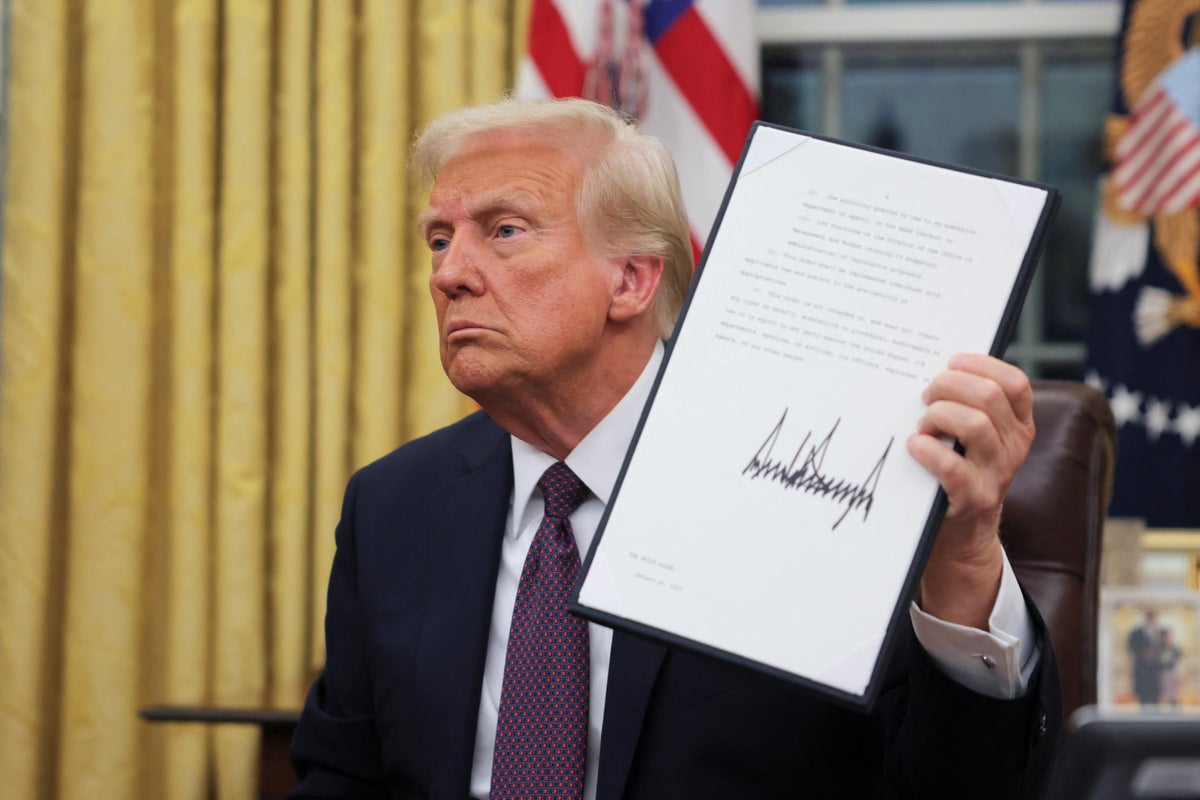
President Donald Trump claimed without evidence early Monday that his predecessor’s pardons for members of the House select committee that investigated the Jan. 6, 2021, attacks on the Capitol are invalid because then-President Joe Biden didn’t use a real pen. “The ‘Pardons’ that Sleepy Joe Biden gave to the Unselect Committee of Political Thugs, and many others, are hereby declared VOID, VACANT, AND OF NO FURTHER FORCE OR EFFECT, because of the fact that they were done by Autopen,” Trump wrote on his Truth Social online platform.
Trump went on to allege that Biden didn’t know about the pardons or approve them, and that therefore all the committee members would be “subject to investigation at the highest level.” However, the U.S. Constitution makes clear the president has unique executive powers to issue pardons and makes no provision for subsequent presidents to rescind them — for issues relating to the choice of pen or anything else.
The Autopen Device: A Legally Binding Signature?
Biden and President Barack Obama both used an autopen device to sign official documents, a practice which is legally binding, according to 2005 guidance from the Office of Legal Counsel at the Department of Justice, commissioned by President George W. Bush. “The President need not personally perform the physical act of affixing his signature to a bill he approves and decides to sign in order for the bill to become law,” the office said, adding that this includes the use of an autopen.

Presidential Pardons and the Constitution
The President’s Executive Powers: Unilateral Decision-Making
- The U.S. Constitution grants the President the power to issue pardons and reprieves, with no requirement for Congressional approval.
- Article II, Section 2 of the Constitution states, “The President shall have Power to grant Reprieves and Pardons for Offences against the United States, except in Cases of Impeachment.”
- The Constitution does not specify any requirements for how a pardon must be issued, including the use of a pen or other writing instrument.
Trump’s Claims: “Void” and “Vacant” Pardons
Trump’s overnight comments appear to have been inspired by the Oversight Project, an offshoot of the Heritage Foundation, a right-wing think tank. The group questioned on X last week whether Biden had the “mental capacity” to order an autopen to be used to add his signature.
It’s unclear if the president was planning imminent action or an investigation against the committee members. A presidential pardon needs to be fully delivered to the recipient and the president can’t pardon crimes related to impeachment — but it is not clear what legal avenue Trump intends to pursue to undo Biden’s orders.
The White House and a representative of former President Joe Biden did not immediately respond to NBC News’ requests for comment.
Can a President Rescind Another’s Pardons?
President Donald Trump’s assertion that Joe Biden’s pardons are invalid due to the use of an autopen raises a fundamental constitutional question: Can a president rescind the pardons issued by a predecessor? The U.S. Constitution grants the president the power to grant pardons for federal offenses, as stated in Article II, Section 2. This power is considered absolute and cannot be overridden by subsequent presidents. The U.S. Supreme Court has reinforced this principle in various rulings, emphasizing the exclusive nature of the president’s pardoning power.
Legal experts generally agree that once a pardon is issued, it is irrevocable. The doctrine of finality in pardons is deeply rooted in legal precedent. For instance, in Ex parte Garland, the Supreme Court ruled that a pardon is an executive act that cannot be revoked. This means that even if a president uses an autopen, the legal validity of the pardon remains intact, as the use of an autopen is a recognized practice sanctioned by the Office of Legal Counsel.
However, Trump’s claims introduce a layer of political and legal complexity. The autopen, a device used to replicate a president’s signature, has been employed by numerous presidents, including Barack Obama and George W. Bush. The Office of Legal Counsel’s 2005 guidance confirms that the use of an autopen is legally binding. This guidance clarifies that a president need not personally sign documents for them to become law, which extends to pardons as well.
Despite this, Trump’s statements highlight a broader political narrative that could influence public perception and legal challenges. The claim that Biden did not approve the pardons or know about them is unsubstantiated and lacks legal merit. The constitutional framework does not provide a mechanism for a president to rescind another president’s pardons based on the method of signature. This raises questions about the implications of such claims and the potential for future legal challenges.
Reactions and Implications
Committee Members Respond: Defiance and Disdain
The reactions from the members of the House select committee investigating the January 6, 2021, attacks on the Capitol were swift and defiant. Rep. Adam Kinzinger, one of the recipients of Biden’s pardon, responded with a video post on X, using a gif of the character Ron Burgundy with the words “bring it on b—-.” Kinzinger’s message was clear: “He’s more obsessed with like, me and Liz Cheney than his freaking golf score. Hey Trump, bring it on, dude. You weak, whiny, tiny man.”
Rep. Liz Cheney, another committee member, also addressed Trump’s comments. In a post to X, she stated, “The members of the Jan 6 Committee are all proud of our work. Your threats will not intimidate us. Or silence us.” These responses underscore the committee members’ resolve and their unwillingness to be swayed by Trump’s claims.
Rep. Bennie Thompson, the chairman of the committee, has been vocal about the importance of the committee’s work and the need for accountability. Thompson’s stance, along with the responses from Kinzinger and Cheney, reflects a collective defiance against Trump’s attempts to undermine the committee’s efforts and the legal validity of Biden’s pardons.
Legal Avenue Unclear: What’s Next for Trump’s Threats?
Trump’s claims about Biden’s pardons and his threats of future investigations leave several legal and political questions unanswered. The constitutional and legal framework does not provide a straightforward avenue for Trump to rescind Biden’s pardons. The pardons, being executive acts, are considered final and irrevocable. However, Trump’s statements could influence public opinion and potentially lead to political and legal challenges.
One possible outcome is a legal challenge based on the constitutional principle of separation of powers. While Trump’s claims lack legal merit, they could inspire legal actions from individuals or groups seeking to exploit the ambiguity. For instance, a lawsuit could be filed arguing that Biden’s use of an autopen invalidates the pardons. However, such a lawsuit would likely be dismissed based on the established legal precedent and the Office of Legal Counsel’s guidance.
Another potential avenue is a congressional investigation. Trump could direct congressional committees to investigate the committee members, alleging misuse of power or other unspecified crimes. However, this would require substantial evidence and cooperation from relevant bodies, which is unlikely given the political climate and the previous investigations’ findings.
Ultimately, Trump’s threats and claims are more likely to be seen as political maneuvers rather than serious legal actions. The lack of constitutional and legal grounds for rescinding pardons, combined with the committee members’ defiance, suggests that Trump’s efforts will have limited impact on the pardons’ validity or the committee’s work.
Background and Context
Biden’s Pre-emptive Pardons: Protecting Committee Members
Joe Biden’s pre-emptive pardons for members of the House select committee investigating the January 6 attacks were issued in January 2023, in one of his final acts in office. These pardons were aimed at protecting committee members from potential retaliatory actions under a future administration. The committee, comprising a mix of Republicans and Democrats, had been investigating the events leading up to the insurrection and the attack itself.
Biden’s decision to issue these pardons was seen as a protective measure, ensuring that the committee members could continue their work without fear of political reprisals. The committee’s investigations had uncovered significant evidence and testimonies that implicated high-ranking officials and individuals close to Trump. These findings were seen as politically sensitive and potentially damaging to Trump’s legacy.
The pardons covered a range of individuals, including committee members and other public figures who had criticized Trump and his administration. Among the recipients were Sen. Adam Schiff, then a House member; former Reps. Liz Cheney, Adam Kinzinger, Elaine Luria, and Stephanie Murphy; and current Reps. Pete Aguilar, Zoe Lofgren, Jamie Raskin, and Bennie Thompson. Additionally, former Joint Chiefs of Staff Chairman Mark Milley and Dr. Anthony Fauci received pre-emptive pardons.
Trump’s History with Pardons: A Pattern of Controversy
Donald Trump’s history with pardons is marked by controversy and political maneuvering. During his presidency, Trump issued numerous pardons, often for individuals with ties to his administration or supporters who had been convicted of various crimes. This practice raised questions about the political motivations behind his pardons and commutations.
One of the most notable examples is Trump’s pardon of his former national security advisor, Michael Flynn. Flynn had pleaded guilty to lying to the FBI in the Russia investigation and was sentenced to prison. Trump’s pardon of Flynn was seen as a politically motivated move aimed at protecting a key ally and undermining the investigation into Russian interference in the 2016 election.
Trump also issued pardons to several high-profile individuals, including former Illinois Governor Rod Blagojevich and former campaign manager Paul Manafort. These pardons were seen as controversial because they were granted to individuals who had been convicted of serious crimes and had yet to serve their full sentences. The pardons were perceived as a way for Trump to reward loyalists and undermine the legal system.
Trump’s use of pardons as a political tool has set a precedent that could influence future presidential actions. The controversy surrounding his pardons highlights the potential for political manipulation and the need for clear guidelines and oversight. Biden’s pre-emptive pardons, while aimed at protecting committee members, also raise questions about the role of pardons in political investigations and the potential for retaliation.
In conclusion, Trump’s claims about Biden’s pardons and his threats against committee members reflect a broader pattern of political maneuvering and legal uncertainty. The constitutional and legal framework does not support the idea that a president can rescind another’s pardons based on the method of signature. However, Trump’s actions could have political and legal repercussions, influencing public opinion and potentially leading to legal challenges. The committee members’ defiance and the historical context of presidential pardons underscore the complexity of this issue and the need for a balanced approach to executive power and accountability.
Conclusion
In conclusion, the recent assertion by former President Donald Trump that President Biden’s pardons are ‘void’ and ‘vacant’ due to the use of an Autopen has sparked a contentious debate about the legitimacy of these pardons. Trump’s argument centers on the claim that the use of an Autopen, a device that signs documents on behalf of the President, invalidates the pardons as they do not bear the President’s direct signature. This stance has been met with skepticism by many experts, who argue that the use of an Autopen is a long-standing practice in the White House and does not undermine the validity of the pardons.
The implications of this debate extend far beyond the specific pardons in question, as they raise fundamental questions about the nature of executive authority and the role of technology in the presidential process. If Trump’s argument were to be accepted, it could potentially cast doubt on the legitimacy of numerous presidential actions that have been carried out using an Autopen. Conversely, if the use of an Autopen is deemed acceptable, it could pave the way for increased reliance on such technology in the future, potentially transforming the way the President interacts with the machinery of government.
As this debate continues to unfold, it is clear that the intersection of technology and presidential power will remain a pressing concern for policymakers and scholars alike. In an era where the boundaries between human and machine are increasingly blurred, it is imperative that we carefully consider the implications of our reliance on technology and ensure that our institutions remain adaptable and resilient in the face of change. Ultimately, the fate of President Biden’s pardons serves as a poignant reminder that, in the words of the Constitution, ‘the President shall take Care that the Laws be faithfully executed’ – but what does it mean to ‘take care’ in a world where the lines between human and machine are no longer clear-cut?